Article
AEO for Plumbers: Turn AI Searches Into Calls
October 4, 2026 • 7 min read
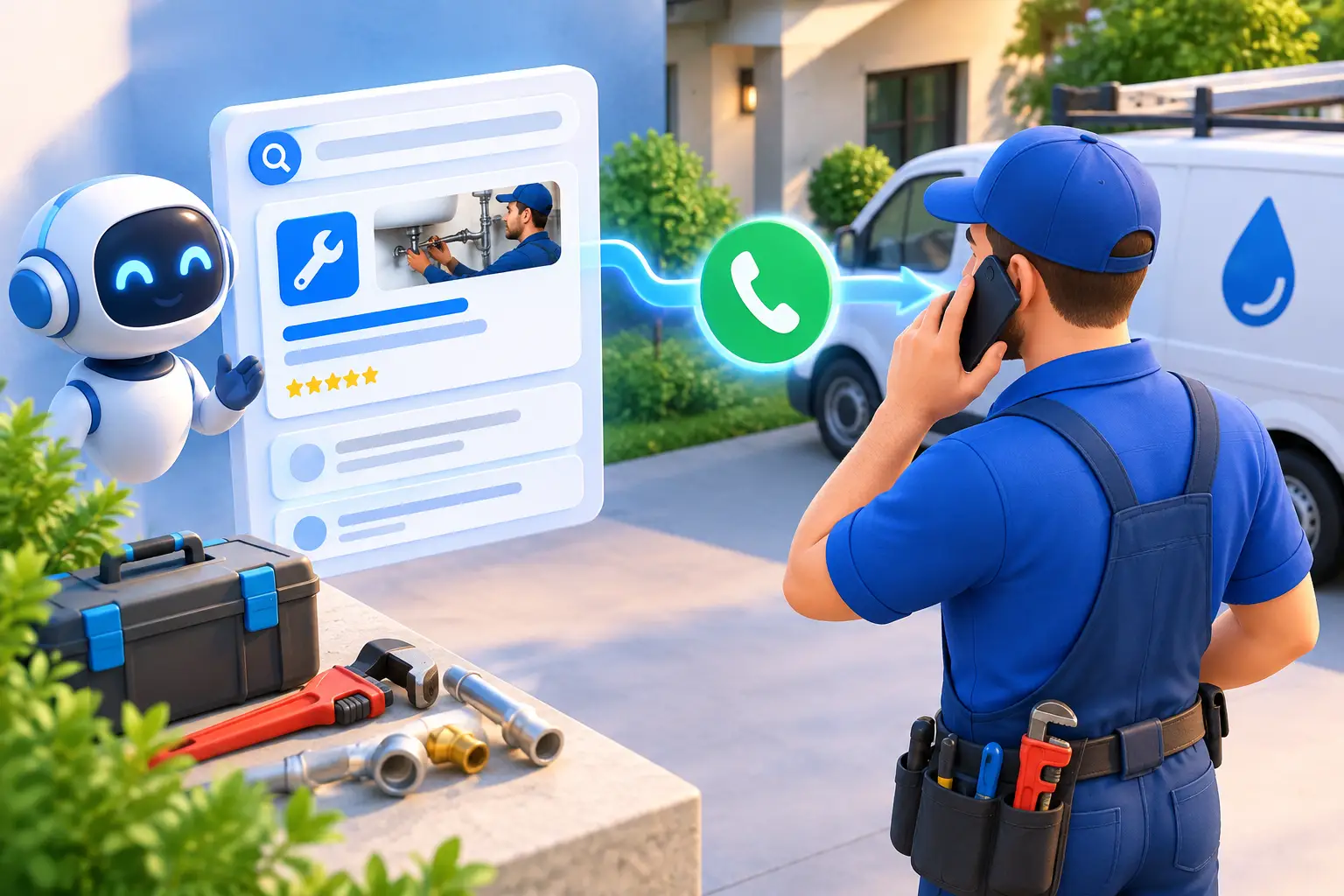
A homeowner with a leaking water heater is not researching marketing channels. They are asking Google, Siri, ChatGPT, or an AI search result one urgent question: “Who can fix this near me?” AEO for plumbers is how your business becomes a credible answer in that moment, before the job goes to the company that responds first.
For plumbing companies, this is not about chasing another digital trend. It is about making sure your service information, reviews, location signals, and response process are clear enough for search engines and AI tools to recommend you with confidence. The payoff is simple: more qualified calls from people who already need a plumber.
What AEO Means for a Plumbing Business
AEO means Answer Engine Optimization. Traditional SEO focuses on helping your website rank in search results. AEO focuses on helping your business get selected as an answer when a customer asks a direct question.
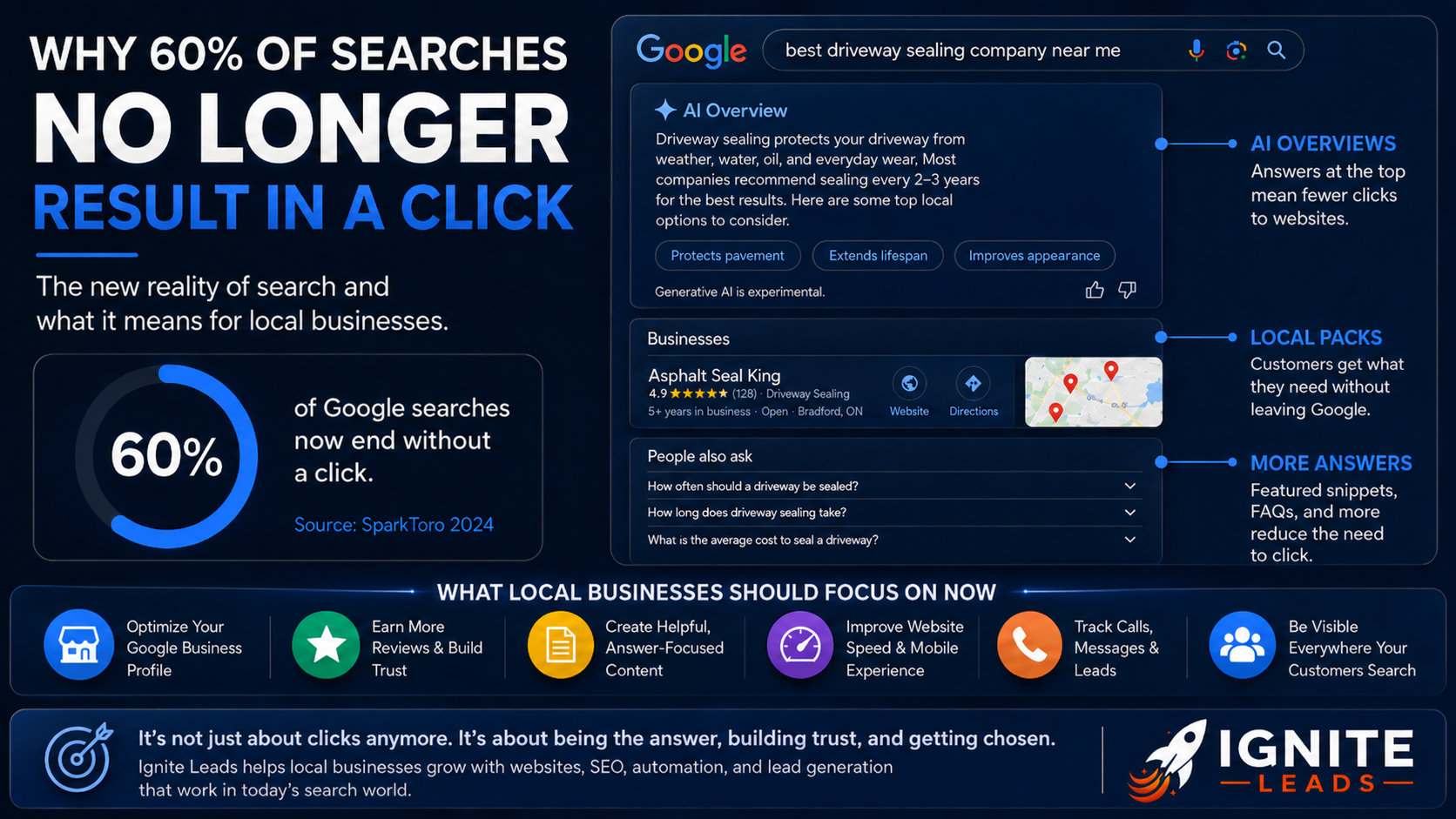
Those questions are becoming more specific. Instead of typing “plumber Barrie,” a customer may ask, “Why is my basement drain backing up?” or “Who offers emergency plumbing near me tonight?” AI-powered results try to provide a fast, useful response. They pull from sources that look trustworthy, local, current, and easy to understand.
That does not mean Google Search is going away. It means the way people use it is changing. Searchers still want phone numbers, reviews, hours, service areas, and proof that a company can solve their problem. AEO strengthens the same local foundation that drives map rankings and organic leads.
For a plumber, the best AEO strategy is practical: make it easy for search platforms to understand what you do, where you work, when you are available, and why a customer should call you.
The Plumbing Questions You Need to Own
The strongest AEO content starts with real customer intent, not a list of industry keywords. Your site should clearly answer the questions your dispatcher hears every week.
A homeowner dealing with a burst pipe wants to know what to do immediately, whether you offer emergency service, and how quickly someone can arrive. A customer with low water pressure wants to know likely causes and whether the issue needs a professional. Someone planning a renovation wants to know whether you handle rough-ins, permits, fixtures, or drain relocation.
Build pages around services that generate revenue and questions that signal urgency. That can include emergency plumbing, drain cleaning, sewer backups, water heater repair, sump pumps, leak detection, fixture installation, and commercial plumbing. Each page needs a plain-language explanation of the issue, the solution, the areas you serve, and a direct way to call or request service.
Avoid thin location pages that change only the city name. A page for Vaughan, Aurora, Newmarket, or Barrie should contain useful local context, such as service availability, common property types, response expectations, and relevant services. The goal is not to manufacture pages. It is to give customers and search engines a clear reason to trust that you serve that area.
Write for the question behind the search
A good service page does more than repeat “emergency plumber.” It answers the situation behind the phrase. Explain what counts as an emergency, what the customer can do before help arrives, what your technician will assess, and what affects the repair cost.
This approach improves visibility because it is useful. It also improves conversion because customers feel informed before they pick up the phone. Do not promise a fixed arrival time or repair price unless you can consistently deliver it. Clear, realistic information beats aggressive claims that create friction later.
Your Google Business Profile Is an AEO Asset
For local service businesses, Google Business Profile remains one of the most important sources of visibility. It tells search platforms who you are, where you operate, what you offer, when you are open, and what customers say about you.
A complete profile supports both local SEO and AEO for plumbers. Keep your primary category accurate. Add relevant service categories, list your service areas correctly, maintain regular business hours, and make sure the phone number and website details match the rest of your online presence.
Photos matter as well. Real images of technicians, branded vehicles, completed work, equipment, and your team help customers verify that you are a legitimate local company. Stock images may fill space, but they do little to build local trust.
Most importantly, keep the profile active. Update holiday hours, answer customer questions, add service posts when appropriate, and monitor calls and messages. A profile that says you are open when no one answers is worse than a profile that accurately sets expectations.
Reviews Give Answer Engines Confidence
AI tools and local search systems look for evidence. Reviews are some of the strongest evidence a plumbing company can build because they show repeated customer experiences in real language.
A five-star rating helps, but review volume, recency, and detail matter too. A steady flow of recent reviews that mention drain cleaning, emergency repairs, water heaters, professionalism, or fast arrival times gives search platforms more context about your business.
Do not script reviews or ask customers to mention a list of keywords. That sounds forced and can create compliance issues. Instead, ask for a review after a successful job while the experience is fresh. Make the request simple, automate the follow-up, and respond to every review in a professional tone.
Negative reviews need a response too. Do not argue publicly. Acknowledge the concern, state that you want to resolve it, and move the detailed discussion offline. Prospective customers do not expect perfection. They do expect a business owner who takes service issues seriously.
Make Your Website Easy for Machines and Customers to Read
Answer engines need clean signals. Your website should make the basics obvious on every important page: the service, the service area, how to contact you, and what action to take next.
This is where technical setup matters. Structured data, also called schema markup, can help search engines interpret details such as your business name, phone number, location, services, reviews, and frequently asked questions. It does not guarantee an AI mention or top ranking. It gives platforms a clearer version of the information they are already trying to understand.
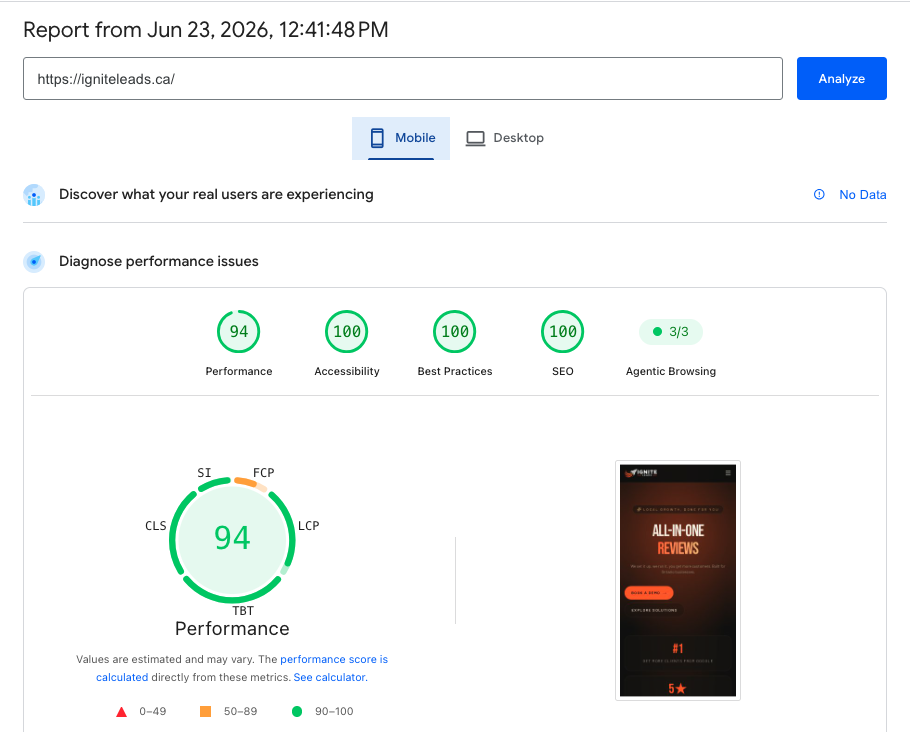
Your site also needs to load quickly on mobile. Plumbing leads often come from someone standing beside a leak, a clogged toilet, or a flooded utility room. If the call button is hard to find, the form is broken, or the page takes too long to load, the lead moves on.
Use direct calls to action. “Call for emergency plumbing” is stronger than “Contact us to learn more.” Keep forms short. Ask for the name, phone number, address or area, and a brief description of the problem. Your team can collect the rest once the lead is secured.
Fast Follow-Up Is Part of the Ranking Strategy
Visibility does not create revenue by itself. AEO can put your business in front of the right customer, but your response process determines whether that customer books.
This is where many plumbing companies lose jobs they have already paid to generate. The phone rings after hours, a web form lands in an inbox no one checks, or a customer sends a message and receives no reply for an hour. For an urgent plumbing issue, an hour is enough time for a competitor to win the job.
A working lead system should route calls, trigger immediate text responses for missed calls and forms, notify the right person, and follow up until the customer books or declines. AI chat and voice reception can help handle basic questions, capture job details, and respond outside regular office hours. It should support your team, not replace the human judgment required for pricing, dispatch, and complex customer concerns.
The trade-off is clear: automation saves time only when it is configured around your actual hours, service areas, and booking process. Generic automations that promise availability you cannot provide will damage trust. Set the system up properly, then monitor it like any other part of operations.
A Practical AEO Plan for Plumbers
Start with the services that drive the highest-value and most urgent calls. Confirm that each one has a useful, dedicated page. Next, clean up your Google Business Profile and make review collection a standard step after every completed job.
Then connect visibility to response speed. Track which calls, forms, and messages become booked work. If emergency drain cleaning gets traffic but few bookings, the issue may not be rankings. It could be a weak call to action, slow response, unclear pricing expectations, or missed after-hours calls.
That is the advantage of treating marketing as one connected system rather than a pile of tools. Ignite Leads helps local service businesses bring together website performance, local visibility, review generation, and automated follow-up so leads have fewer chances to disappear between the search and the booking.
The plumbers who win AI-driven search will not be the ones with the most complicated content strategy. They will be the ones whose business is easiest to understand, easiest to trust, and easiest to reach when the customer needs help now.
Allan Heath
Founder of Ignite Leads. Helps local businesses grow through SEO, lead generation, and marketing automation — simplifying the playbook so owners can focus on the work.