Article
AEO for Small Businesses That Want More Calls
October 3, 2026 • 6 min read
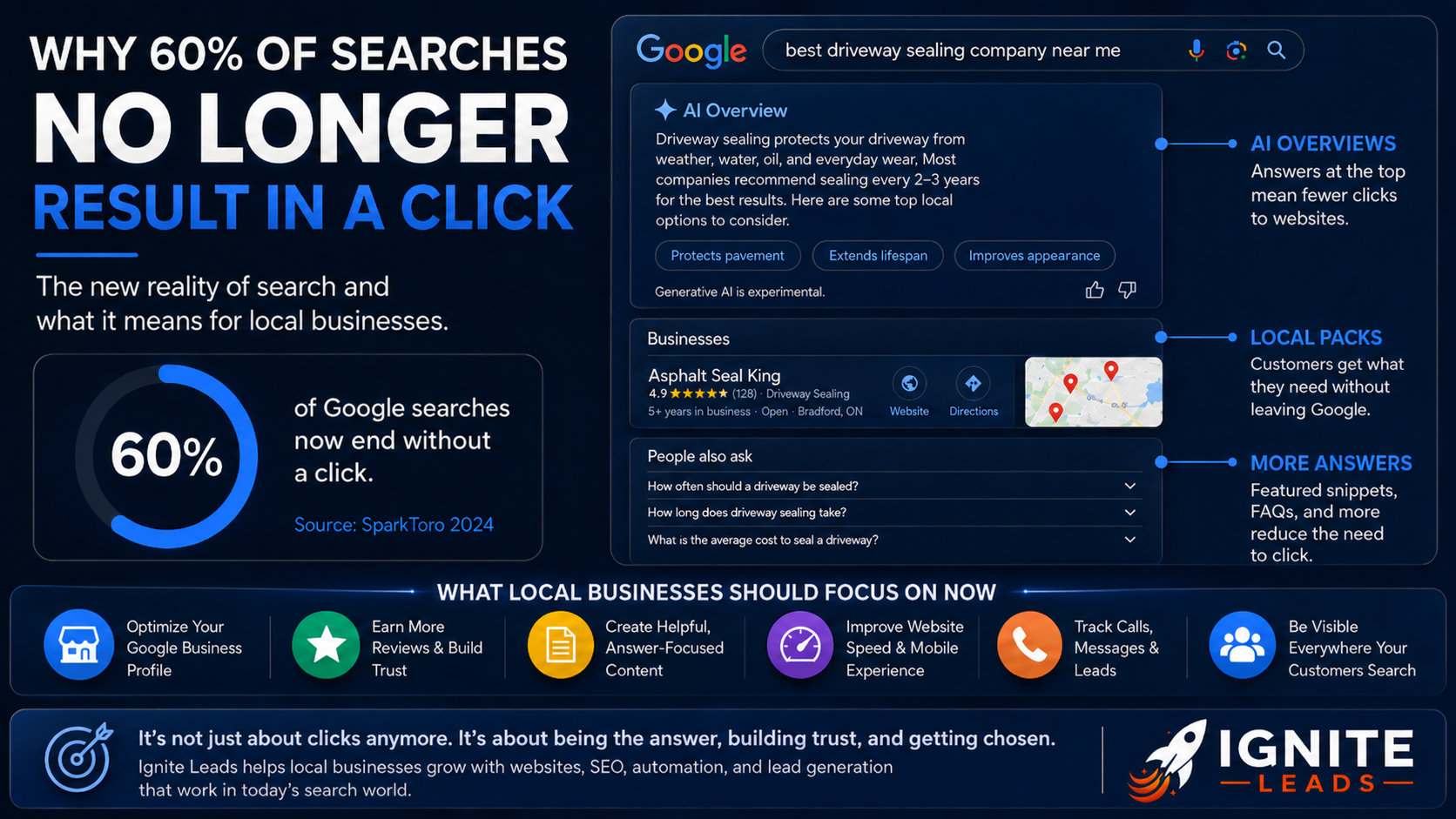
A homeowner in Barrie asks an AI tool, “Who can fix a leaking basement fast?” A driver in Vaughan searches, “best garage near me for brake repair.” The businesses that get named are not always the biggest. They are the ones with clear service information, credible local signals, strong reviews, and a website that gives direct answers. That is where AEO for small businesses becomes a practical customer-acquisition priority.
AEO means answer engine optimization. It is the process of making your business easy for search engines and AI-powered answer tools to understand, trust, and recommend. For a local service business, the goal is simple: show up when a ready-to-buy customer asks a specific question, then make it easy for that customer to call, book, or request a quote.
What AEO Means for a Local Service Business
Traditional SEO focuses heavily on earning rankings in search results. AEO builds on that foundation by helping your content become a useful answer. Instead of optimizing only for broad phrases such as “Aurora plumber,” you also prepare your site to answer high-intent questions like “How much does emergency drain cleaning cost?” or “Can a mechanic inspect a used car before I buy it?”
This matters because customers increasingly search in complete sentences. They ask Google, voice assistants, and AI chat tools for recommendations, prices, timelines, comparisons, and next steps. If your website only has a homepage, a list of services, and a contact form, it may not give those systems enough detail to confidently present your business.
AEO is not a replacement for local SEO. Your Google Business Profile, reviews, location relevance, service pages, and technical website health still matter. The difference is that AEO pushes your marketing from keyword matching toward clear, verifiable answers.
For a spa, that may mean explaining what happens during a first treatment and who it is suited for. For a roofing company, it may mean outlining whether a repair is enough or replacement is needed. For a coach, it may mean answering how the first session works, what results are realistic, and how long an engagement usually lasts.
Why Clear Answers Create Better Leads
More traffic is not automatically better business. A local operator needs qualified calls, booked appointments, and quote requests from people who understand the service well enough to take action.
Answer-focused content filters and prepares leads before they reach you. A customer who reads your pricing guidance, service area details, process, and turnaround times is less likely to call with the wrong expectation. They arrive with more confidence and less friction.
That creates two advantages. First, your team spends less time repeating basic information. Second, faster, better-informed leads are easier to convert through automated follow-up, AI reception, and a well-managed sales process.
There is a trade-off. Being specific can discourage people who are looking for the cheapest option or a service you do not provide. That is usually a benefit. A business that wants profitable work should not build its marketing around vague promises designed to attract everyone.
The AEO Foundation: Make Your Business Easy to Verify
Before creating new content, make sure your core business information is consistent and complete. AI systems and search engines look for signals that support what you claim. Conflicting details create doubt. Missing details create ambiguity.
Your website should clearly state what you do, where you operate, how customers can contact you, and what makes your process credible. Every major service needs its own page, especially if it has different pricing, timelines, customer concerns, or service areas.
A strong service page does more than say, “We offer furnace repair.” It explains the common problem, the service process, the types of equipment or situations covered, what affects cost, expected response time, and the next action. It should include real business details, not generic copy that could apply to any company in Canada.
Your reviews support this work. Detailed reviews mentioning a service, neighbourhood, outcome, and customer experience are far more useful than a string of five-star ratings with no context. Review generation should be part of the operating system, not a task someone remembers when business is slow.
How to Build AEO for Small Businesses
Start with the questions your team already hears every week. Your receptionist, technicians, estimators, and sales staff know where customers hesitate. Those questions are your best content plan because they come directly from people close to booking.
Turn real questions into useful service content
Build each page around one customer need. A page for emergency garage door repair should answer what counts as an emergency, whether the door should be used, typical availability, likely causes, and what a technician will check. It should not be padded with broad marketing language.
Use clear headings that mirror customer questions. Write direct answers near the top, then add the supporting detail below. This helps people scan the page and gives answer engines cleaner information to interpret.
Avoid making claims you cannot support. “Best in Ontario” is weak without evidence. “Same-day service when availability allows” is useful, credible, and sets a reasonable expectation.
Publish local proof, not generic location pages
Local relevance still drives service decisions. Customers want to know whether you work in their area and whether you understand the practical realities of the job.
The right approach is not to create dozens of near-identical pages with city names swapped out. That adds little value and can weaken trust. Instead, create location content only when you can make it genuinely useful. Mention travel coverage, common local service needs, project examples, neighbourhood availability, or relevant regulations where applicable.
For businesses serving Barrie, Newmarket, Aurora, and Vaughan, this may mean a focused service-area page supported by a few detailed location pages where there is enough real information to say. Quality beats volume.
Add structure behind the content
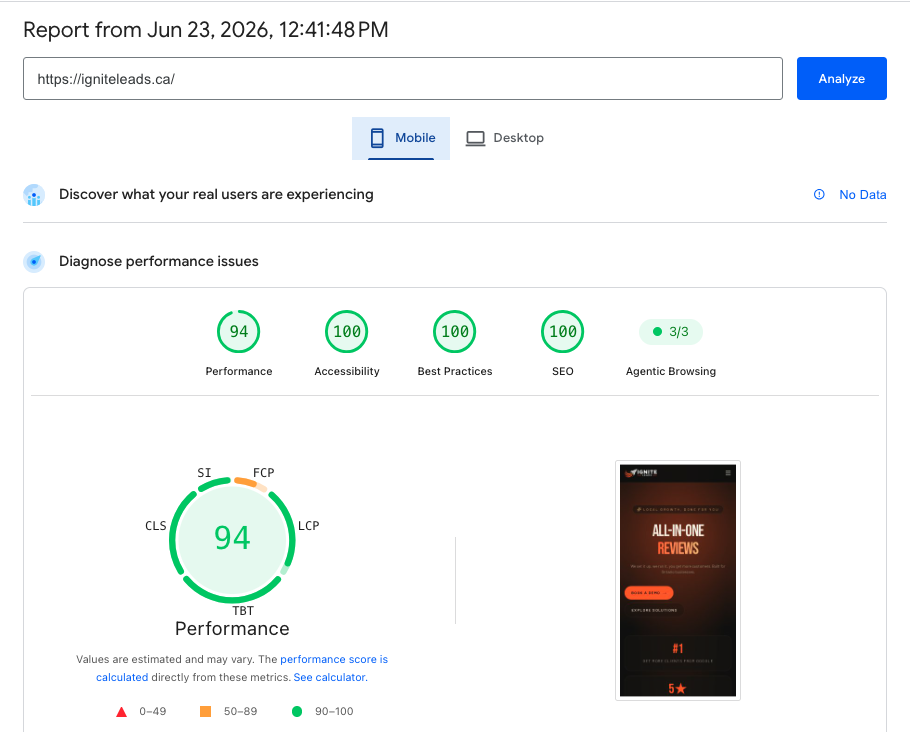
People see the words on your website. Search engines also need the structure behind them. Clean page titles, logical headings, accurate business details, fast mobile performance, and properly configured structured data all make your information easier to process.
This is where many small businesses lose ground. They invest in a website design, then treat it like a brochure. A lead-generation website needs ongoing operational attention: pages updated as services change, reviews added, calls tracked, forms tested, and speed-to-lead monitored.
Technical work alone will not make an average business the recommended answer. But weak technical setup can stop strong content and reputation signals from performing as they should.
Connect visibility to immediate follow-up
AEO can create demand, but it cannot fix a slow response process. If a customer finds you through an AI answer or local search and waits three hours for a reply, the lead is already cooling off.
Connect every form, call, chat, and message to a defined follow-up workflow. An immediate confirmation, fast human response, appointment reminders, and missed-call text-back can protect leads that would otherwise go to the next business listed.
This is especially important for urgent services. A customer with a burst pipe, a broken furnace, or a vehicle that will not start is not researching for entertainment. They are looking for the fastest credible solution.
What to Measure Instead of Chasing AI Hype
Do not judge AEO by whether your business appears in every AI response. Results vary by search query, user location, device, and platform. No provider can honestly guarantee inclusion in every generated answer.
Measure outcomes that affect revenue: calls from organic search, qualified form submissions, booked appointments, review volume and quality, response times, close rates, and cost per acquired customer. Track which service pages create real leads, not just page views.
You should also watch the questions customers ask after they arrive. If the same question keeps appearing in calls and messages, your website has a content gap. Add the answer, make it specific, and connect it to a clear action.
The businesses that benefit most from AEO will not be the ones publishing the most pages. They will be the ones that make it easy to understand what they do, easy to trust their claims, and easy to reach them at the exact moment a customer needs help. Build that system well, and every new answer you publish has a job: move the right local customer one step closer to booking.
Allan Heath
Founder of Ignite Leads. Helps local businesses grow through SEO, lead generation, and marketing automation — simplifying the playbook so owners can focus on the work.