Article
AI Chat for Local Businesses That Books More Jobs
July 12, 2026 • 6 min read
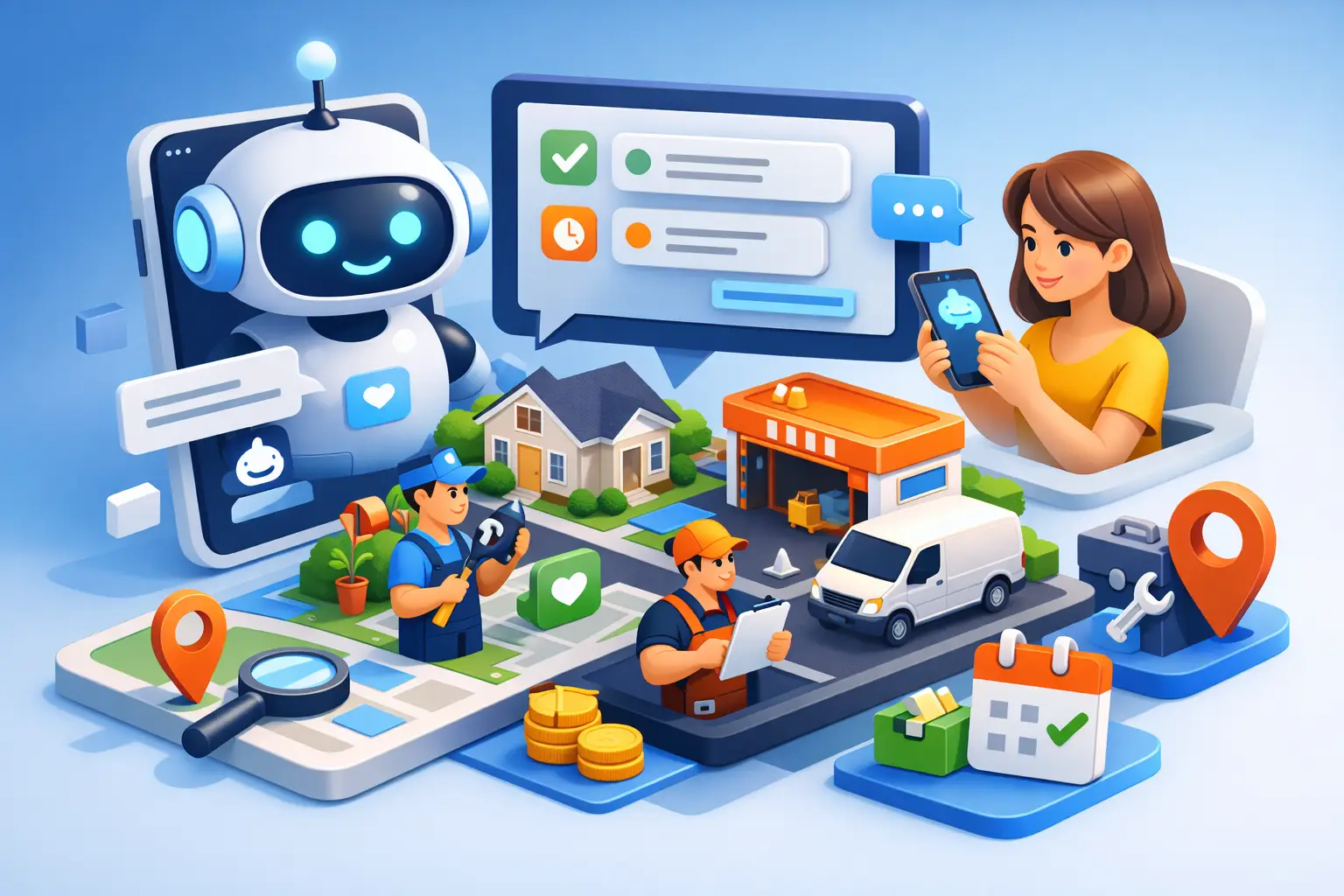
A homeowner finds your garage, spa, or home service company after dinner. They have one question, want a rough idea of availability, and are ready to act. If nobody responds until the next morning, that lead may already be booked elsewhere.
That is where AI chat for local businesses earns its place. It is not a novelty widget added to a website for appearance. When set up properly, it becomes a front-line lead handling system that answers common questions, collects the details your team needs, and moves qualified prospects toward a call or booking.
For service businesses in Barrie, Newmarket, Aurora, and Vaughan, speed matters because local customers often contact more than one provider. The company that responds first with a clear next step has a measurable advantage.
What AI Chat for Local Businesses Actually Does
AI chat should reduce the gap between a website visit and a real conversation. It can greet visitors, answer approved business questions, identify what service they need, collect their contact information, and direct them to book an appointment. It can also route urgent requests differently from routine enquiries.
The goal is not to make a chatbot sound clever. The goal is to stop good leads from leaving your website without taking action. A well-built chat flow uses your service areas, hours, FAQs, offers, pricing guidance, and booking rules to give visitors useful answers without forcing your staff to repeat the same information all day.
Answering questions is only half the job
Many businesses install chat that can explain services but does nothing when a visitor is ready to buy. That creates activity without creating revenue. A stronger system recognizes buying intent and asks practical questions: what service is needed, where the job is located, when they need help, and how they prefer to be contacted.
From there, the information should enter your CRM, notify the right person, and trigger follow-up. If the prospect asks for an estimate, the chat should not end with a vague message telling them someone will be in touch. It should offer the next available booking option or clearly set the expectation for a callback.
Where AI Chat Produces the Best Results
AI chat works best when customers arrive with a clear problem and a short decision window. Home service companies can qualify repair or installation requests. Auto shops can gather vehicle details and service needs. Spas can handle treatment questions and appointment requests. Coaches can screen inquiries before a consultation.
It is especially useful outside regular office hours. Your best staff cannot answer every website message while serving customers, driving between jobs, or managing a busy front desk. AI chat gives visitors an immediate response while keeping your team focused on work that needs a human.
There are limits. A chat system should not diagnose a complicated issue, promise an exact price without enough information, or handle sensitive complaints with a generic script. Those conversations need a staff member. The system should recognize the handoff point and capture enough context so the person taking over does not have to start from zero.
Build the Chat Around Booked Calls, Not Conversations
The strongest AI chat setups are built backwards from the outcome you want. For most local service businesses, that outcome is a booked appointment, a qualified phone call, or an estimate request with enough detail to act on.
Start by deciding which actions matter most. A plumbing business may prioritize emergency calls and quote requests. A med spa may prioritize consultation bookings. A garage may need service appointment requests with vehicle information. One generic chat script will not fit all three.
Your chat should be able to handle four core jobs:
- confirm whether the visitor is in your service area
- identify the service or problem they need help with
- collect name, phone number, email, and useful job details
- offer a clear next step, such as booking, calling, or requesting a quote
Keep the questions short. Asking for a full project history before offering help creates friction. Gather the minimum information needed to qualify the lead, then let your team handle the deeper conversation.
Connect Chat to the Rest of Your Lead System
Chat alone will not fix a weak follow-up process. If enquiries sit in an inbox, are copied manually into a spreadsheet, or rely on one staff member remembering to respond, leads will still slip through.
A proper setup connects website chat to the systems that manage the next action. New leads should enter the CRM automatically, carry the chat transcript or summary, and trigger a notification or follow-up sequence. If a prospect does not book immediately, they can receive a timely text or email that keeps the conversation moving.
This is where an integrated system changes the result. Your website brings in local traffic through Google. AI chat captures the visitor while intent is high. CRM automation follows up. Your team receives a qualified opportunity instead of a vague message that says, Need pricing. Each part supports the next one.
Ignite Leads builds these systems for businesses that want one team to manage visibility, lead capture, follow-up, and conversion rather than stitching together disconnected tools.
Avoid the Mistakes That Make Chat Feel Useless
The most common mistake is treating AI chat as a set-it-and-forget-it feature. Your services change, offers expire, business hours shift, and new questions come up. The chat needs regular review so its answers remain accurate.
Another issue is giving it too much freedom. A local business chat should work from approved information. It is better for the system to say it needs to confirm a specific answer than to guess about pricing, availability, warranties, or technical details. A wrong answer costs more than a delayed one.
Avoid hiding the human option. Some visitors want to speak with a person immediately, especially when the job is urgent or high value. Make calling, requesting a callback, or booking easy. AI should reduce customer effort, not become a barrier between your business and a ready buyer.
Finally, do not measure success by the number of chats. A hundred casual questions are less valuable than ten qualified leads that enter your pipeline with complete information. Track booked appointments, calls, quote requests, response times, and the percentage of chat leads that become customers.
How to Know if AI Chat Is Worth It
Review performance after enough traffic has passed through the system. Look at how many visitors engage, how many share their contact details, and how quickly your team follows up after the chat ends. Then compare close rates and average job value against leads from forms, phone calls, and other sources.
If chat is generating plenty of contacts but few bookings, the issue may be the questions it asks, the offer it presents, or the speed of your human follow-up. If visitors leave before sharing details, simplify the opening message and make the value of continuing clearer. Small changes in the conversation flow can have a meaningful effect on conversion.
The right AI chat system does not replace your team. It makes your team faster, better prepared, and less dependent on being available every minute of the day. Start with the questions your staff answers most often, build a direct path to booking, and make every qualified chat lead impossible to miss.
Allan Heath
Founder of Ignite Leads. Helps local businesses grow through SEO, lead generation, and marketing automation — simplifying the playbook so owners can focus on the work.