Article
Is an AI Voice Receptionist for Small Business Worth It?
August 5, 2026 • 7 min read
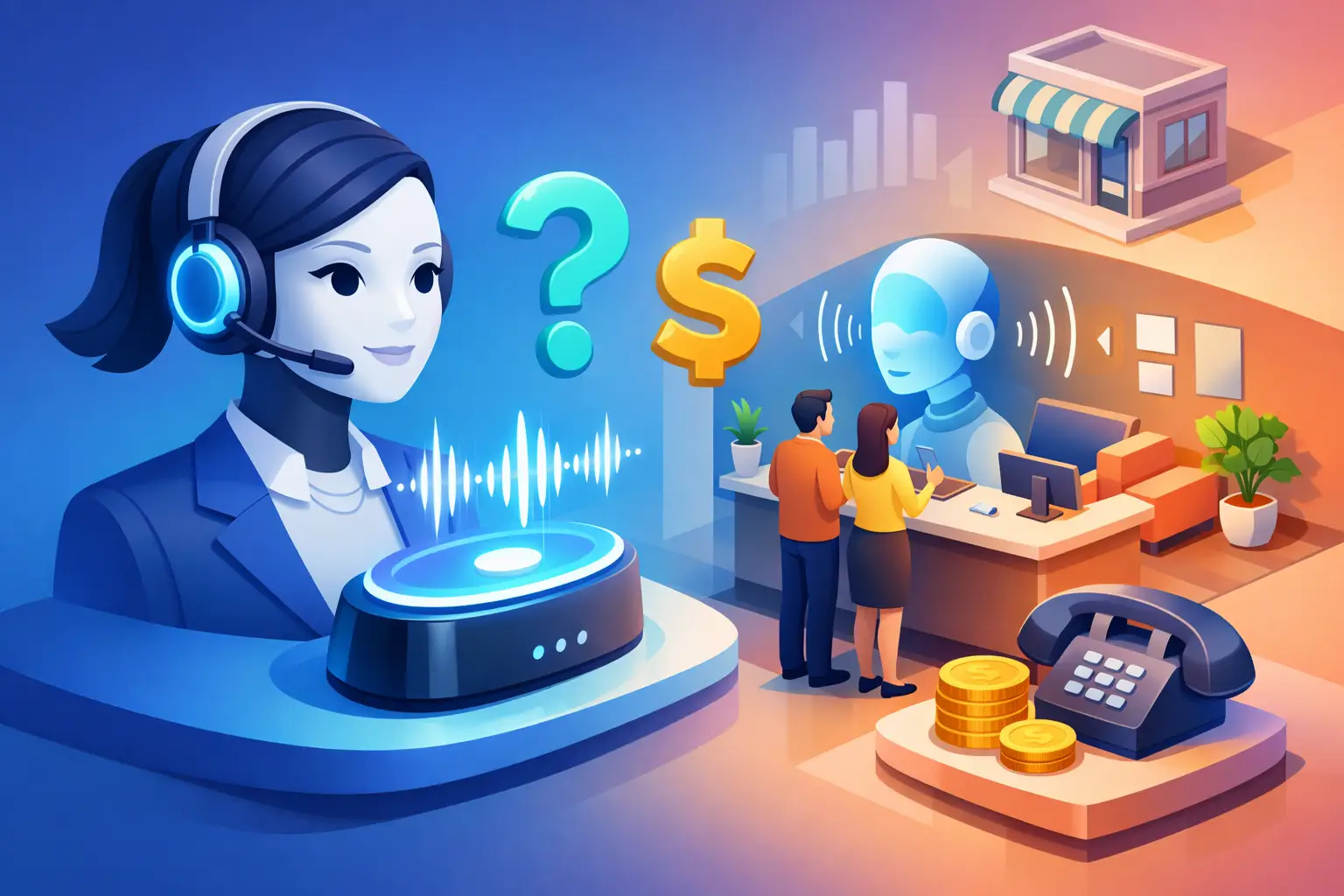
A missed call from a homeowner needing an urgent repair or a client trying to book a service is not just an interruption. It is often a customer choosing the next company that answers. An AI voice receptionist for small business gives local operators a practical way to respond immediately, capture the lead, and move the conversation toward a booking without adding another full-time phone line to payroll.
For service businesses, speed matters more than most marketing reports show. You can rank well on Google, run ads, and earn five-star reviews, but none of that helps if calls go unanswered while your team is with customers, on the road, or closed for the day.
Why missed calls cost more than you think
Many small businesses treat the phone as a background task. Someone answers when they can. A voicemail gets checked later. A text may be sent the next morning. That process works until call volume rises, staff get busy, or an urgent lead calls after hours.
The issue is not that your team is careless. It is that they have work to do. A garage technician cannot diagnose a vehicle and answer every incoming call. A spa receptionist cannot check in guests, process payments, and handle multiple booking questions at once. A home service owner cannot be on a ladder and return a new inquiry in under two minutes.
When callers cannot get a clear answer, they rarely wait around. They call the next local result. That means the money spent on your website, local SEO, Google Business Profile, ads, and reputation can leak out at the final step: the moment a prospect tries to contact you.
An AI receptionist is designed to close that gap. It answers according to your rules, gathers the right details, handles common questions, and routes urgent or high-value calls to a person when needed.
What an AI voice receptionist for small business actually does
This is not a generic recording that tells callers to leave a message. A properly configured AI voice receptionist can hold a natural, guided conversation based on your business information, services, availability, and lead-handling process.
For a local service business, that can mean answering calls 24/7, confirming the caller's location, asking what service they need, collecting contact details, and booking an appointment or service window. It can also answer straightforward questions about hours, service areas, pricing ranges, availability, or next steps.
The most useful outcome is not simply answering more calls. It is creating a complete lead record while interest is still high. Instead of a vague voicemail that says, “Call me back,” your team can receive the caller's name, phone number, requested service, preferred time, address or postal code where relevant, and notes from the conversation.
That information should flow directly into the same CRM your business uses for follow-up. If a caller does not book immediately, an automated text or email can confirm the inquiry and give your staff a clear reason to follow up. The phone, CRM, calendar, and follow-up system need to work as one process, not as separate tools that someone has to stitch together manually.
Where it delivers the biggest return
AI reception works best where call handling is directly connected to revenue. Businesses that rely on appointments, estimates, service dispatches, consultations, and urgent inquiries tend to see the clearest value.
A plumber may need the system to identify emergencies and escalate them to an on-call technician. A dental or wellness clinic may want it to offer appointment options and reduce front-desk interruptions. A coaching business may use it to qualify prospects before placing them on a consultation calendar. An auto shop may use it to collect vehicle details and service requirements before a booking request reaches the team.
It is also useful for businesses that receive calls outside regular hours. Search traffic does not stop at 5 p.m. In competitive markets across Barrie, Newmarket, Aurora, and Vaughan, being the business that answers first can be a meaningful advantage, especially for high-intent service searches.
The system is not a replacement for every human conversation. It should handle repeatable front-line tasks and give your people more time for complicated questions, active customers, and sales conversations that require judgement.
Set it up around the calls you want to win
The quality of an AI receptionist depends on the setup. Giving it a business name and a general service list is not enough. If the goal is more booked customers, the call flow needs to reflect how your business actually qualifies and converts leads.
Start with your highest-value call types
Identify the calls that deserve immediate action. These may include emergency requests, new estimates, first-time appointments, quote follow-ups, or inquiries for your most profitable service. Define what information is needed before the call can be booked, assigned, or escalated.
For example, a home service company may need service type, property location, urgency, and preferred visit time. A clinic may need the requested treatment, new or existing patient status, and appointment preference. Asking the right questions once is better than making staff call back to collect missing details.
Give the system clear boundaries
Your AI should know what it can answer, what it should avoid, and when it must hand off. Do not let it invent pricing, make guarantees, provide medical or legal guidance, or resolve sensitive complaints without a person involved.
Set escalation rules for urgent requests, angry callers, complex jobs, repeat customers with active issues, and high-value opportunities. The goal is controlled automation, not automation for its own sake.
Connect booking and follow-up
A conversation only creates value when it leads somewhere. If the AI can offer real appointment availability, the experience is faster for the caller and cleaner for your team. If it cannot book directly, it should create a structured lead and trigger an immediate confirmation message.
This is where many businesses lose momentum. They add a call-answering tool but leave the booking calendar, CRM, and follow-up process disconnected. The lead gets captured, then sits in an inbox. A managed system should make sure the next action happens automatically and is visible to the right person.
Review real calls and improve the script
Your first setup will not be perfect. Review call transcripts and outcomes during the first few weeks. Look for questions the system could not answer, points where callers drop off, booking objections, and calls that should have been escalated sooner.
Small adjustments can have a large effect. Changing one qualification question, adding a clearer explanation of service areas, or revising the booking prompt may improve conversion without increasing your marketing spend.
The trade-offs to consider before you deploy it
An AI receptionist is a strong fit for many businesses, but it is not automatically the right answer for every call flow. If every inquiry requires a detailed technical diagnosis or highly personal consultation, a human-first model may still be necessary. In that case, AI can capture details, set expectations, and route calls rather than trying to complete the entire conversation.
There is also a brand consideration. Callers should know they are speaking with an automated assistant when appropriate, and the voice should sound professional and aligned with your business. A rushed, generic script can feel worse than voicemail. A well-built assistant that is clear, helpful, and able to reach a person when needed can improve the customer experience.
Privacy and consent matter as well. If calls are recorded or transcribed, make sure callers receive the required notice and that your process is appropriate for the information you collect. Collect only what is necessary to handle the request, and make sure access to lead records is controlled.
Measure bookings, not just answered calls
The most flattering metric is call answer rate, but it is not the metric that pays the bills. Track how many calls become qualified leads, booked appointments, estimates, completed jobs, and revenue.
Also monitor response time for leads that need human follow-up, the percentage of calls resolved without staff intervention, after-hours leads captured, and missed-call volume before and after implementation. These numbers show whether the system is reducing workload while protecting opportunities.
For a small business, the financial case is often simple. If an AI receptionist recovers even a few leads per month that would otherwise go to voicemail, it can pay for itself quickly. The value rises when it is connected to local visibility, review generation, CRM automation, and consistent follow-up rather than operated as a standalone tool.
The best phone system does not try to sound clever. It makes it easy for a ready-to-buy customer to get help, book the next step, and hear from the right person without delay. Build your call handling around that standard, and every marketing dollar has a better chance of turning into a real customer.
Allan Heath
Founder of Ignite Leads. Helps local businesses grow through SEO, lead generation, and marketing automation — simplifying the playbook so owners can focus on the work.