Article
Barrie SEO That Brings More Calls and Bookings
July 25, 2026 • 7 min read

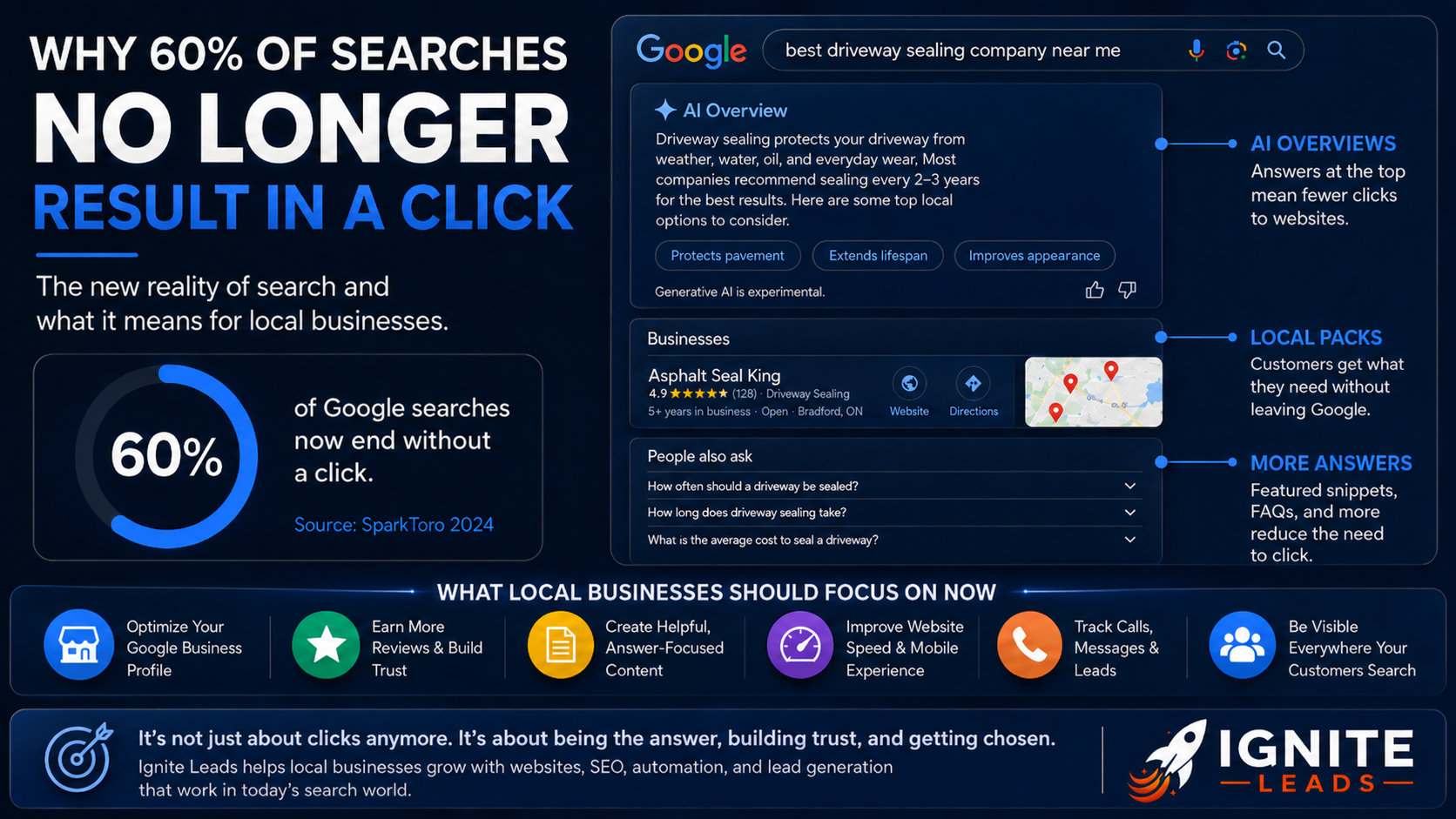
When a homeowner in Barrie searches for “garage door repair near me” at 8:15 a.m., the business that appears first and responds fastest has a serious advantage. Barrie SEO is not about collecting vanity rankings for broad keywords. It is about putting your service business in front of nearby buyers, then making sure those buyers can call, book, or request a quote without delay.
For local operators, Google visibility is only one part of the job. A ranking that produces a form submission nobody answers until tomorrow is not a lead-generation system. The real goal is a connected process: get found, build trust, capture the enquiry, and follow up while the customer is still ready to act.
What Barrie SEO Should Actually Deliver
A useful local SEO program produces outcomes that matter to an owner: more calls, more quote requests, more appointments, and a stronger pipeline from the areas you serve. That means the work must focus on local purchase intent, not traffic for its own sake.
Someone searching “how to fix a leaking tap” may be researching. Someone searching “emergency plumber Barrie” needs help now. Both searches have value, but they require different pages, offers, and follow-up. Service businesses usually get their fastest return by prioritizing the searches closest to a phone call or booking.
Strong local visibility also builds credibility before a prospect contacts you. Your Google Business Profile, review rating, website, service details, and recent activity all shape the decision. If a competitor has clearer information, newer reviews, and an easier way to request service, being one position higher may not be enough.
The Local Search System Behind Better Rankings
SEO works best when it is treated as an operating system rather than a one-time website project. Google needs clear, reliable signals about what you do, where you do it, and why customers should choose you. Prospects need a fast path from search to conversation.
Start with the Google Business Profile
For many service businesses, the map pack drives the most valuable local calls. Your Google Business Profile needs accurate categories, service areas, hours, contact details, photos, and service descriptions. It also needs ongoing attention.
A neglected profile sends mixed signals. Old hours, unanswered questions, weak photos, and a long gap between reviews can make an established business look inactive. Regular updates do not replace a sound SEO foundation, but they support trust and give potential customers more reasons to choose you.
Do not chase every available category or add locations where you do not genuinely serve customers. Local relevance has to be credible. A Barrie-based business serving Newmarket or Vaughan can target those markets when it has the operational capacity, dedicated service content, and customer experience to support them.
Build Pages for Services, Not Just Your Brand Name
A homepage alone rarely gives Google enough context to rank for a range of valuable services. A garage should have clear pages for brake repair, oil changes, diagnostics, seasonal tire service, and other profitable work. A spa should explain the treatments customers book. A home-service company should make each core job easy to find and understand.
Each page should answer practical questions quickly: what the service includes, who it is for, common problems it solves, what happens next, and how to book. Add local context where it is genuinely useful, but do not stuff “Barrie” into every sentence. Customers can spot awkward copy immediately, and it does not make the offer more convincing.
The page must also convert. Use clear calls to action, visible phone numbers, simple forms, and a booking option where appropriate. If you offer emergency work, after-hours support, financing, or same-day appointments, make that information impossible to miss.
Make Technical Basics Non-Negotiable
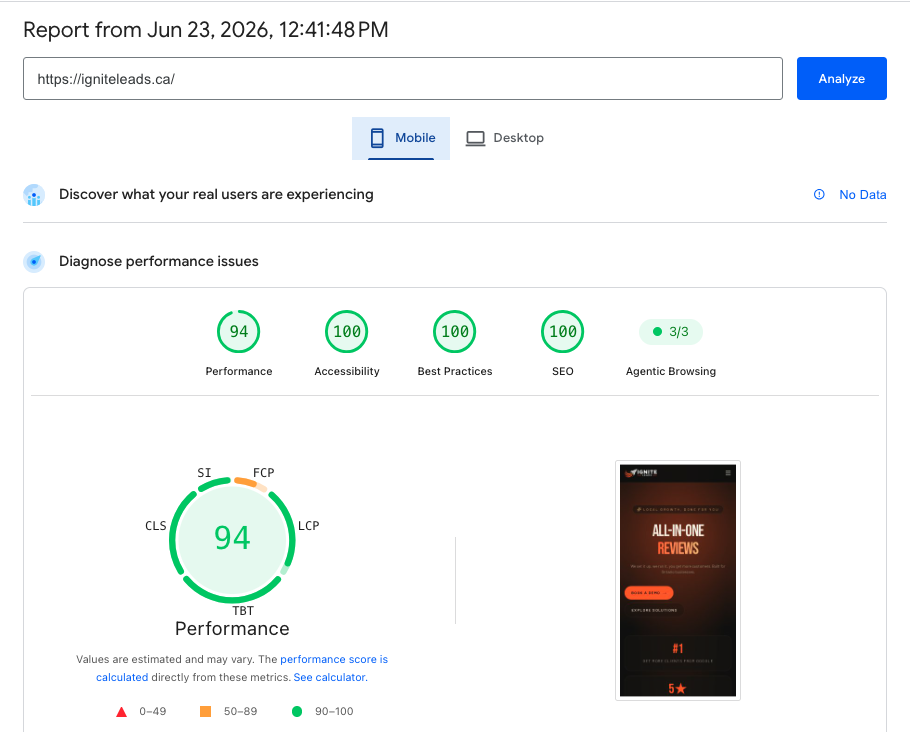
A slow, confusing website wastes paid and organic traffic alike. Local customers often search on a phone while standing in a driveway, office, or living room. They will not wait for oversized images to load or hunt through a cluttered menu for a number.
Technical SEO includes fast page performance, mobile usability, logical page structure, crawlable content, secure browsing, and clean tracking. It is not glamorous, but it affects whether Google can understand the site and whether a prospect stays long enough to contact you.
It also protects your marketing investment. If you are running ads, email outreach, or social campaigns, every visitor should land on a page built to handle that demand. Sending all traffic to a generic homepage usually creates unnecessary drop-off.
Reviews Are a Ranking Signal and a Sales Tool
Local reviews influence two decisions at once: Google’s confidence in your business and a customer’s willingness to contact you. A strong review profile does not mean asking for dozens of generic five-star ratings in one week. It means creating a consistent process that requests feedback after a real customer interaction.
Timing matters. Ask when the job is complete, the vehicle is ready, the treatment is fresh, or the customer has confirmed they are happy. Make the request simple and mobile-friendly. Then respond to reviews, including the difficult ones, with a calm and professional tone.
The quality of review content matters too. When customers naturally mention the service, staff experience, speed, or local area, future buyers gain useful context. You should never script fake feedback, but you can make it easier for satisfied customers to share an honest experience.
Businesses with uneven review collection often have a service problem only on paper. They do great work, but no system asks customers to document it. That leaves the digital proof to competitors who are simply more organized.
Rankings Do Not Matter If Leads Sit Unanswered
This is where many Barrie businesses lose work they already paid to generate. A form comes in after hours. A voicemail is missed during a busy job. An office manager plans to call back later, but the customer has already contacted three other companies.
Speed-to-lead changes the result. An immediate text confirmation, an automated acknowledgement, and a fast call back can keep the conversation alive. For appointment-based businesses, automated reminders reduce no-shows and prevent staff from spending hours chasing confirmations.
AI chat and voice reception can help cover the gaps, particularly when your team is on-site, with clients, or closed for the day. The right setup should answer common questions, capture the enquiry details, route urgent requests properly, and hand qualified prospects to a person. Automation should support a human sales process, not trap customers in a frustrating loop.
A practical lead workflow should include four actions:
- Confirm the enquiry immediately so the customer knows they have reached the right business.
- Route the lead to the right person, team, or location without manual sorting.
- Follow up through call, text, or email until there is a clear outcome.
- Track booked jobs and revenue, not only clicks or form fills.
Without this layer, SEO can increase enquiries while the business still feels inconsistent. The problem is not always lead volume. It is often lead handling.
How to Judge an SEO Provider in Barrie
Be cautious of anyone promising a guaranteed number-one ranking. Search results change by service, location, competition, device, personalization, and the customer’s exact query. A provider can control the quality and consistency of the work, but not Google’s final placement on every search.
Instead, ask what they will build and manage. You should get a direct answer on Google Business Profile optimization, service pages, technical fixes, review generation, reporting, conversion tracking, and lead follow-up. If the work is vague, the reporting will probably be vague too.
Also ask how success will be measured. Ranking reports have a place, but they are not the finish line. A useful report connects visibility to calls, booked appointments, quote requests, response time, and closed business. It should show what improved, what needs attention, and what the next operational move is.
The right approach depends on your market. A new business may need foundational website, profile, and review work before it can compete. An established company with plenty of traffic but few bookings may need conversion improvements and faster follow-up first. A multi-location operator may need tighter location management and consistent reporting across every branch.
Put Your Local Marketing Under One Roof
Fragmented tools create fragmented results. One vendor runs the website, another handles ads, someone else asks for reviews, and leads arrive in an inbox nobody owns. The owner becomes the person connecting the pieces, even though that is exactly the job they were trying to avoid.
A coordinated system gives each part of marketing a clear role. Your website explains the offer and converts visitors. Local SEO creates durable visibility. Reviews build proof. CRM automation protects follow-up. AI-assisted reception helps catch demand outside normal working hours. Reporting shows whether those activities are creating booked customers.
That is the model Ignite Leads applies for service businesses that want more control without more marketing admin. The priority is not adding software for the sake of it. It is making sure every enquiry gets a faster, more reliable path to your team.
The next customer searching for your service will choose somebody. Make sure your business is easy to find, easy to trust, and ready to respond before the call goes to a competitor.
Allan Heath
Founder of Ignite Leads. Helps local businesses grow through SEO, lead generation, and marketing automation — simplifying the playbook so owners can focus on the work.