Article
Capture After Hours Enquiries Before They Go Cold
September 26, 2026 • 7 min read
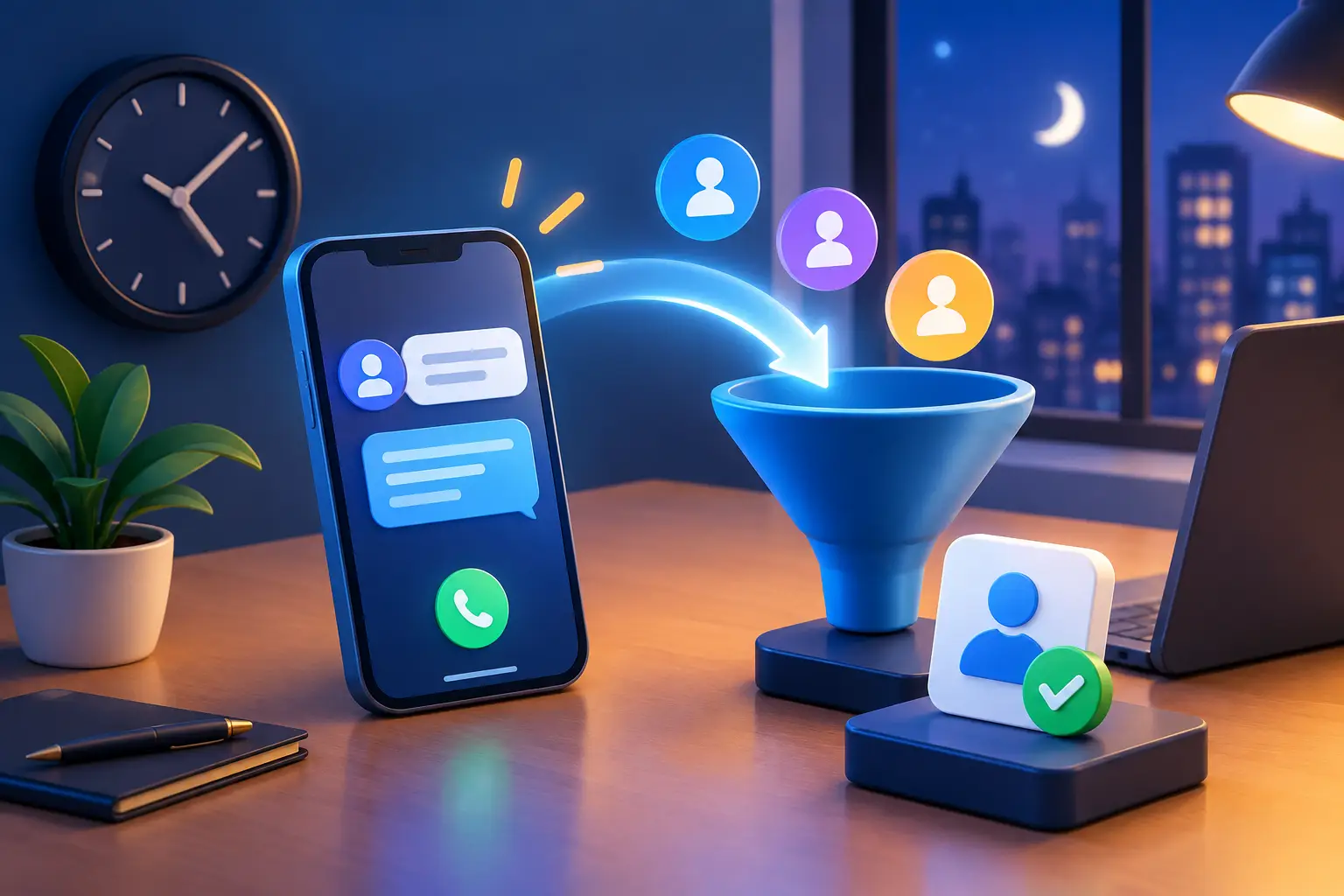
A homeowner with a leaking pipe at 8:47 p.m. is not planning a comparison-shopping session. They want an answer, a next step, and confidence that someone will show up. If your phone rings out, your web form sits unread until morning, or your inbox receives a reply three hours later, a competitor often gets the job. The ability to capture after hours enquiries is not a nice extra for a local service business. It is part of the sales process.
For businesses in Barrie, Newmarket, Aurora, and Vaughan, the opportunity is especially clear. Customers search when the need happens, not when your office is staffed. The businesses that respond first do not just collect more leads. They book more of the high-intent calls they already paid to generate.
Why after-hours leads disappear so quickly
An after-hours enquiry usually arrives at the point of urgency. It may be a customer searching for an emergency repair, a parent trying to book a lesson after work, or someone finally dealing with the auto issue they noticed on the drive home. They are active, motivated, and often contacting more than one provider.
The common mistake is treating these enquiries as a morning task. By then, the customer may have booked elsewhere, solved the problem, or lost interest. A good website, local SEO campaign, or paid ad can put your business in front of the right person. It cannot compensate for a slow response once that person is ready to talk.
This is why speed-to-lead matters. A fast acknowledgement keeps the conversation with you. A useful first response moves the customer toward a booking. A clear handoff ensures your team can pick up the lead without hunting through missed-call logs, text threads, and inboxes.
The real cost of a missed call
Most owners notice a missed call. Fewer see the chain reaction behind it. The call may have come from a Google Business Profile, a local search result, a referral, or a paid campaign. You invested time and money to create that demand, then lost it at the final step because nobody was available.
It is also easy to underestimate how many leads arrive outside normal hours. Home service customers commonly search early, late, and on weekends. Spas and coaching businesses often receive booking requests after clients finish work. Garages may get calls after a breakdown or when someone has time to deal with a vehicle problem.
You do not need a 24/7 office to compete. You need a system that responds immediately, gathers the right information, and gives the customer a credible next step.
Build an after-hours enquiry system, not another inbox
The strongest setup is simple from the customer’s perspective. They call, message, submit a form, or use website chat. They receive a prompt response, answer a few relevant questions, and either book an available slot or receive a confirmed follow-up window.
Behind the scenes, every conversation should enter one central CRM. That record needs the customer’s name, contact details, service requested, location, preferred time, source, and conversation history. When your team starts the next day, they should see a prioritized pipeline rather than a pile of disconnected notifications.
Answer calls with AI voice reception
An AI voice receptionist can answer routine calls after hours, identify the reason for the call, collect job details, and route urgent situations according to rules you set. For a plumbing company, that might mean identifying active leaks and escalating true emergencies. For a clinic or spa, it may mean answering service questions and offering the next available booking option.
The goal is not to pretend that automation is a human team member. The goal is to ensure callers are acknowledged and guided when a human cannot answer. The script should be clear, natural, and specific to your services. Generic prompts frustrate people. A reception flow that understands the difference between an emergency repair, a quote request, and a scheduling question creates a much better experience.
There is a trade-off. AI reception is excellent for first response, qualification, and simple bookings. It should not be left to make promises about pricing, availability, insurance coverage, or technical diagnosis when those answers require staff judgment. Set boundaries, escalation rules, and approved language before it goes live.
Use website chat to catch visitors before they leave
Many customers would rather type than call, particularly late at night. AI website chat gives them an immediate way to ask questions, request a quote, or book a consultation. It can qualify the enquiry by asking a short sequence of practical questions, then create a contact record and notify the right person.
Keep the conversation focused. Ask for only the details needed to take action. For example, a home service company may need the service type, postal code, urgency, and preferred callback time. A coach may need the program of interest and booking preference. Long chat questionnaires reduce completion rates.
The chat should also know when to stop. If a question is complex, the right answer is often: "We have your details and will have a specialist contact you by 9 a.m." That is better than an inaccurate answer or an endless automated exchange.
Reply to forms and missed calls in minutes
A form submission should trigger an immediate text or email confirmation, not an internal notification that waits for someone to notice it. The message should confirm receipt, set expectations, and make it easy for the prospect to take the next step.
A practical response might say that the team has received the request, will call at a stated time, and can be reached by text if the issue is urgent. If your calendar supports it, offer a booking link or appointment options directly in the reply. The customer gets certainty, and your staff gets a cleaner schedule.
Missed calls deserve the same treatment. An automated text sent within a minute can recover a large portion of callers who would otherwise move on. Keep it direct: acknowledge the missed call, ask how you can help, and offer a callback or booking option. Do not send a long promotional message to someone trying to solve a problem.
Make sure follow-up continues after the first reply
An instant acknowledgement alone does not create revenue. The next step is a structured follow-up sequence for leads that do not book immediately. This should include a timely staff callback, a reminder message, and a final check-in where appropriate.
The timing depends on your service. Emergency work needs immediate escalation. Quote-based services may require follow-up over several days. Higher-consideration services, such as coaching or elective treatments, may need more nurturing before a decision. The key is that the process is defined rather than dependent on someone remembering.
Your CRM should assign ownership for every lead. If a person requests a callback at 8 a.m., one team member should be responsible for making it. If the lead is unresponsive, the record should show the attempts made and the next action due. That accountability prevents good enquiries from vanishing between shifts.
Measure the numbers that expose leakage
Do not judge your after-hours process by how many notifications you receive. Track what happens after the enquiry arrives. Start with after-hours call volume, missed-call recovery rate, first-response time, booked appointments, and closed revenue.
Also track lead source. If Google Maps produces the most after-hours calls, protect that channel with the fastest response path. If website chat produces qualified weekend enquiries, ensure those chats reach the same CRM and follow-up workflow as phone calls. Separate tools make reporting harder and create gaps customers can feel.
Review call recordings and chat transcripts regularly. You will find questions your automation cannot answer, services customers misunderstand, and points where people abandon the conversation. Those findings improve your script, website copy, intake process, and team training.
Keep the setup useful, not overbuilt
The best system is not the one with the most features. It is the one your staff can trust every day. Start with call answering, missed-call text-back, website chat, CRM capture, and a defined morning follow-up process. Add more automation only when it supports a real operational need.
This is where a managed growth system makes sense for busy owners. Ignite Leads combines the website, local visibility, AI-assisted reception, CRM automation, and follow-up process so leads do not fall through the cracks between separate providers. One connected system is easier to operate, measure, and improve.
Your customers are already looking for help after your office closes. Give them a fast, clear path to a real next step, and your next business day starts with booked conversations instead of missed opportunities.
Allan Heath
Founder of Ignite Leads. Helps local businesses grow through SEO, lead generation, and marketing automation — simplifying the playbook so owners can focus on the work.