Article
CRM Follow Up Automation for Leads That Book
July 11, 2026 • 7 min read
A new web form, missed call, or Google Business Profile message is not a lead until someone responds. For a local service business, the difference between a booked job and a lost opportunity is often measured in minutes. CRM follow up automation for leads gives every enquiry a fast, consistent response without requiring your team to watch a phone all day.
That matters when you are on-site, serving a client, managing staff, or driving between appointments. A prospect who does not hear back quickly will usually call the next business in the search results. The right system keeps the conversation moving until they book, opt out, or clearly are not a fit.
Why leads go cold before your team gets a chance
Most service businesses do not lose leads because their work is poor. They lose them because the handoff between marketing and follow-up is unreliable. A form notification lands in an inbox. A voicemail gets checked after a busy afternoon. A receptionist writes down a number but does not log it. By the time someone calls back, the customer has already made another choice.
More advertising will not fix that problem. More traffic simply creates more leads for an inconsistent process to lose.
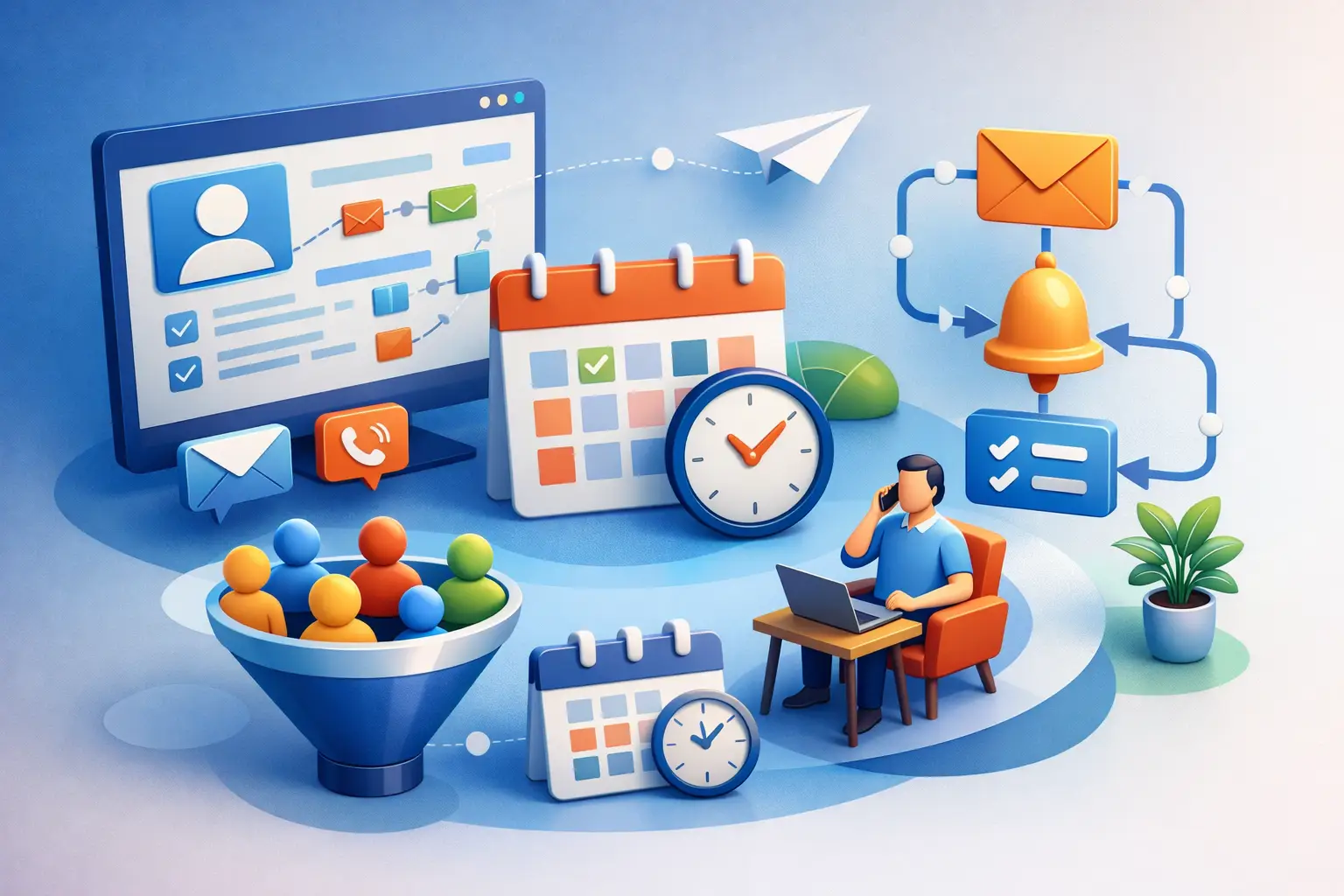
A CRM puts every enquiry in one place. Automation adds the next action: an immediate text, an email confirmation, a task for a team member, or an AI-assisted response that can answer basic questions and request an appointment. The result is not less personal service. It is a faster start to the personal service your customers expect.
What CRM follow up automation for leads should do
A useful system is built around your actual sales process, not a pile of generic messages. A garage needs to capture vehicle details and booking availability. A spa may need to route questions about services, packages, and appointments. A home service company may need a postal code, job type, photos, and an estimate request before a technician can take over.
The workflow should handle five jobs well:
- Capture leads from your website, phone calls, chat, social messages, ads, and Google Business Profile.
- Respond immediately with a clear acknowledgement and a useful next step.
- Notify the right person based on service, location, or lead value.
- Continue follow-up when the prospect has not replied.
- Track outcomes so you can see which sources create booked customers, not just enquiries.
Speed is the first priority, but relevance is close behind. An automated message that says, “Thanks, we received your request. What service do you need and what is the best time to reach you?” is far more effective than a vague reply that asks the customer to wait.
Build the workflow around response time
The first message should go out as soon as a lead is captured. In many cases, SMS works best because it is seen quickly and makes it easy for the customer to answer. Email still has a role, especially for quote details, confirmations, and information that needs a longer format. The best approach is usually both, with each channel doing a specific job.
Start with a short confirmation. Let the lead know their request was received, identify your business, and set expectations. If your team can respond right away, say so. If not, give a realistic window. Avoid promising an instant call if technicians are often unavailable for several hours.
Next, ask for the one piece of information that moves the sale forward. For a landscaper, that may be the property address. For a coach, it may be the preferred day for a discovery call. For an auto shop, it may be the make, model, and issue. Every extra question creates friction, so collect the essentials first and get the rest during the conversation.
Then create an internal alert. The assigned staff member should know where the lead came from, what they asked for, and whether they have replied to the automated message. They should not have to search through five apps or ask someone to forward a screenshot.
Use follow-up that feels persistent, not pushy
One response is rarely enough. People enquire while working, commuting, or comparing options. They may mean to reply and simply forget. A practical sequence gives them a few clear opportunities to continue the conversation.
For many local businesses, a good starting point is an immediate text and email, a follow-up the next business day, another message two or three days later, and a final check-in after about a week. The timing depends on the service. Emergency plumbing leads require immediate phone contact and very short follow-up windows. A renovation project or coaching package may need a longer sequence because the buying decision takes more time.
Each message should offer a reason to respond. Do not send four versions of “Just following up.” Confirm an available appointment window, offer to prepare an estimate, ask whether the job is still needed, or make it simple to call back. Keep the language direct. Local customers do not need a marketing campaign when they are trying to fix a problem or book a service.
You also need stop rules. Once someone books, the sales sequence must end and the appointment workflow should begin. If they opt out, their preference must be respected. If the lead is unqualified, move them out of the active pipeline rather than continuing to message them. Automation should reduce noise for your staff and your prospects.
Do not automate the wrong parts of the conversation
Automation is excellent for speed, reminders, routing, and routine questions. It is not a replacement for judgement. Complex quotes, upset customers, unusual service requests, and high-value opportunities need a human response quickly.
The most effective setup uses automation to identify intent and hand off at the right moment. An AI chat or voice receptionist can collect basic details after hours, answer approved questions, and notify your team. A real team member can then take over with context instead of starting from zero.
This balance matters in service businesses where trust drives the sale. Customers want fast answers, but they also want confidence that a capable person understands their situation. Scripts should sound like your business, use Canadian spelling where appropriate, and reflect how your team actually works.
Connect follow-up to the full customer journey
A lead management system becomes more valuable when it connects to the rest of your marketing. Website forms, calls from local search, review requests, appointment reminders, and reactivation campaigns should all feed into the same customer record.
That gives you a cleaner picture of performance. You can see whether your Google visibility is producing enquiries, how quickly your team responds, which services close most often, and where prospects drop off. If leads from one campaign consistently go unanswered, the problem is visible. If missed calls are generating booked work after an automatic text-back, you can measure that too.
For businesses in Barrie, Newmarket, Aurora, and Vaughan, this is especially useful in competitive local categories. Ranking well gets you considered. Fast, organized follow-up helps you win the customer while competing businesses are still returning voicemail.
The metrics that tell you whether it is working
Do not judge CRM automation by how many messages it sends. Judge it by whether it creates more completed conversations and booked work.
Track first-response time, contact rate, appointment rate, quote-to-close rate, and lead source. If possible, also track no-shows, average job value, and how long it takes a new enquiry to become a customer. These numbers reveal whether your bottleneck is visibility, response speed, sales handling, or capacity.
There is a trade-off to manage. Aggressive follow-up may lift short-term response rates but can damage trust if messages are too frequent. A lighter sequence may suit a premium service where customers need more time. The right cadence depends on the urgency of the service, the value of the job, and how your customers prefer to communicate.
Make the system easy enough to use every day
The best CRM is not necessarily the one with the longest feature list. It is the one your staff will actually use. A clear pipeline, simple status labels, automatic reminders, and a single customer record are more valuable than complicated dashboards nobody checks.
At Ignite Leads, the goal is to connect the pieces that affect booked customers: local visibility, lead capture, response automation, and ongoing follow-up. When these functions are managed as one system, owners spend less time chasing notifications and more time delivering the service they sold.
Your next lead should not depend on whether someone happens to see an email at the right time. Build a follow-up process that responds immediately, keeps the right conversations alive, and gives your team a clear reason to act.
Allan Heath
Founder of Ignite Leads. Helps local businesses grow through SEO, lead generation, and marketing automation — simplifying the playbook so owners can focus on the work.