Article
Google Business Profile Optimization That Drives Calls
August 9, 2026 • 7 min read

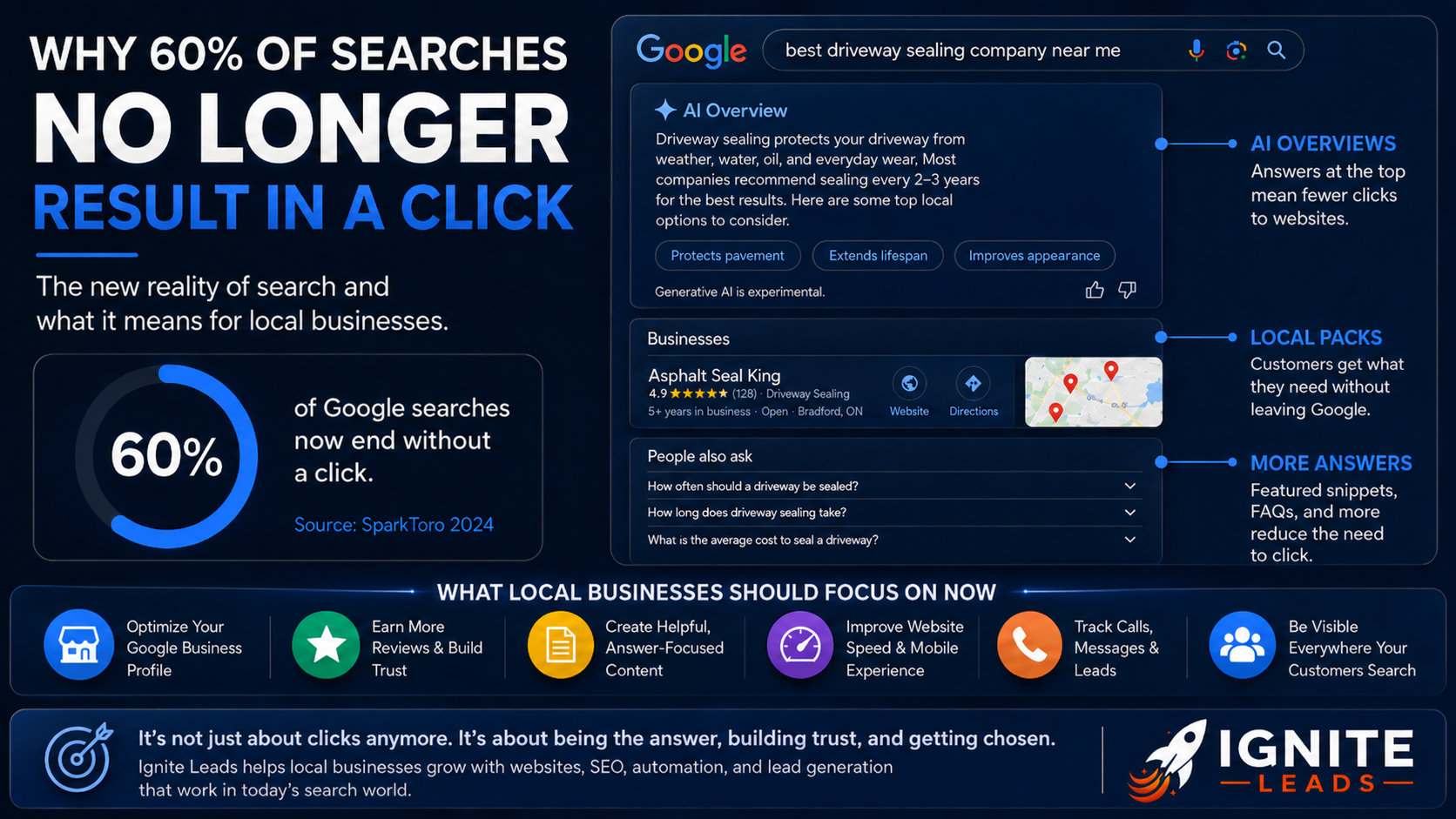
A homeowner in Barrie searches for an emergency plumber at 8:15 p.m. They do not browse ten websites or read a marketing brochure. They look at the businesses Google puts in front of them, compare ratings, hours, photos and response signals, then call one. Google Business Profile optimization is the work that helps make sure your business is the obvious choice at that moment.
For service businesses, your Google profile is not a side project. It is a lead-generation asset sitting directly between local search demand and your phone line. If its information is weak, outdated or unmanaged, you lose calls to competitors who may not actually do better work. They simply make it easier for customers to choose them.
What Google Business Profile optimization actually does
A Google Business Profile helps your company appear across Google Search and Maps when people look for local services. Optimization means setting up and maintaining the profile so Google can understand what you do, where you serve and why your business is relevant for a search.
That includes the obvious details: your business name, category, service area, phone number, hours and website. But the real performance difference usually comes from the supporting signals around those basics. Recent reviews, accurate services, useful photos, complete descriptions, prompt answers and consistent business information all affect customer confidence. Some also help Google determine whether your company deserves visibility for a local search.
This is not a one-time setup task. A garage that changes its seasonal hours, a spa adding a new treatment or a home service company expanding into Aurora needs its profile to reflect reality. The more accurate your profile is, the less friction stands between a local search and a booked customer.
Start with the information customers use to make a decision
Your profile needs to be complete, but it also needs to be commercially useful. Filling fields with vague marketing language does not help the customer or Google. Build every section around the questions someone asks before calling.
Choose categories with intent in mind
Your primary category carries significant weight. It should describe the core service you want to be known for, not a broad label that sounds impressive. A business focused on furnace repairs should not lead with a generic category just because it also installs equipment. A massage clinic should be specific about the type of business it operates.
Secondary categories can add context, but do not add every category that loosely applies. Relevance beats volume. Too many disconnected categories create a confused signal and can attract the wrong type of enquiry.
Make service areas accurate, not inflated
Service-area businesses should define the towns and cities they genuinely serve. Adding every municipality across the GTA may look ambitious, but it does not create real local relevance. It can also bring leads you cannot serve profitably or quickly.
For businesses serving Barrie, Newmarket, Aurora or Vaughan, use those areas when they are part of your normal operating range. Then support that geographic coverage with clear service pages, reviews from real customers and operations that can actually respond to calls from those locations.
Use services to remove uncertainty
The services section is often underused. Add specific services customers search for and use plain names. A customer is more likely to search "drain cleaning," "brake repair," "laser hair removal" or "roof leak repair" than a branded internal service name.
Where appropriate, add concise descriptions that explain scope and outcomes. This is not the place for keyword stuffing. It is a chance to show customers that you handle their exact problem before they call.
Reviews are a ranking signal and a sales tool
Reviews influence visibility, but their bigger impact is conversion. A customer comparing two similar businesses often chooses the one with more recent, credible feedback and thoughtful responses.
The goal is not to chase a perfect score through pressure or shortcuts. It is to build a reliable review process into your customer journey. Ask when the job is complete and the customer has received value. For a contractor, that may be after the final walkthrough. For a salon or clinic, it may be shortly after an appointment. For an auto shop, it may be after the vehicle is back on the road.
Timing matters because satisfied customers are busy. A simple automated request sent soon after the service has a better chance of being completed than a vague request weeks later. Your team should not have to remember every ask manually.
Respond to reviews consistently, including negative ones. Keep responses professional, specific and brief. Do not argue in public or disclose customer details. A calm response shows prospective customers that you take service issues seriously. It also gives your team a chance to move the actual resolution offline.
Review quality is not only about star ratings. Detailed comments mentioning the service, neighbourhood, staff experience or speed of work help future customers understand what to expect. The best way to earn those reviews is not to script them. It is to deliver a service experience worth describing.
Photos prove your business is active and credible
Many local profiles rely on a logo, a stock image and photos uploaded years ago. That is a missed opportunity. Real, current images give customers evidence that you are established, equipped and ready to serve them.
Use photos that answer practical questions: What does your storefront look like? What will the technician’s vehicle look like? Is the clinic clean and professional? What does finished work look like? Who will a customer meet?
For service businesses, before-and-after images can work well when they are honest, clear and relevant. A renovation company can show completed spaces. A detailing shop can show a cleaned interior. A landscaping company can show seasonal work. Avoid generic stock photography when possible. Customers can tell the difference.
Upload photos regularly instead of treating the gallery as a launch-day task. New activity supports trust, especially for businesses where customers need confidence before inviting someone into their home or committing to an appointment.
Google Business Profile optimization needs operational follow-up
A strong profile can generate more calls, messages and website visits. But visibility is only valuable if your business handles the lead quickly.
This is where many local businesses lose the return on their marketing. The phone rings while the owner is on a job. A web form arrives after hours. A customer sends a message and receives no answer until the next day. By then, they have booked with someone else.
Your profile strategy should connect to a response system. Calls need to be answered or captured. Missed callers need a fast callback or automated text response. Web leads need immediate confirmation and a defined follow-up sequence. Appointment requests need an easy path to booking.
There is a trade-off here. More exposure can create more leads, but it can also expose weak operations. If your team cannot handle extra demand, improve capacity and lead routing before pushing aggressively for more visibility. The right system does not just create enquiries. It helps turn qualified enquiries into scheduled work.
At Ignite Leads, this is why Google visibility, review generation, websites and AI-assisted lead handling are treated as connected parts of one system. A profile should not send a potential customer into a dead end. It should send them into a fast, managed follow-up process.
Avoid the shortcuts that put profiles at risk
Google rewards businesses that accurately represent themselves. Attempts to manipulate local rankings can lead to edits, suspensions or a profile that customers no longer trust.
Do not add keywords to your official business name unless they are genuinely part of the name used in the real world. Do not use virtual offices or fake addresses to rank in markets where you do not have a legitimate location. Do not buy reviews, offer incentives for positive reviews or ask staff and friends to create feedback that does not reflect a real customer experience.
Also avoid making changes constantly without a reason. Updating real business information is necessary. Rewriting categories, business names and locations every week in pursuit of rankings is not a strategy. It creates inconsistency and makes it harder to identify what is actually improving performance.
Measure calls, not just profile views
Profile views are useful, but they are not the outcome. Owners should care about calls, direction requests, website visits, appointment requests, form submissions and booked jobs.
Track which services produce the best leads, which areas generate profitable work and how quickly your team responds. If your profile receives plenty of activity but few booked customers, the issue may be the offer, website, call handling, pricing clarity or response time rather than ranking.
Google Business Profile optimization works best when it is reviewed monthly as part of your wider local marketing system. Check for incorrect edits, unanswered reviews, new photos, expired hours and service gaps. Then compare profile activity with actual lead and booking data.
A customer searching for help is already close to making a decision. Give them accurate information, current proof and a fast way to reach a real response. That is how a Google profile stops being an online listing and starts producing booked customers.
Allan Heath
Founder of Ignite Leads. Helps local businesses grow through SEO, lead generation, and marketing automation — simplifying the playbook so owners can focus on the work.