Article
Google My Business and SEO for More Local Calls
October 11, 2026 • 6 min read
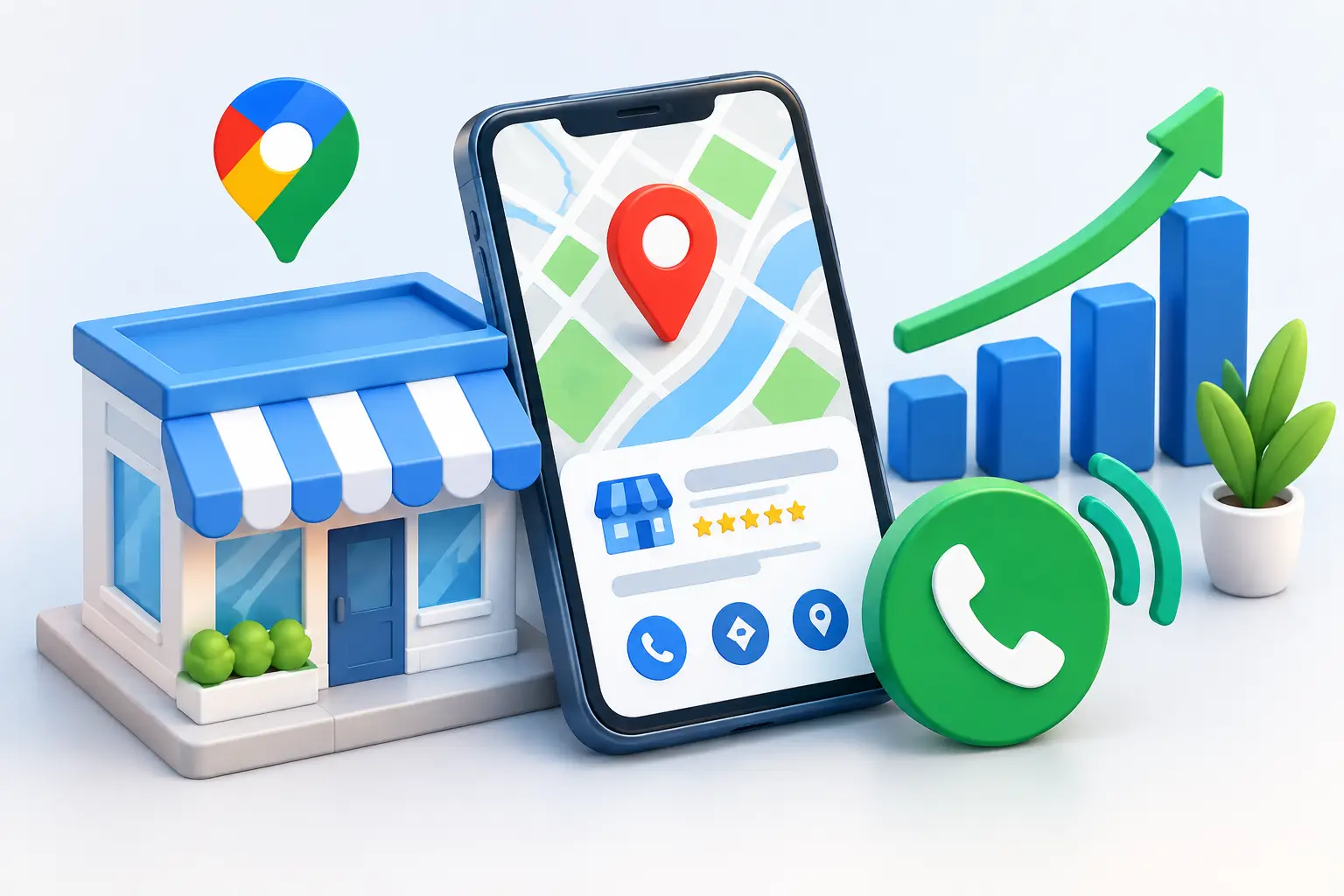
A homeowner searching for an emergency plumber in Barrie is not comparing marketing strategies. They are looking at the first few businesses Google shows, checking ratings, calling one, and moving on if nobody answers. That is where Google My Business and SEO earn their value. Done properly, they put your business in front of ready-to-book customers and give them a reason to choose you fast.
Google My Business is now called Google Business Profile, but the job is the same: make your business visible in Google Search and Maps. SEO gives that profile, your website, and your reputation the signals Google needs to rank you for the services and areas that matter.
For local service businesses, this is not a branding exercise. It is a customer acquisition system.
Why Google My Business and SEO Belong Together
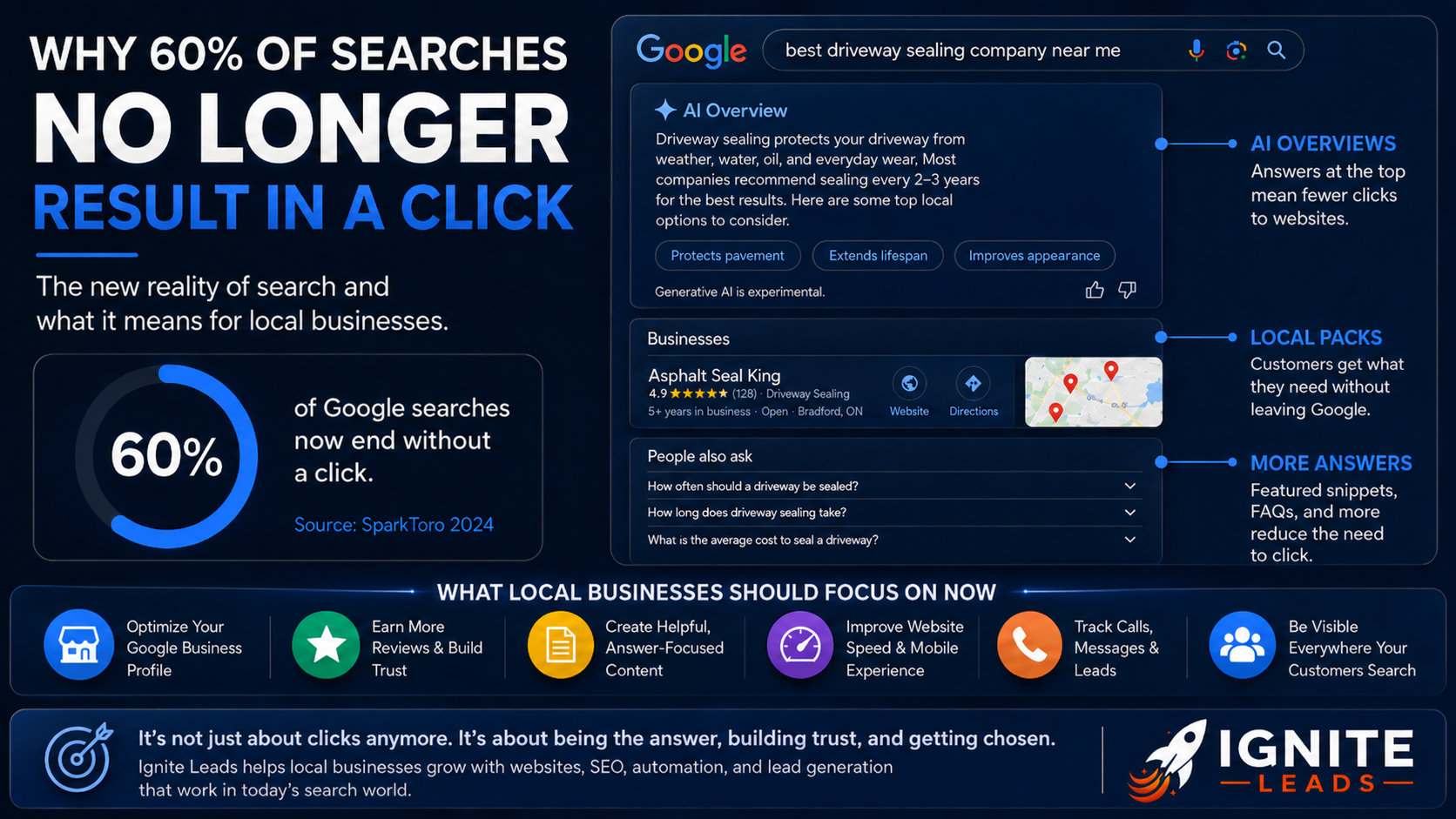
Your Google Business Profile can appear when someone searches for a service near them, looks on Google Maps, or searches a business category with a city name. It shows high-intent information at a glance: your phone number, hours, reviews, service area, photos, website, and directions.
But simply claiming a profile does not make it competitive. Google has to decide which businesses deserve visibility in the local map results. That decision is influenced by relevance, proximity, and prominence.
You cannot control where every customer is standing when they search. You can control how relevant your business looks for the search and how credible it appears compared with nearby competitors. That is where local SEO work matters.
A complete profile supports relevance. Accurate categories, service descriptions, services, photos, and business details help Google understand what you do. A well-built website reinforces those same services and locations with clear pages, useful information, and consistent business data. Reviews and local visibility build prominence - the proof that real people know and trust your company.
Treating these as separate jobs creates gaps. A profile may generate views but send visitors to a weak site. A strong website may never reach the map results because the profile is incomplete or poorly managed. And both can lose leads if calls sit unanswered for 20 minutes.
Set Up the Profile to Win the First Click
Start with accuracy, not decoration. Your business name should match the real-world name you use on signage, invoices, and customer communications. Do not add city names, services, or promotional phrases to force extra keywords into the name. It can trigger profile edits, suspensions, and lost visibility.
Choose the most specific primary category available. A garage, for example, should not settle for a vague category if a more accurate service category exists. Your primary category tells Google the core job you perform. Secondary categories can support related services, but adding every possible category makes the profile less focused.
Complete your phone number, website, hours, service area, appointment options, and attributes. If you serve customers at their location rather than a storefront, configure the profile as a service-area business. Do not publish a home address or virtual office that customers cannot visit during stated hours.
The services section deserves more attention than it usually gets. List the work customers actually search for, using clear language. An auto shop might list brake repair, oil changes, tire services, and diagnostics. A spa might list facials, laser treatments, and massage services. This helps match your business to local intent without stuffing awkward phrases into every field.
Photos are also operational proof. Use current images of your team, vehicles, completed work, exterior signage, reception area, and real results where appropriate. Stock photos are not useless, but they do little to prove that your business is active, local, and trustworthy.
Build Local SEO Around Revenue, Not Random Keywords
The mistake many businesses make is trying to rank for every service in every surrounding town with thin pages that say almost nothing. Google is better at detecting this than it used to be, and customers can see through it immediately.
Instead, build website pages around the services that produce the right jobs. Each core service should have a focused page that explains the problem, the process, what affects price, what customers can expect, and how to book. A visitor looking for furnace repair needs a different answer than someone looking for a new furnace installation.
Location pages can help when you genuinely serve an area and can make the page useful. For a business serving Newmarket, Aurora, Vaughan, and Barrie, that may mean including service coverage, response expectations, local proof, project examples, and clear booking information. It does not mean swapping one city name for another across copied pages.
Your website should make the next action obvious. Put a phone number and booking path where a mobile visitor can find them immediately. Explain what happens after they call. If someone submits a form after hours, set up an automated response and a real follow-up process. Ranking without response speed wastes the opportunity you paid to earn.
Local SEO also depends on consistency. Your business name, address or service-area details, phone number, hours, and website should align across the web. Inconsistent information creates friction for customers and uncertainty for search engines.
Reviews Are a Ranking Signal and a Conversion Tool
A high star rating is useful, but volume, recency, detail, and responses matter too. A business with 87 recent reviews that describe specific services will usually inspire more confidence than one with 12 reviews from three years ago.
The practical goal is not to ask every customer once a quarter. Build review requests into your normal workflow after a successful job, appointment, or completed transaction. The timing depends on the service. A detailing shop may ask at vehicle pickup. A coach may ask after a client reaches a meaningful milestone. A contractor may ask when the final walkthrough is complete.
Keep the request simple and personal. Do not offer incentives for positive reviews, filter unhappy customers away from public feedback, or use fake reviews. Those shortcuts can damage trust and put the profile at risk.
Respond to every review with a real answer. Thank positive reviewers by referencing the service when natural. Handle negative reviews calmly, without arguing or sharing private details. A thoughtful response is not only for the unhappy customer. It is for the next prospect deciding whether your business takes accountability seriously.
Track What Produces Calls and Bookings
Visibility metrics can look impressive while producing little revenue. Profile views, search impressions, and ranking reports are useful diagnostics, but they are not the finish line.
Track calls, website enquiries, appointment requests, booked jobs, close rate, and revenue by service where possible. Review missed calls and response times. If your profile generates calls but the front desk is overloaded, the problem is not SEO. It is lead handling.
This is where an integrated system outperforms disconnected tools. The website needs to capture intent, the profile needs to drive discovery, reviews need to build trust, and automation needs to confirm, route, and follow up on every lead. Ignite Leads manages these connected pieces so local operators do not have to chase rankings in one platform and missed enquiries in another.
There are trade-offs. A business in a highly competitive category may need more time, stronger review momentum, better service pages, and a larger content investment than a niche provider in a smaller market. A multi-location company needs clean location management, while a mobile business needs precise service-area settings. The right plan depends on competition, service mix, capacity, and how quickly your team can respond.
A Better Standard for Local Visibility
The question is not whether your Google profile is claimed. The question is whether it consistently turns nearby searches into conversations with qualified customers.
Audit the journey as if you were the customer: search for your main service, view the businesses that appear, compare your profile, call your number, submit an enquiry, and see how long it takes to hear back. The weak point you find is often more valuable than another month of vague marketing activity.
Fix that point, keep collecting genuine proof, and make it easy for customers to choose you when they are ready. Local search rewards businesses that are clear, credible, and prepared to respond.
Allan Heath
Founder of Ignite Leads. Helps local businesses grow through SEO, lead generation, and marketing automation — simplifying the playbook so owners can focus on the work.