Article
How Local AEO Gets Your Business Chosen by AI
October 2, 2026 • 7 min read
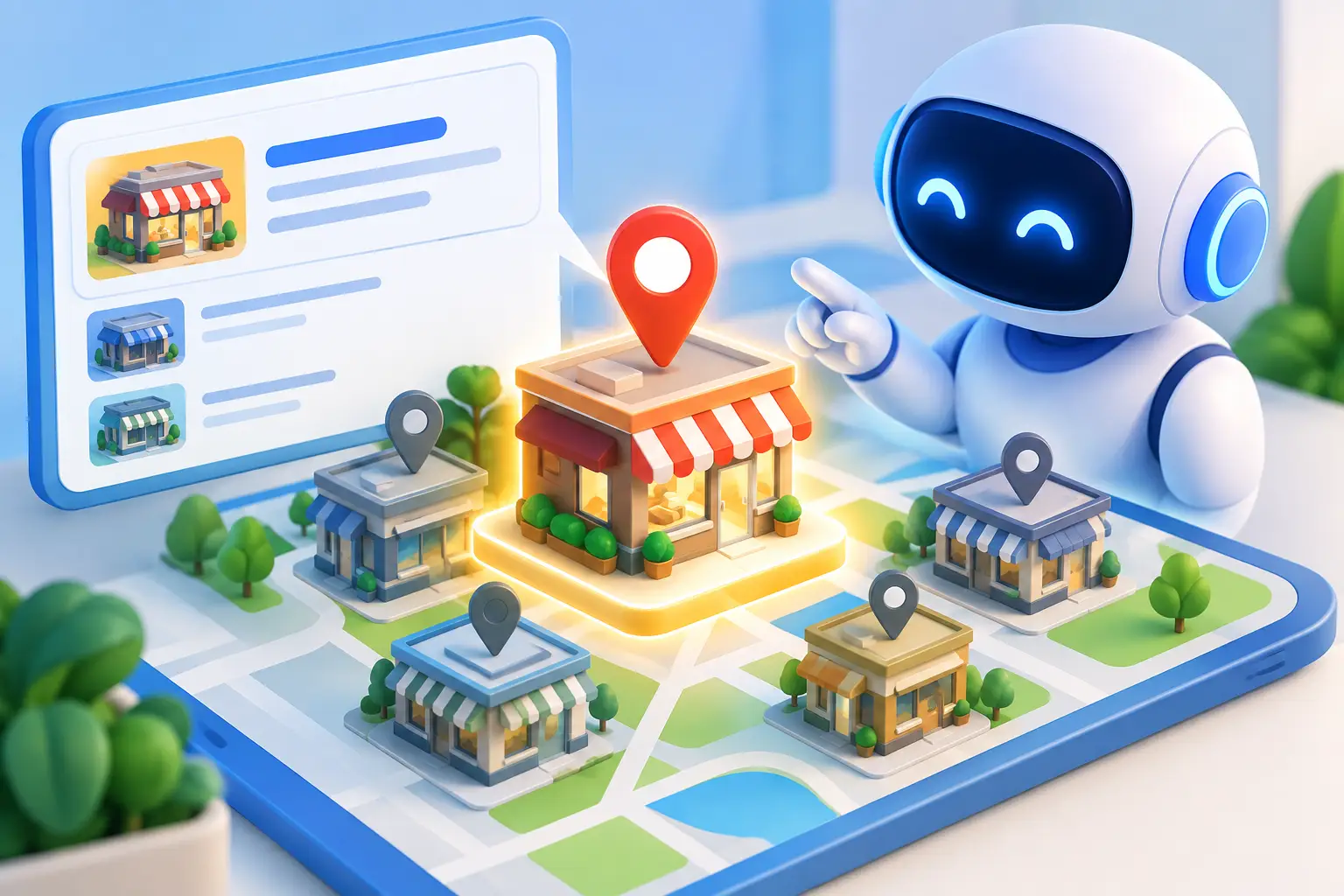
When a homeowner asks an AI assistant, “Who can fix a leaking basement near me?” the business that gets mentioned has already cleared a major trust hurdle. Local AEO is the work that helps your company become one of those credible, relevant answers. For service businesses, that can mean more than visibility. It can mean the call that comes before a competitor ever gets considered.
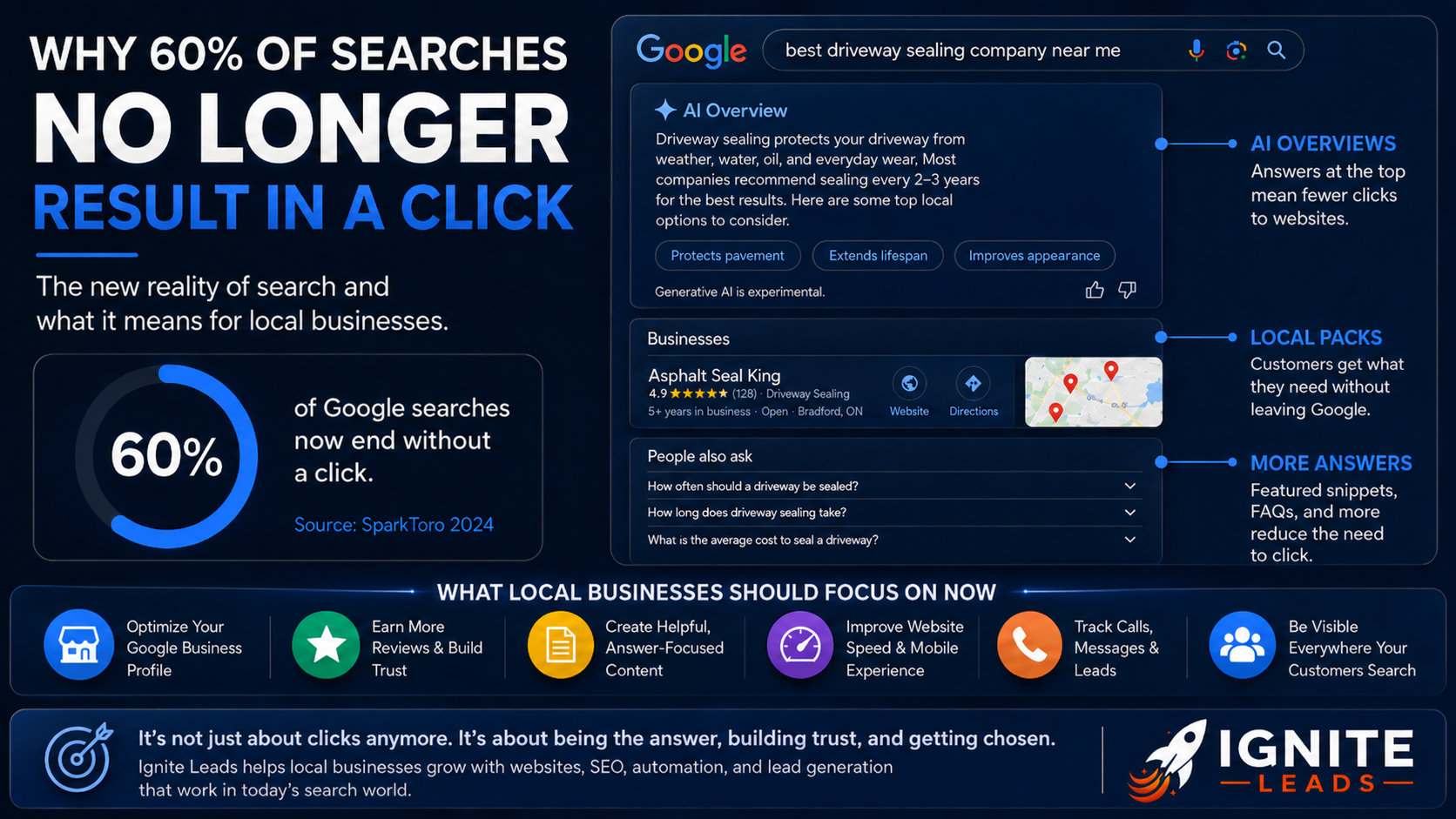
Search is no longer limited to typing a short phrase into Google. Customers ask full questions in Google, Maps, voice assistants, and AI search tools. They want an answer now, usually with a location, a reason to trust the provider, and a clear next step. If your business information is inconsistent, your website is vague, or your reviews tell an incomplete story, AI systems have less reason to surface you.
What Local AEO Actually Means
AEO stands for answer engine optimization. Local AEO applies that work to searches with local intent: someone looking for a nearby garage, spa, coach, contractor, or professional service.
Traditional local SEO focuses heavily on ranking in organic search and Google Maps. That still matters. Local AEO builds on it by making the facts about your business easy for search engines and AI systems to understand, verify, and use in a direct answer.
For a business in Barrie, Newmarket, Aurora, or Vaughan, that means being clear about what you do, where you serve, who you help, how customers can contact you, and why people choose you. It also means supporting those claims with consistent profiles, useful service pages, real reviews, and an active local reputation.
The goal is not to chase every new AI platform. The goal is to make your business the obvious answer wherever customers ask.
Why Local AEO Matters for Service Businesses
Local customers are not usually researching for entertainment. They have a problem to solve. Their furnace stops working, they need a last-minute appointment, or they want a provider they can trust before committing money.
AI-generated answers compress that decision process. Instead of showing ten blue links, a search experience may recommend a short list, explain the options, or answer a detailed question directly. Businesses with clear, corroborated local signals are better positioned to be included.
That makes local AEO especially valuable for businesses that depend on calls, quotes, appointments, and walk-ins. A vague website may still receive traffic, but it does not do enough to help an answer engine confidently match your company to a specific customer need.
There is a trade-off. No agency can guarantee that a particular AI tool will cite or recommend a business for every query. Search results change, user location changes, and some answers may pull from different sources. What you can control is the quality and consistency of the information those systems find.
The Signals AI Needs Before It Can Recommend You
Answer engines do not need clever marketing language. They need evidence. The strongest local presence is built from a few connected sources that all tell the same story.
Accurate business information everywhere
Your business name, address, phone number, hours, website, service categories, and service areas must agree across your Google Business Profile, website, social profiles, directories, and industry listings. Small differences can create confusion, especially after a move, rebrand, or phone-number change.
Keep your business profile complete. Add current hours, service descriptions, appointment options, photos, and answers to common customer questions. If you serve customers at their location rather than from a storefront, configure your service area properly instead of using an address customers cannot visit.
Service pages written for real questions
A generic page that says “quality services at competitive prices” gives customers and AI systems almost nothing to work with. A useful page explains the specific service, the problem it solves, who it is for, what the process looks like, and how to book.
For example, a garage should not rely on one broad auto repair page if brakes, seasonal tire changes, diagnostics, and oil changes are meaningful services. A home service company should explain its core jobs in plain language, including the areas it serves and what happens after a customer calls.
This is not a reason to create dozens of thin location pages with nearly identical copy. Those pages often add little value and can weaken trust. Build pages around genuine services, locations where you have real relevance, and questions your customers actually ask.
Reviews that describe the work
Ratings matter, but review detail matters too. A steady stream of genuine reviews that mentions service quality, response time, location, and the work completed gives future customers much better context.
Do not script reviews or offer incentives that compromise their authenticity. Instead, automate a simple request after a successful job or appointment, make the review link easy to access, and respond professionally to feedback. A calm, useful response to a negative review can reinforce that your business is accountable.
A website that turns attention into action
Being mentioned is not the same as being booked. When a customer reaches your site, they should immediately see what you offer, where you work, how to contact you, and what to do next.
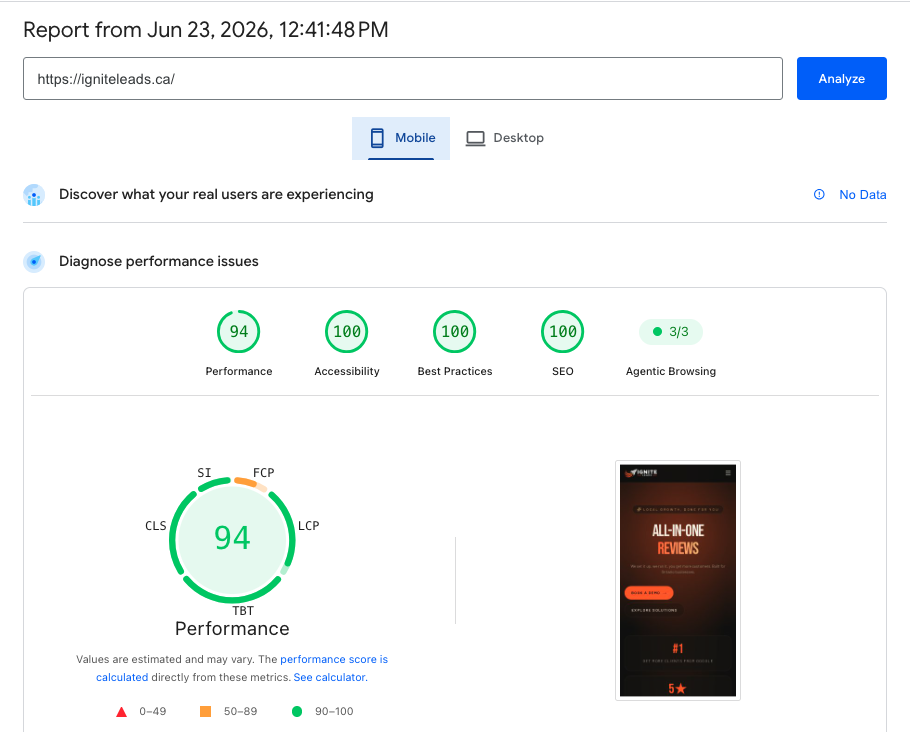
Mobile speed, click-to-call options, straightforward forms, and visible booking paths matter because local leads are impatient. If a customer has to hunt for a phone number or wait hours for a reply, the lead goes to the next provider. Local AEO and speed-to-lead need to work together.
A Practical Local AEO Operating Plan
The work is not complicated, but it must be coordinated. Start by checking the information customers and search platforms see today. Then improve the gaps in the order that affects revenue first.
- Audit your local footprint. Search your business name, main services, and key service areas. Check whether your contact details, hours, categories, and descriptions match across major profiles. Fix outdated information before adding more content.
- Define your highest-value customer questions. Look at incoming calls, emails, estimates, and front-desk conversations. What do people ask before booking? Use those questions to improve service pages, profile descriptions, and FAQs where they genuinely help.
- Strengthen your Google Business Profile. Add accurate service details, current photos, business updates where relevant, and clear contact options. Treat it like a live sales asset, not a listing you set up once and forget.
- Create a reliable review process. The best time to ask is shortly after a positive customer outcome. Automation makes this consistent without asking your team to remember it after every job.
- Respond to every new lead quickly. AI visibility has limited value if calls go unanswered. Use call handling, text follow-up, web chat, or automated intake to acknowledge leads immediately and route them to the right person.
- Track booked outcomes, not vanity metrics. Rankings and impressions are useful diagnostics, but they are not the finish line. Measure calls, form submissions, appointment requests, quote opportunities, response time, and closed revenue.
For many owners, the challenge is not knowing what to do. It is keeping the website, profiles, reviews, follow-up, and reporting moving at the same time. That is why a managed system is often more effective than adding another disconnected software subscription.
What Local AEO Is Not
Local AEO is not stuffing “near me” into every paragraph. It is not publishing AI-written pages with no local insight. It is not claiming to serve every city in Ontario when your team cannot realistically respond there.
It also does not replace good operations. If reviews consistently mention missed appointments, slow callbacks, or poor communication, more visibility may only expose the problem faster. The strongest marketing system reflects a business that can deliver on the promise it makes.
Be careful with overly broad claims such as “best,” “number one,” or “guaranteed.” Use specific proof instead: years in business, certifications, response times, service processes, real customer feedback, and transparent pricing where appropriate. Specific facts are more credible to customers and easier for search systems to understand.
How to Measure Whether It Is Working
Expect local AEO to improve over time, not overnight. First, watch whether your business information becomes more consistent and whether profile views, direction requests, calls, and website actions increase. Then connect those actions to booked appointments and sales.
Pay attention to the quality of leads. A customer who asks for a precise service in your service area is more valuable than a vague inquiry from outside your coverage. Good optimization should help filter toward the work you actually want.
You may also notice customers saying they found you through Google, Maps, voice search, or an AI answer. Ask that question during intake and record the response. Attribution is never perfect, but it is far better than guessing where your best opportunities originate.
The businesses that win local search are not necessarily the loudest. They are the easiest to verify, easiest to understand, and fastest to respond. If your local presence is accurate and your follow-up is immediate, every new search format becomes another chance to earn the next booked customer.
Allan Heath
Founder of Ignite Leads. Helps local businesses grow through SEO, lead generation, and marketing automation — simplifying the playbook so owners can focus on the work.