Article
How to Improve Call Conversion for Local Services
October 29, 2026 • 7 min read
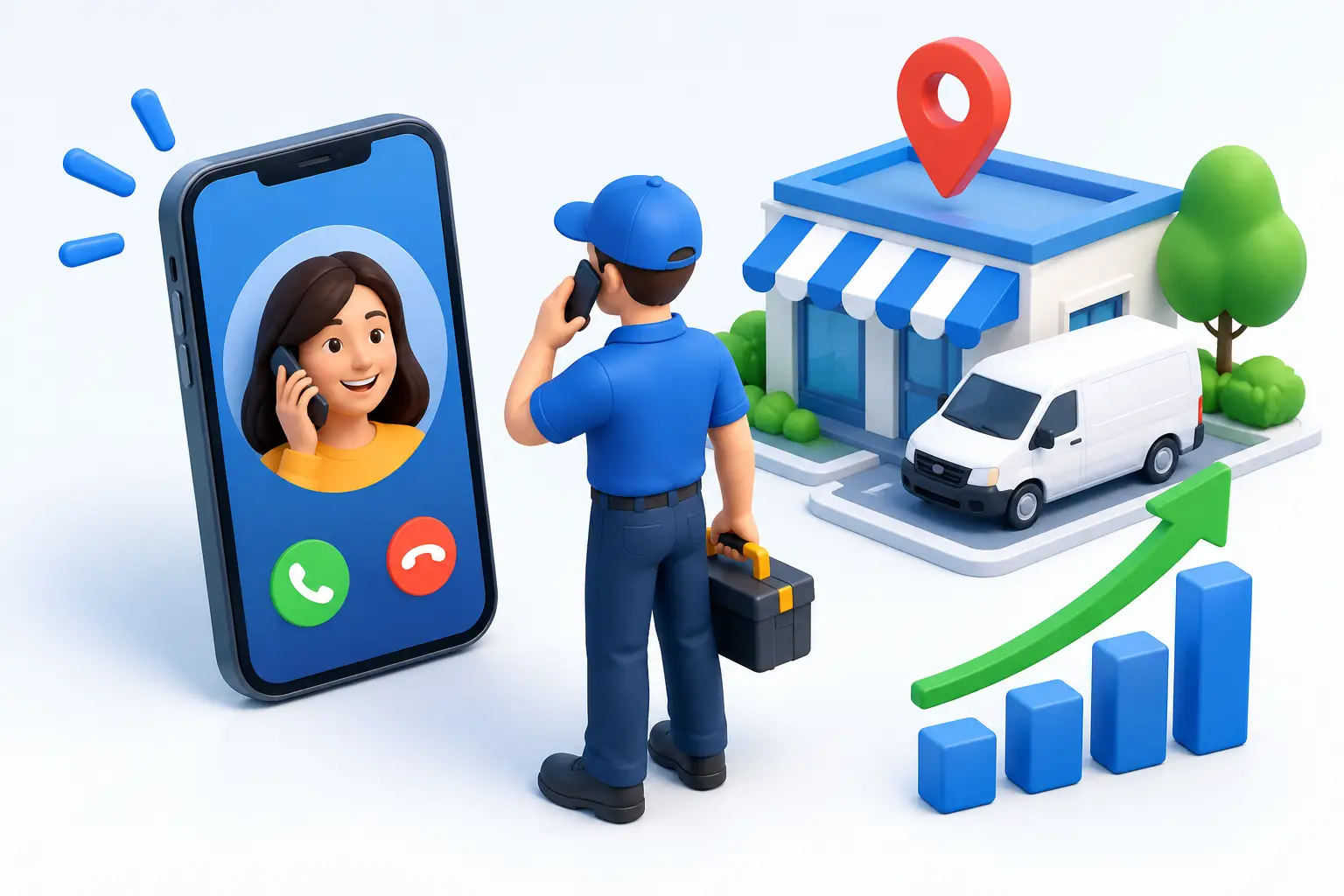
A missed call is not just a missed conversation. For a local garage, spa, contractor, or coaching business, it can be a job worth hundreds or thousands of dollars handed to the next company in Google’s results. Knowing how to improve call conversion starts with treating every inbound call as part of a system, not a chance interaction handled differently depending on who picks up.
Most businesses do not have a lead problem. They have a response and follow-up problem. They invest in websites, Google visibility, ads, and reviews, then let valuable calls ring too long, route to an untrained team member, or end without a clear next step. Fixing that gap creates growth without needing to spend more to generate demand.
How to improve call conversion before the phone rings
Call conversion begins before anyone says hello. The quality of the lead, the information they have seen, and their expectation of your business all affect whether the conversation becomes a booked appointment or job.
Your Google Business Profile, website, service pages, reviews, and call-to-action should tell the same clear story: what you do, where you work, why customers choose you, and what happens when they contact you. If a caller has to ask whether you serve their area, offer the service they need, or have availability, your marketing has already created friction.
Set expectations directly. A home service company can state its service area and emergency availability. A clinic or spa can make booking options and consultation details clear. A garage can show the types of repairs it handles and whether estimates are available. Better-qualified callers are easier to convert because they arrive with fewer unknowns.
Call tracking matters here as well. If you cannot see which source produced the call, you cannot tell whether local SEO, paid advertising, referral traffic, or a specific landing page is generating booked work. Track the source, outcome, call duration, and value where possible. The objective is not more reporting for its own sake. It is knowing where your best customers come from and where the process breaks down.
Answer faster than your competitors
Speed-to-lead has an outsized effect on local service sales. A person searching for a plumber, auto repair shop, or cleaning company is often comparing several options at once. If they reach voicemail, they usually call the next result. By the time you return the call, the job may already be booked.
Aim to answer every call during business hours and have a defined plan for calls that come in after hours, during lunch, or while your team is on-site. That plan may include a dedicated receptionist, intelligent call routing, an AI voice receptionist, or an immediate text response that confirms the enquiry was received and offers a booking path.
Automation is useful when it protects the customer experience. It is not useful when it traps callers in a confusing menu or gives them generic answers. For many service businesses, the right setup is simple: answer immediately, collect the essentials, book the next step, and make sure a real person can take over when the request is complex.
The trade-off depends on your call volume. A smaller team may not need a full-time receptionist. It still needs coverage. An automated intake layer can prevent missed opportunities without adding another person to payroll, provided the handoff and follow-up are properly configured.
Make the first 30 seconds count
Callers decide quickly whether they have reached an organized business. A rushed greeting, long hold time, or vague answer to a basic question lowers trust before you have discussed price or availability.
Use a consistent opening that is friendly, direct, and built around the caller’s reason for contacting you. For example: “Thanks for calling [Business Name], this is [Name]. How can I help today?” Once they explain the issue, confirm what you heard before moving forward. “You need a brake inspection this week in Vaughan, correct?” This reduces errors and signals that you are paying attention.
Your staff do not need a stiff script. They need a call framework. The framework should cover the caller’s name and contact details, service needed, location, urgency, preferred timing, and the next action. For appointment-based businesses, the next action is usually a confirmed booking. For larger projects, it may be a site visit, estimate, consultation, or qualified callback.
Avoid leading with a price when the caller has not explained the job. Price-only conversations turn your service into a commodity. First understand the need, explain the relevant process, and then give accurate guidance on pricing, ranges, or the estimate process. Be transparent, but do not guess just to get off the phone.
Turn questions into booked next steps
Many calls fail because the employee answers the question and ends the conversation. “Yes, we do that.” “Our next opening is Thursday.” “Someone will call you back.” Those answers may be technically correct, but they do not move the lead forward.
Every qualified call should end with a specific next step and a clear time. Instead of asking, “Would you like to book?” offer an option: “I have Tuesday at 10:00 a.m. or Wednesday at 2:00 p.m. Which works better?” Instead of saying, “We can send an estimate,” say, “I can book a technician to assess it Thursday afternoon. You will receive the estimate after the visit.”
This approach is not pushy. It removes the work the customer would otherwise have to do. People calling local businesses are often busy, stressed, or dealing with a problem that needs attention. Clear options make it easier to decide.
For high-value services, build confidence before asking for the booking. Mention a relevant credential, process, warranty, review strength, or practical differentiator. Keep it connected to the caller’s concern. A customer with a water leak wants to know how quickly help can arrive. A coaching prospect wants to understand what the first session will accomplish. Reassurance works when it is specific.
Build follow-up for calls that do not book
Not every caller will commit on the first conversation. That does not make the lead cold. They may be comparing quotes, checking schedules, speaking with a partner, or waiting for payday. Without follow-up, those opportunities disappear into a spreadsheet, a handwritten note, or someone’s memory.
Create a simple follow-up process for every unbooked qualified call. Capture the reason they did not book, assign ownership, and set the next contact time before the call record is closed. A same-day text or email can confirm the estimate details, answer a question, or provide a direct booking option. A follow-up call within the agreed window shows professionalism without becoming a nuisance.
The message should reflect the conversation. “Hi Sam, following up on your furnace repair enquiry. We have an opening tomorrow morning if you would like us to take a look” is far stronger than a generic promotional blast.
A centralized CRM makes this repeatable. It records the enquiry, triggers reminders, tracks communication, and keeps leads from being lost when the office is busy. The real value is accountability: every lead has a status, owner, and next action.
Measure the right call conversion numbers
Listening to calls occasionally is useful. Measuring the pipeline is better. Review your numbers weekly so you can identify patterns before they become expensive habits.
Track at least these four metrics:
- Answer rate: the percentage of inbound calls answered by a person or effective intake system.
- Booking rate: the percentage of qualified calls that become appointments, estimates, or jobs.
- Speed to first response: how long it takes to acknowledge and act on missed or after-hours calls.
- Lead outcome: whether the call became revenue, was unqualified, went elsewhere, or still needs follow-up.
Do not judge performance from booking rate alone. A campaign that produces many irrelevant calls can lower the percentage while still revealing a targeting problem. A low answer rate points to coverage. A high answer rate with weak bookings points to call handling, offer clarity, pricing objections, or availability.
Review real call recordings with your team when legally permitted and appropriate for your business. Look for recurring issues: calls put on hold too long, unanswered questions, missing contact details, no booking attempt, or promises that are never followed through. Coaching is much more effective when it is based on actual conversations rather than assumptions.
Make call conversion a managed process
The strongest local businesses do not rely on one excellent receptionist or owner who happens to answer at the right time. They build a process that works when the team is busy, a staff member is away, or calls arrive after hours.
That process connects visibility, call handling, CRM follow-up, reputation, and reporting in one place. Ignite Leads helps service businesses build this type of coordinated growth system so marketing does not stop at generating the phone call.
Start with one practical change this week: audit every missed call and every unbooked enquiry from the past seven days. You will quickly see whether the next growth opportunity is faster coverage, clearer booking language, or consistent follow-up. The calls are already coming in. The advantage comes from being ready to convert them.
Allan Heath
Founder of Ignite Leads. Helps local businesses grow through SEO, lead generation, and marketing automation — simplifying the playbook so owners can focus on the work.