Local SEO
How to Improve Your Google Maps Ranking in Barrie, Newmarket, Aurora & Vaughan
September 18, 2026 • 11 min read
Why your map position matters more than your website ranking
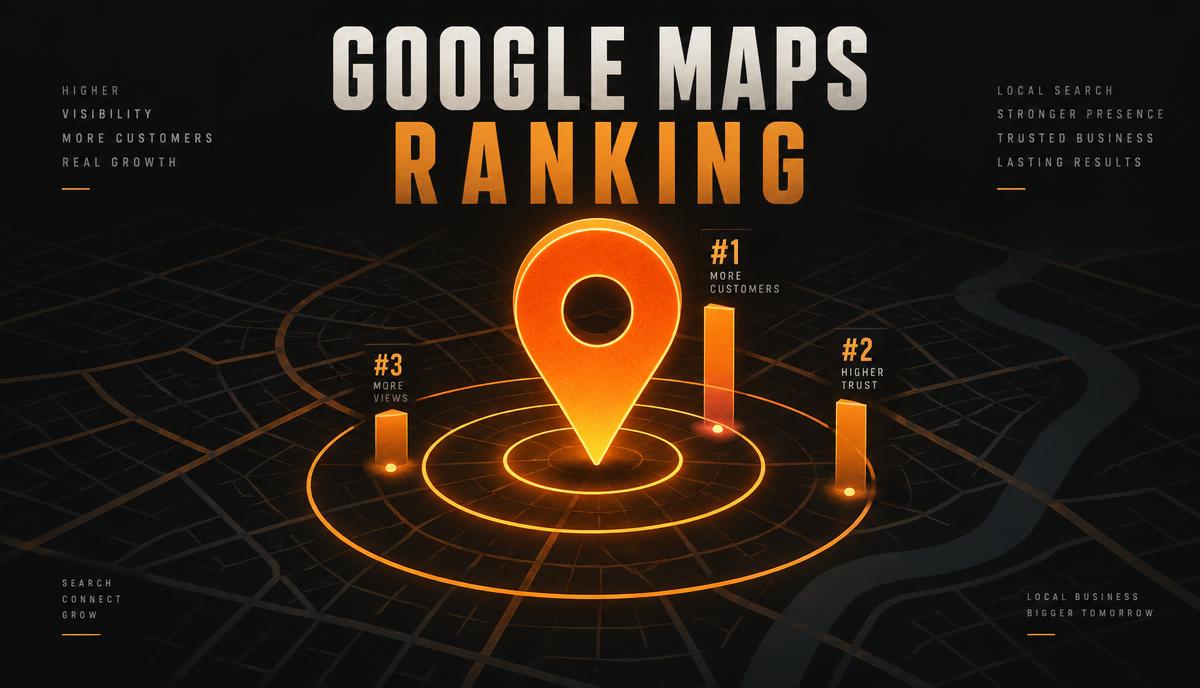
When somebody searches a service plus a town — “roofer Barrie”, “dentist Newmarket”, “bin rental near me” — Google leads with a block of three map listings. Those three take most of the clicks and almost all of the phone calls. Everything below them, including the website results businesses obsess over, competes for what's left.
That's why improving your Google Maps ranking is usually the highest-return work a local business can do. It's also why so many owners feel stuck: they can see competitors sitting above them and have no idea what those competitors did. The answer is less mysterious than it looks.
The three things Google actually ranks maps on
Google is unusually open about this. Local results are ranked on relevance, distance and prominence.
- Relevance — how well your business matches what was searched. Driven by your categories, services, profile content and the pages on your site.
- Distance — how close you are to the person searching. You can influence how this is interpreted, but you can't move your building.
- Prominence — how well known and trusted your business is. Reviews, links, mentions, citations and activity.
Two of those three are buildable. That's the whole game: maximise relevance, build prominence, and accept distance as the constraint you design around.
Step 1: Find out where you actually rank
Almost every owner overestimates their map position, because they search from their own office — the one place they're guaranteed to rank. Move three kilometres away and you may vanish completely.
The fix is grid tracking: checking your map position from a spread of postal codes across your city, so you get a picture of where you win and where you're invisible. It's the first thing we run in a Google Maps SEO engagement, because without it you're guessing.
Step 2: Fix relevance before you build anything
Relevance is the cheapest win available and the most commonly botched. Work through this in order:
- Primary category. The single biggest lever. “Contractor” instead of “Roofing contractor” can cost you the entire map pack. Check what the businesses ranking above you use.
- Secondary categories. Add every one that genuinely applies, and nothing that doesn't.
- Services and products. List every service by the name customers search for, each with a real description. Most profiles leave this section empty.
- Business description. 750 characters written around what you do and where — not your company history.
- Service areas and hours. Accurate, complete, and updated for holidays. Incomplete information suppresses rankings.
- Matching pages on your site. Google cross-checks your profile against your website. A service in your profile with no page behind it is a weaker claim.
We walk through every one of these in Google Business Profile optimization, including the parts most audits skip like attributes, products and Q&A.
Step 3: Build prominence, because that's what beats closer competitors
If a competitor two towns over outranks you for a search in your own neighbourhood, prominence is the reason. It's built from four things:
- Reviews — volume matters, but recency, the rate they arrive, whether they mention specific services, and whether you reply matter just as much. A steady trickle beats a batch of twenty in one week.
- Local links — suppliers, associations, local sponsorships, chambers of commerce, local news. A handful of genuine local links outweighs hundreds of directory listings.
- Citations — your name, address and phone consistent everywhere they appear. Conflicting data caps how high Google will place you.
- Activity — posts, fresh photos, answered questions. Dormant profiles get quietly demoted against active ones.
Step 4: Work around distance instead of fighting it
You can't change where you are, but you can change how much of your area you're relevant to. Service-area businesses should define their areas properly rather than leaving them at a default radius. Multi-town businesses need a real page for each town — not one page with a list of city names dropped into it.
This is the work behind our city pages: a distinct page per service, per market, with content specific enough that a local reader recognises it.
Step 5: Don't waste the ranking once you have it
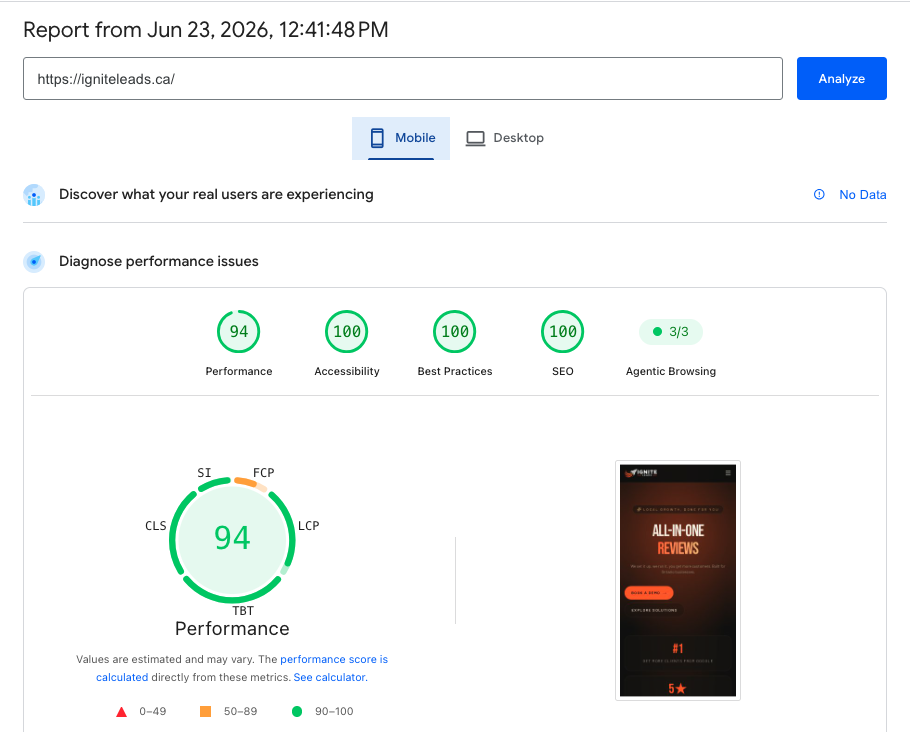
Map visibility sends you urgent, phone-in-hand traffic. If your site takes five seconds to load or the call rings out, you paid for that ranking and handed the job to whoever is second. Fast local websites and AI chat and voice answering exist for exactly this reason.
How long it takes
Relevance fixes — categories, services, descriptions — often show up within two to four weeks. Prominence compounds: expect three to six months to hold a top-three position in a competitive city. Anyone promising faster than that is describing luck, not a method.
Where to start
Run the grid scan, fix your categories and services, then start the review flow. If you'd rather see the gap list before doing any of it, we'll send a free audit of your profile and map position. See the full local SEO services, or book a call.
Allan Heath
Founder of Ignite Leads. Helps local businesses grow through SEO, lead generation, and marketing automation — simplifying the playbook so owners can focus on the work.