Article
How to Respond to Leads Faster and Book More Jobs
August 13, 2026 • 7 min read
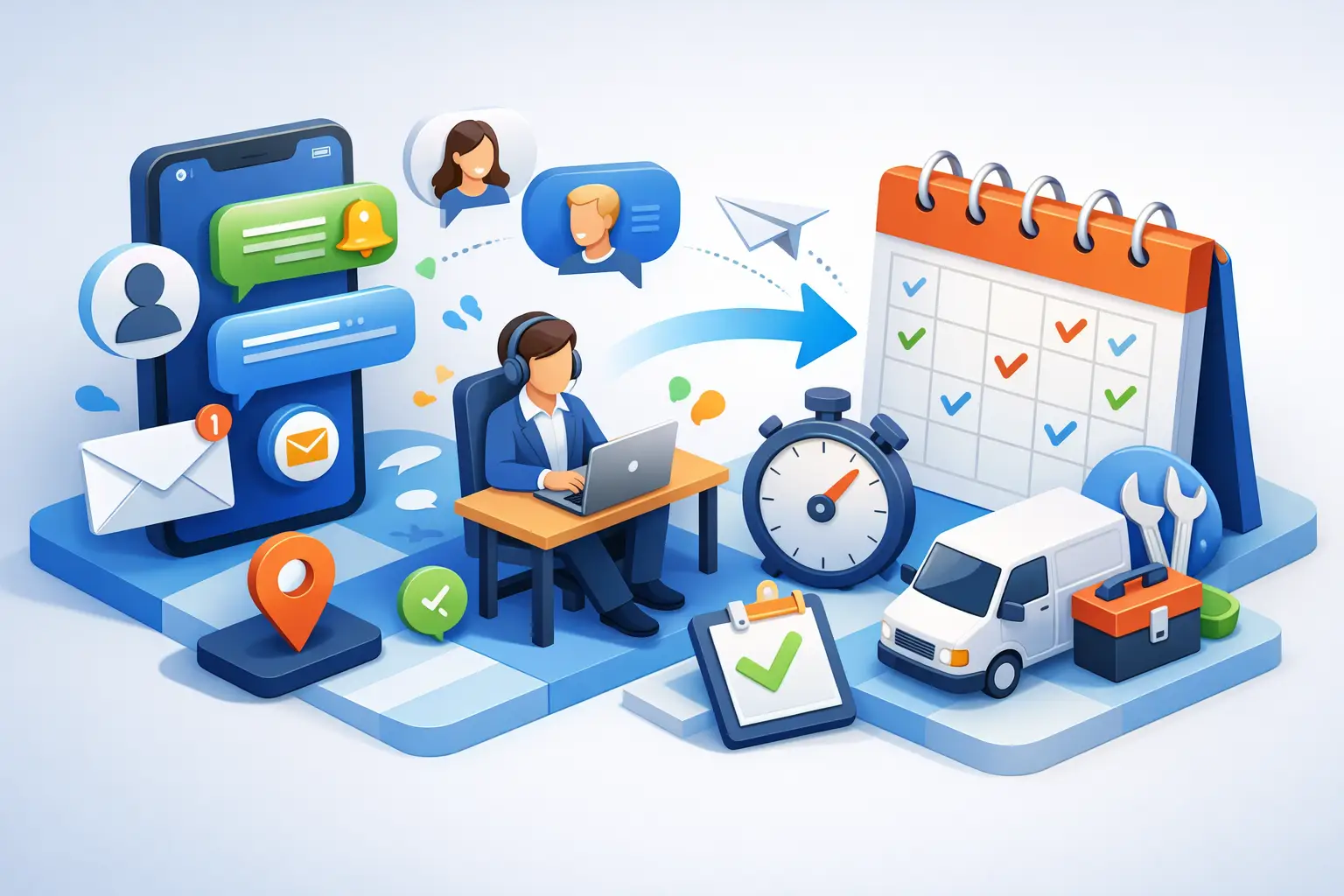
A homeowner in Barrie searches for an electrician, submits a form, then calls the next company on Google while waiting for a reply. That is the real cost of slow follow-up. Learning how to respond to leads faster is not about sending more messages for the sake of it. It is about being first to make contact, first to answer the obvious question, and first to make booking the next step feel easy.
For local service businesses, a lead is usually time-sensitive. The customer may need a repair today, a quote before the weekend, or an appointment before they contact another provider. If your team replies two hours later, the lead may already be booked elsewhere. Fast response is a conversion system, not an admin task.
Why speed-to-lead changes the outcome
A new lead is at their highest level of intent immediately after they call, fill out a form, send a text, or start a web chat. They have a problem and are actively looking for a solution. Every minute without a response gives competitors a chance to win the job.
This matters even more for businesses with high-value appointments. A garage enquiry, spa booking, coaching consultation, roofing estimate, or emergency home-service call can turn into meaningful revenue. Losing several enquiries each month because nobody saw a notification quickly is not a minor operational issue. It is a growth leak.
The goal is not to pressure every prospect into an instant sale. Some jobs require a site visit, a detailed estimate, or a conversation with a specialist. The goal is to acknowledge the enquiry immediately, set clear expectations, and move the person into the correct next step before their attention shifts.
How to respond to leads faster with one clear workflow
Fast follow-up fails when leads arrive in too many places. A form submission goes to one inbox, Facebook messages sit in another app, missed calls live on a phone, and web chats are checked only when someone remembers. The owner or office manager becomes the connection point between disconnected tools.
Start by directing every lead source into one central system. Calls, contact forms, chat messages, Google Business Profile enquiries, and social messages should create a contact record and trigger the same response process. Your team should never need to guess where a new enquiry came from or whether someone has already replied.
Send an immediate acknowledgement
The first response should arrive within minutes, ideally much sooner. It does not need to be a long sales message. It needs to confirm that the customer has been heard and tell them what happens next.
For example: “Thanks for contacting us about your furnace repair. We have received your request and a team member will call you shortly. If the issue is urgent, reply URGENT and we will prioritise it.”
That message does three jobs. It reassures the lead, makes your business look organised, and gives your staff time to review the details. For an appointment-based business, the message can offer a booking link or ask the one question needed to route the lead properly, such as location, preferred date, or service required.
Automation is useful here because it runs regardless of whether the office is busy, a technician is driving, or the enquiry comes in after hours. But the automated response must sound like a real business, not a generic chatbot. Use the customer’s name where possible, reference their requested service, and avoid promising a callback time you cannot consistently meet.
Make ownership visible
An immediate text is only the first move. Someone still needs to own the lead. Assign each new enquiry to a specific person or queue, with a clear target for human follow-up. For many local businesses, that means a phone call within five to 15 minutes during business hours.
If the assigned person cannot respond, the system should escalate the lead. This may mean notifying a second team member, routing the call to an AI voice receptionist, or moving the enquiry to a shared booking team. The right setup depends on your business size and the type of work you sell.
A solo contractor may need automated acknowledgement and a callback task between jobs. A multi-location brand may need intelligent routing by service area, location, or department. What matters is that no lead remains unassigned because everyone assumed someone else would handle it.
Give the lead a simple next step
Speed alone does not book customers. A quick reply that says “How can we help?” after the customer has already explained their need creates friction. Read the enquiry, answer the immediate question if you can, and offer one clear action.
For a spa, that might be confirming availability and offering two appointment times. For a garage, it may be asking for the vehicle make, model, and issue before scheduling an inspection. For a home-service company, it could be confirming the postal code and proposing a quote window.
Avoid making prospects work to buy from you. If they have to call back, repeat information, search for your calendar, or wait for a vague reply, many will move on. The best follow-up feels direct: here is the availability, here is the expected process, and here is how to secure your spot.
Build follow-up for leads who do not answer
Not every lead will answer your first call. That does not mean the opportunity is gone. People submit enquiries while at work, during school pickup, or while dealing with the problem they want solved. A missed connection should trigger a structured follow-up sequence, not a forgotten voicemail.
Use a mix of phone, text, and email based on the contact details and permission you have. A short text after a missed call is often effective because it is easy to read and reply to: “Hi Jordan, this is Alex from Northside Auto. We received your brake repair enquiry and tried to reach you. Would you prefer a call back or an appointment time?”
Follow up more than once, but do it with purpose. The first few attempts should happen close together while intent is high. After that, space messages out and add useful context, such as available appointment times, a reminder that estimates are available, or an answer to a question they raised. Stop when the customer opts out or the enquiry is clearly no longer active.
The trade-off is simple: too little follow-up leaves revenue on the table, while too much can make your business feel pushy. Track replies and bookings to find the cadence that fits your service category and customer expectations.
Use AI to cover gaps, not replace good service
AI chat and voice reception can reduce the delay between enquiry and response, particularly after hours or when your team is tied up with customers. An AI receptionist can answer common questions, capture job details, qualify the request, and book an available time. AI chat can guide website visitors toward the right service and collect contact information before they leave.
This works best when the system has clear boundaries. Let automation handle routine questions, lead capture, appointment requests, and basic routing. Escalate complex pricing questions, complaints, emergencies, and technical advice to a person. A customer with a burst pipe or a complicated vehicle issue should not be trapped in a long automated conversation.
The strongest setup combines instant automated coverage with fast human judgement. That gives your business responsiveness without forcing staff to live on their phones.
Measure the response time that actually matters
Do not rely on the feeling that your team is “pretty quick.” Measure it. Your CRM should show the time between a lead arriving and the first response, the time to first human contact, the number of contact attempts, and the final outcome.
Review these numbers by lead source. Google search leads may convert differently from website forms, referral calls, or social media messages. If paid leads are waiting too long, fix the routing before increasing ad spend. If web forms produce low-quality enquiries, adjust the form questions instead of blaming your staff for slow booking.
Also listen to call recordings and read message threads. You may find that the problem is not response speed alone. A team member may be calling quickly but failing to ask for the booking, or an automated text may be too vague to earn a reply. Speed gets your business into the conversation. Process turns that conversation into revenue.
Make fast response part of daily operations
The businesses that consistently book more leads do not depend on heroic effort from one office manager. They build a system that captures every enquiry, responds immediately, assigns responsibility, follows up automatically, and reports on results.
That is the operating model Ignite Leads helps local service businesses build: one coordinated system for visibility, lead capture, response, and follow-up. Whether you serve Barrie, Newmarket, Aurora, Vaughan, or nearby communities, customers expect quick answers when they are ready to buy.
Start with the leads you already have. Map where they arrive, measure how long they wait, and remove one delay at a time. The next customer may not need more convincing. They may simply need your business to answer first.
Allan Heath
Founder of Ignite Leads. Helps local businesses grow through SEO, lead generation, and marketing automation — simplifying the playbook so owners can focus on the work.