Article
How to Improve Google Maps Ranking Faster
October 9, 2026 • 7 min read
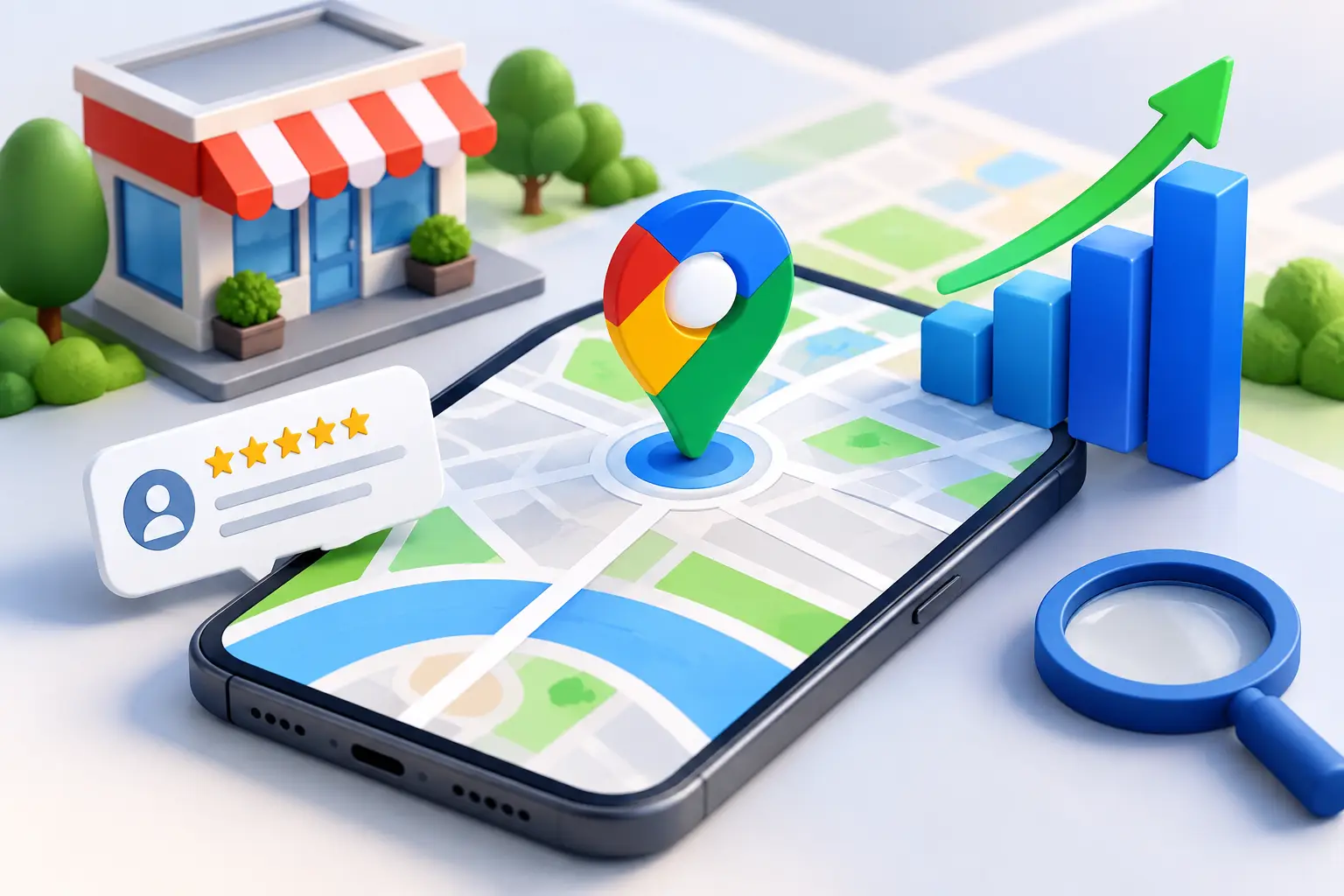
A Google Maps listing that sits below the local pack is not just missing traffic. It is losing calls to competitors who may be less qualified, less responsive, and less trusted - but easier for customers to find. To improve Google Maps ranking, local service businesses need more than a completed profile. They need a system that proves relevance, trust, and operational reliability to both Google and the customer searching.
For a garage, spa, contractor, coach, or multi-location operator, the objective is simple: show up when a nearby buyer needs the service, then turn that search into a booked job. The work behind that result is not complicated, but it does need to be consistent.
What Actually Moves Google Maps Rankings
Google has publicly pointed to three major local ranking factors: relevance, distance, and prominence. Relevance is how well your business profile and website match the search. Distance is how close the searcher is to your location or service area. Prominence is the evidence that your business is known, trusted, and active online.
You cannot control where every customer is standing when they search. A business in Barrie will not reliably outrank a closer competitor for a search made across town. What you can control is how clearly Google understands your services, where you operate, and why customers choose you.
This is why chasing one ranking position is the wrong goal. Search results change by neighbourhood, device, search term, and searcher behaviour. The better measure is whether your Maps visibility is generating more qualified calls, direction requests, form submissions, and appointments in the areas you can profitably serve.
Start With a Google Business Profile Built to Convert
Your Google Business Profile is the centre of your Maps presence. Treat it like a sales page, not a directory entry.
Choose the most accurate primary category for the core service that generates revenue. Categories tell Google what type of business you are, so this decision has real ranking impact. A home renovation company should not use a broad category simply because it sounds impressive if a more specific, accurate category is available. Add secondary categories only for services you genuinely provide.
Write a clear business description using the services and communities you serve in natural language. Explain what you do, who you help, and what makes your process useful. Do not cram every nearby city and service into one paragraph. It reads poorly and creates weak signals. A focused description is more credible for customers and easier to maintain.
Complete every field that applies: business name, phone number, website, hours, holiday hours, service areas, appointment options, attributes, products, and services. Add real photos of your team, vehicles, location, completed work, and before-and-after results where appropriate. Generic stock photos do little to build buyer confidence.
Accuracy matters more than cleverness. Your business name should be your real-world name, not a string of keywords. Adding phrases such as “best plumber Vaughan” to a company name can trigger an edit, suspension, or lost visibility. Short-term manipulation is a poor trade for an asset that produces leads every month.
Match Your Service Setup to How You Work
If customers visit your location, publish the correct address and keep your signage consistent. If you travel to customers, configure the profile as a service-area business and hide the address unless clients are received there.
Service areas should reflect the territory you actually cover, not a huge list built around every city in Ontario. Broad coverage can make operational sense for some businesses, but it does not remove the distance factor. Build visibility where your team can respond quickly and deliver a strong customer experience.
Improve Google Maps Ranking With Better Service Signals
A profile needs specific service information. Google has to connect your business with searches such as “brake repair,” “deep tissue massage,” “emergency electrician,” or “business coach,” not just a vague industry label.
Create individual service entries for your priority offers. Use plain names customers use, write concise descriptions, and add pricing only when it is useful and accurate. For a contractor, that may mean separating furnace installation, furnace repair, heat pump installation, and maintenance plans. For a spa, it may mean distinguishing facials, massages, laser treatments, and gift cards.
Your website must support the same service signals. Each priority service deserves a useful page that explains the job, the service area, the process, common questions, and the next step. Thin pages that swap a city name into identical copy rarely produce durable results. Pages built around genuine local demand do.
Keep the basics aligned across your profile, website, social profiles, and major business directories: business name, address, phone number, hours, and website. Inconsistent details create friction for customers and uncertainty for search engines. Fixing those mismatches is often less glamorous than creating content, but it is frequently the faster win.
Build Reviews Into the Customer Workflow
Reviews influence prominence and conversion at the same time. A strong rating with recent, detailed feedback can make a customer call you before they compare the next listing.
The most effective review strategy is operational, not occasional. Ask every satisfied customer shortly after the service is completed, when the outcome is still fresh. Use a simple automated request by text or email, then send a polite reminder if appropriate. Make the process easy, but never offer discounts, gifts, or other incentives in exchange for a review.
Quality matters alongside volume. A review that mentions the service, the team, and the experience gives future buyers useful context. For example, “They repaired our AC the same afternoon and explained the options clearly” is more persuasive than “Great service.” Do not script reviews or ask customers to use keywords. Let their language reflect a real experience.
Reply to reviews consistently, including negative ones. Thank positive reviewers specifically. For a complaint, respond calmly, acknowledge the issue without arguing, and move the resolution offline. Prospects read these responses as evidence of how your business handles problems.
Keep the Profile Active Without Posting for the Sake of It
Regular activity can strengthen your profile and gives searchers more reasons to engage. That does not mean posting filler every day.
Use Google Business Profile updates for offers, seasonal services, availability changes, recent projects, events, and useful customer reminders. A snow removal company might post before forecasted storms. An auto shop might promote tire-change appointments in the fall. A clinic might share an opening for a specific treatment. The update should support an actual service or booking decision.
Add new photos on a predictable schedule, especially after completed jobs or team milestones. Businesses with real, current visual proof tend to earn more trust than profiles that have not changed since launch.
Earn Local Authority Beyond Your Own Profile
Prominence grows when other credible local sources mention your business. This can include relevant directories, local associations, suppliers, sponsorships, community partnerships, and earned coverage. The point is not to collect hundreds of low-quality listings. It is to build accurate, legitimate evidence that your business exists and serves the market.
A local business should also be easy to find through branded searches. When someone searches your company name, the result should show a consistent identity, current reviews, correct contact details, and a website that loads quickly on mobile. Google sees many signals; customers make one decision at a time.
Avoid buying reviews, creating fake locations, using virtual offices as storefronts, or setting up duplicate profiles for the same business. These tactics can produce a temporary spike, but they create suspension risk and a cleanup problem that costs far more than doing the work properly.
Track Calls, Not Just Rankings
Ranking reports are useful when they show performance across a geographic grid and your key service searches. They are not enough on their own. A number-one position that produces unqualified leads is not a win.
Track the outcomes tied to revenue: calls from your profile, website visits, direction requests where relevant, form completions, booked estimates, show rates, and closed jobs. Record which service generated the lead and how quickly your team replied. Local visibility and lead handling are connected. If a customer calls after hours and gets no response until the next day, the marketing system has failed at the finish line.
This is where automation earns its place. Fast text follow-up, missed-call responses, appointment reminders, review requests, and lead tracking protect the value of every Maps lead. More visibility matters. Converting that visibility before a competitor responds matters more.
Make Google Maps Part of One Growth System
Google Maps is not a one-time setup task, and it is not a separate channel that can carry a weak customer journey. The businesses that keep gaining ground pair a well-managed profile with a credible website, steady reviews, accurate local information, and immediate lead follow-up.
Start with the profile your customers see today. Fix what is incomplete, request feedback from recent happy clients, and make sure every new inquiry gets a fast response. If the execution keeps getting pushed behind operations, a managed system from a team like Ignite Leads can turn Maps visibility into a process that keeps working while you run the business.
The next customer is already searching nearby. Make it easy for Google to recommend you, and even easier for that customer to book.
Allan Heath
Founder of Ignite Leads. Helps local businesses grow through SEO, lead generation, and marketing automation — simplifying the playbook so owners can focus on the work.