Article
Local Business SEO That Brings More Calls
July 30, 2026 • 6 min read
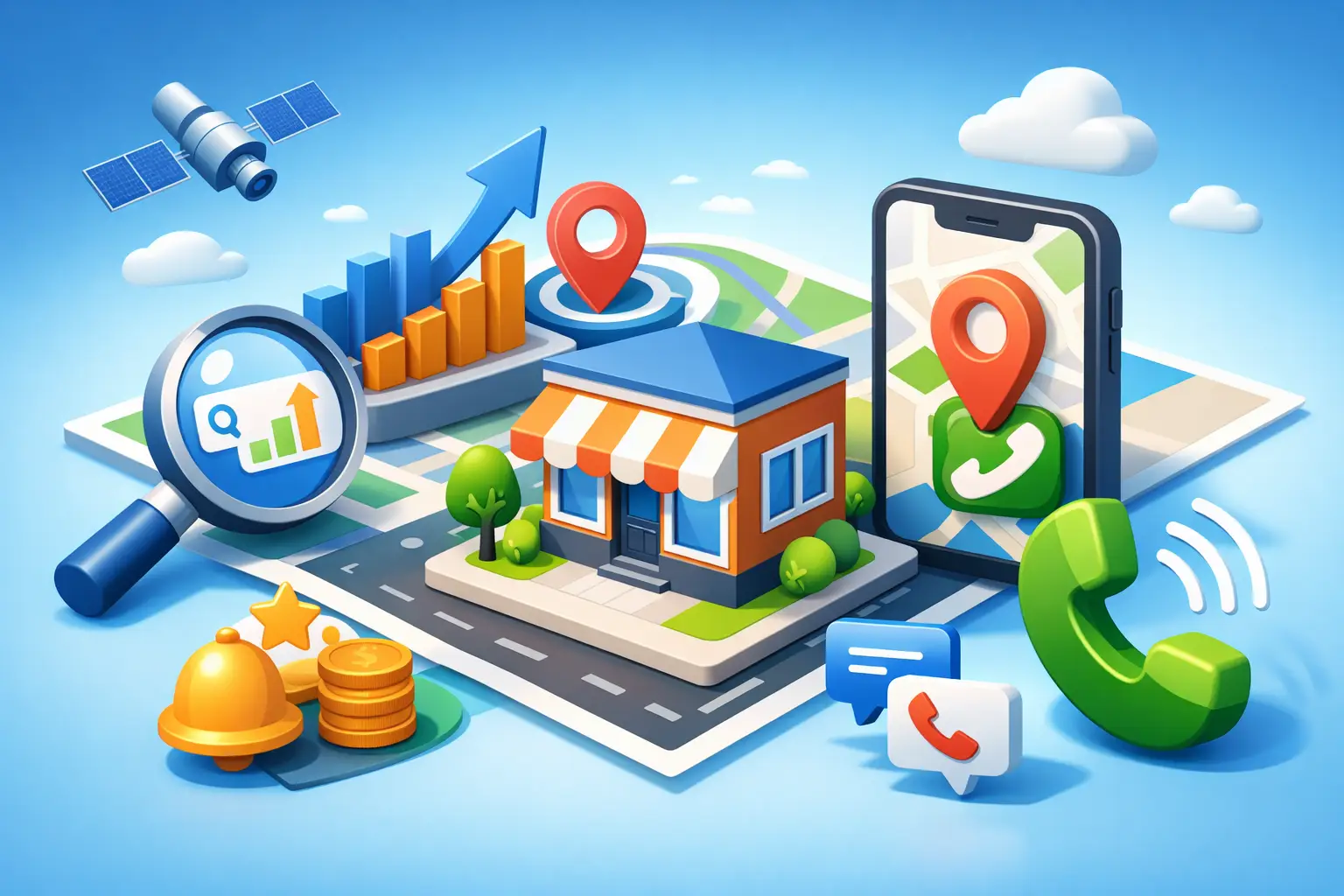
When someone searches “garage near me,” “spa in Barrie,” or “emergency plumber Vaughan,” they are not researching for fun. They are looking for a business they can call, visit, or book now. Local business SEO is the system that puts your company in front of those high-intent customers before they choose a competitor.
For service businesses, visibility is only part of the job. A strong local presence must also create trust, make contacting you easy, and ensure every lead gets a fast response. Ranking without a follow-up system leaves revenue on the table. A great website without local visibility stays invisible.
What Local Business SEO Actually Does
Local business SEO improves how your business appears when people search for services in a specific area. The goal is not vanity traffic from people outside your service area. The goal is more qualified calls, form submissions, direction requests, and booked appointments from customers who are ready to act.
Google uses several signals to decide which local companies deserve prominent placement in search results and Google Maps. Relevance matters: does your business clearly offer what the person searched for? Distance matters: are you genuinely close enough to serve them? Prominence matters: does your online presence show a credible, active, trusted business?
That means local SEO is not a single task. It is a coordinated operating system made up of your Google Business Profile, website, reviews, service pages, local authority, and lead-handling process.
Start With Your Google Business Profile
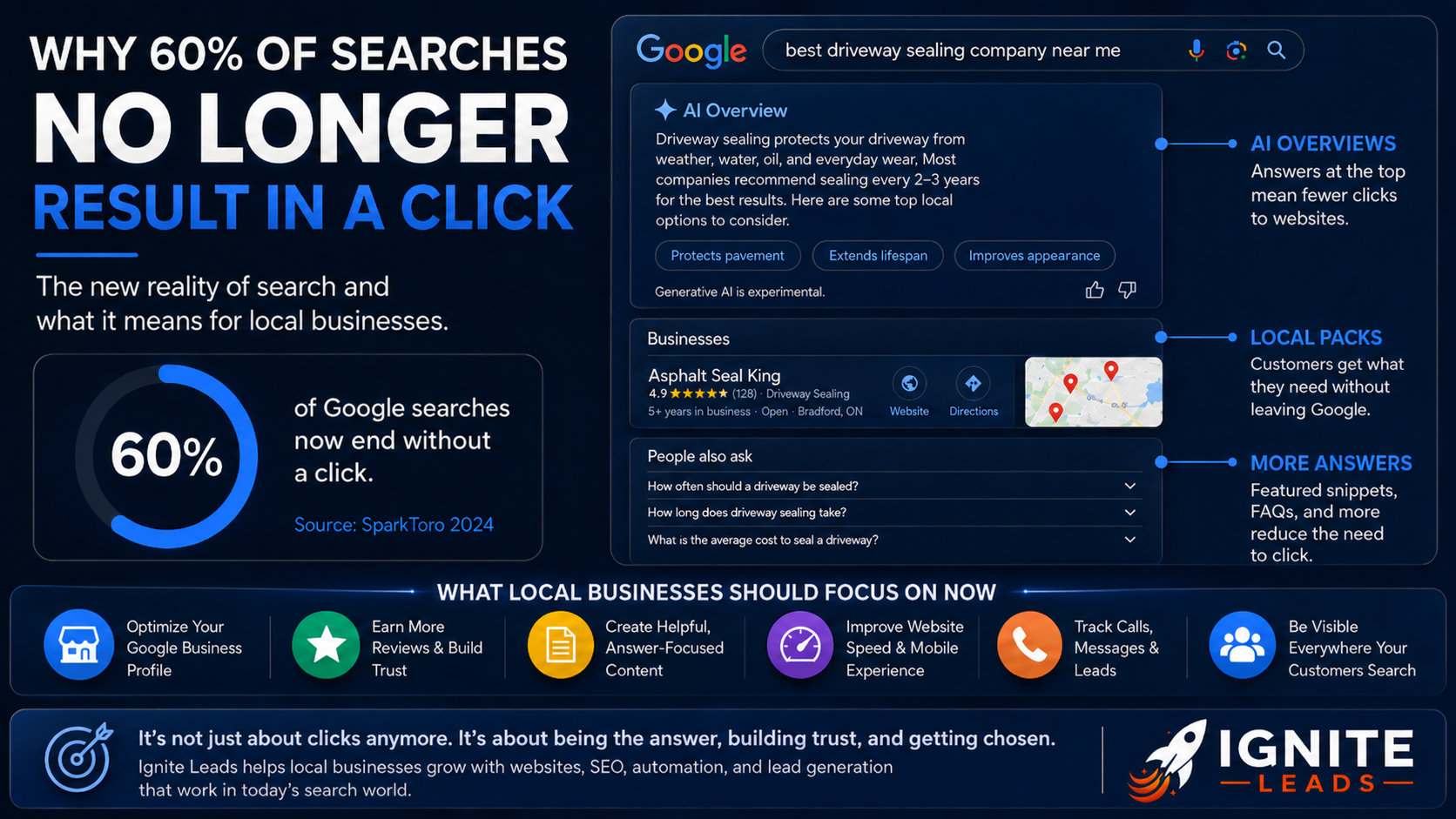
For many local searches, the Google Map Pack is the most valuable real estate on the page. Customers see your business name, rating, hours, phone number, location, and reviews before they ever visit your website. If that profile is incomplete, inaccurate, or inactive, you are making it easy for competitors to win the call.
Your profile should use the correct primary category, relevant secondary categories, accurate service areas, current hours, professional photos, and a clear business description. Services should be listed properly, not buried in a vague paragraph. Every field gives Google and customers another reason to understand what you do.
Consistency is non-negotiable. Your business name, address, phone number, website, and hours should match across major online listings. A different suite number, old phone number, or duplicate profile can create confusion for both search engines and customers.
Choose Categories Based on Revenue, Not Guesswork
Your primary category has real ranking implications, so it should reflect the core service that drives the business. A general category may feel safe, but it can dilute relevance when customers are searching for a specific provider.
A repair shop, for example, needs to think beyond the word “automotive.” If tires, brakes, or auto repair are the services that produce the best jobs, the profile and website need to support those terms in a truthful, specific way. The right choice depends on what you actually offer and where you want more demand.
Build Service Pages That Match How Customers Search
A one-page website rarely gives Google enough context to rank for multiple services and locations. It also forces customers to work too hard to find what they need. A customer searching for laser hair removal has a different question than someone searching for a facial or massage. They should land on a page built for that service.
Each core service needs its own useful page. Explain what is included, who it is for, common concerns, service area details where relevant, and the next action to take. Use clear calls to call, request a quote, or book an appointment. Do not create thin pages that simply swap one city name for another. Google has seen that tactic for years, and customers can spot it immediately.
For businesses serving Barrie, Newmarket, Aurora, and Vaughan, location pages can make sense when each area has genuine operational relevance. Add real proof: the neighbourhoods you serve, the type of jobs you handle there, customer feedback, local project examples, and practical booking information. If the page offers no unique value, it is likely just extra noise.
Your Website Must Convert the Visit
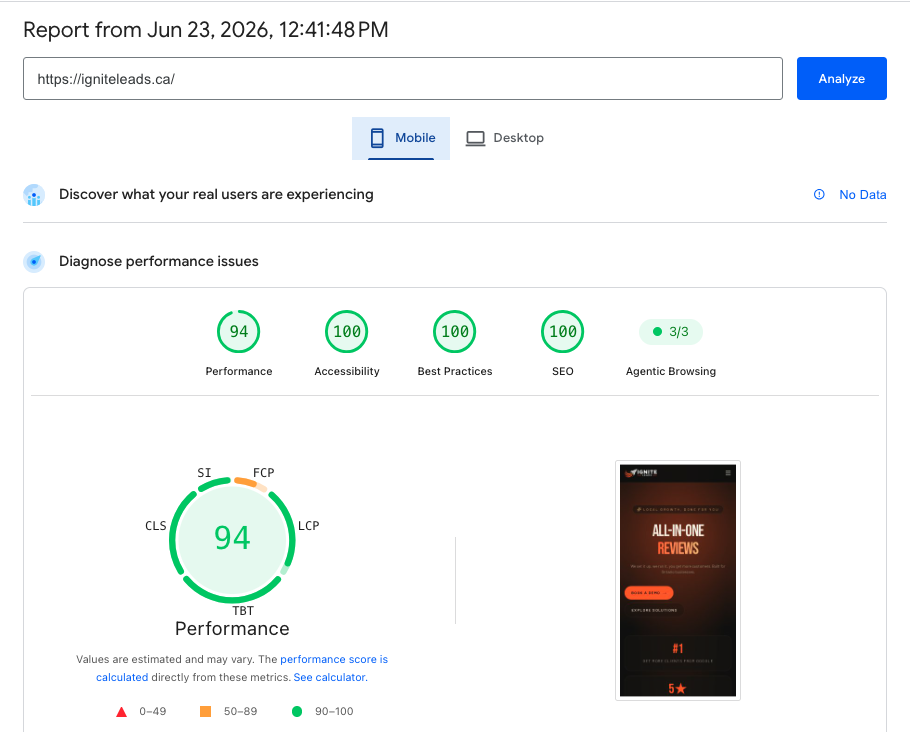
Local search traffic is valuable because intent is high, but intent can disappear quickly. A slow site, unclear headline, hidden phone number, or long contact form can cost you the lead even if you rank first.
Your website should answer four questions within seconds: what do you do, where do you serve, why should someone choose you, and how can they contact you right now? Mobile matters most. Many local searches happen from a phone while the customer is in a driveway, at work, or dealing with an urgent problem.
Use prominent click-to-call buttons, short forms, visible service areas, and trust signals such as reviews, certifications, before-and-after work, or clear guarantees. Then connect every enquiry to a CRM so it is tracked and assigned instead of sitting in an inbox.
Reviews Are a Visibility and Conversion Asset
Reviews influence local rankings, but their bigger impact is often conversion. A customer comparing three similar businesses may choose the one with recent, detailed feedback and a professional owner response. Your rating is not just a number. It is a public record of how reliably you serve people.
The businesses that generate reviews consistently do not wait for happy customers to remember. They build a simple request into the customer journey, usually after a completed job, successful appointment, or positive interaction. Automated follow-up helps make this consistent without putting another task on your team.
Avoid buying reviews, offering incentives that violate platform rules, or asking staff and friends to manufacture feedback. Those shortcuts create risk and produce vague reviews that do little to build trust. A steady flow of genuine reviews from real customers is more valuable than a sudden spike that looks unnatural.
Respond to both positive and negative reviews. Keep positive responses brief and specific. For negative feedback, stay calm, acknowledge the concern, and invite an offline resolution where appropriate. A thoughtful reply is often read by prospective customers who were never involved in the issue.
Speed-to-Lead Protects the Value of Your SEO
Here is the gap many local businesses miss: SEO can generate the lead, but it cannot make your team call back faster. If an enquiry arrives after hours or while your staff is on a job, the customer may contact two more businesses before anyone responds.
That is why local marketing needs automation. Instant text replies, missed-call text-back, CRM notifications, appointment reminders, and AI-assisted chat or phone reception can keep the conversation moving while your team handles operations. The objective is simple: acknowledge the lead immediately, collect the right details, and get them to the next step.
Automation should support your team, not create a cold experience. An emergency home service call needs urgency and a direct path to a human. A coaching enquiry may need qualification and scheduling. The right follow-up depends on the service, sales cycle, and customer expectations.
Measure Booked Revenue, Not Just Rankings
Rankings matter, but they are not the finish line. A business can rank well for a broad keyword that brings low-quality calls, while a lower-volume service term produces higher-value jobs. The reporting should show what happens after visibility.
Track calls, forms, booked appointments, response times, review growth, and lead source. If possible, connect leads to closed revenue. This tells you whether your investment is producing customers, not simply website visits.
Watch for operational bottlenecks. If calls are increasing but bookings are not, the problem may be pricing, staff availability, call handling, or weak follow-up rather than SEO. A coordinated system makes those issues visible early, when they are easier to fix.
Local SEO Works Best as One Connected System
The strongest local businesses do not treat their website, Google profile, reviews, and follow-up as separate projects. They run them as one customer acquisition process. Search visibility creates the opportunity. Reviews create confidence. A clear website drives action. Automation makes sure the lead receives a response.
That is the practical advantage of a managed system: less time switching between tools and more control over the path from search to booked customer. Ignite Leads builds that system for service businesses that want more local demand without taking on another marketing job.
Start with the basics that affect real customer decisions: accurate business information, clear service pages, recent reviews, and immediate lead response. Then improve the system based on calls and bookings, not assumptions. The next customer searching in your area is already comparing options. Make it easy for them to choose yours.
Allan Heath
Founder of Ignite Leads. Helps local businesses grow through SEO, lead generation, and marketing automation — simplifying the playbook so owners can focus on the work.