Article
Local Search Trends in Ontario That Drive Calls
September 27, 2026 • 7 min read
A homeowner in Vaughan with a leaking water heater is not researching plumbing strategies. They are searching, checking ratings, calling the business that looks credible, and moving on if nobody answers. That is the commercial reality behind local search trends in Ontario: visibility matters, but speed, trust, and follow-up decide who gets the job.
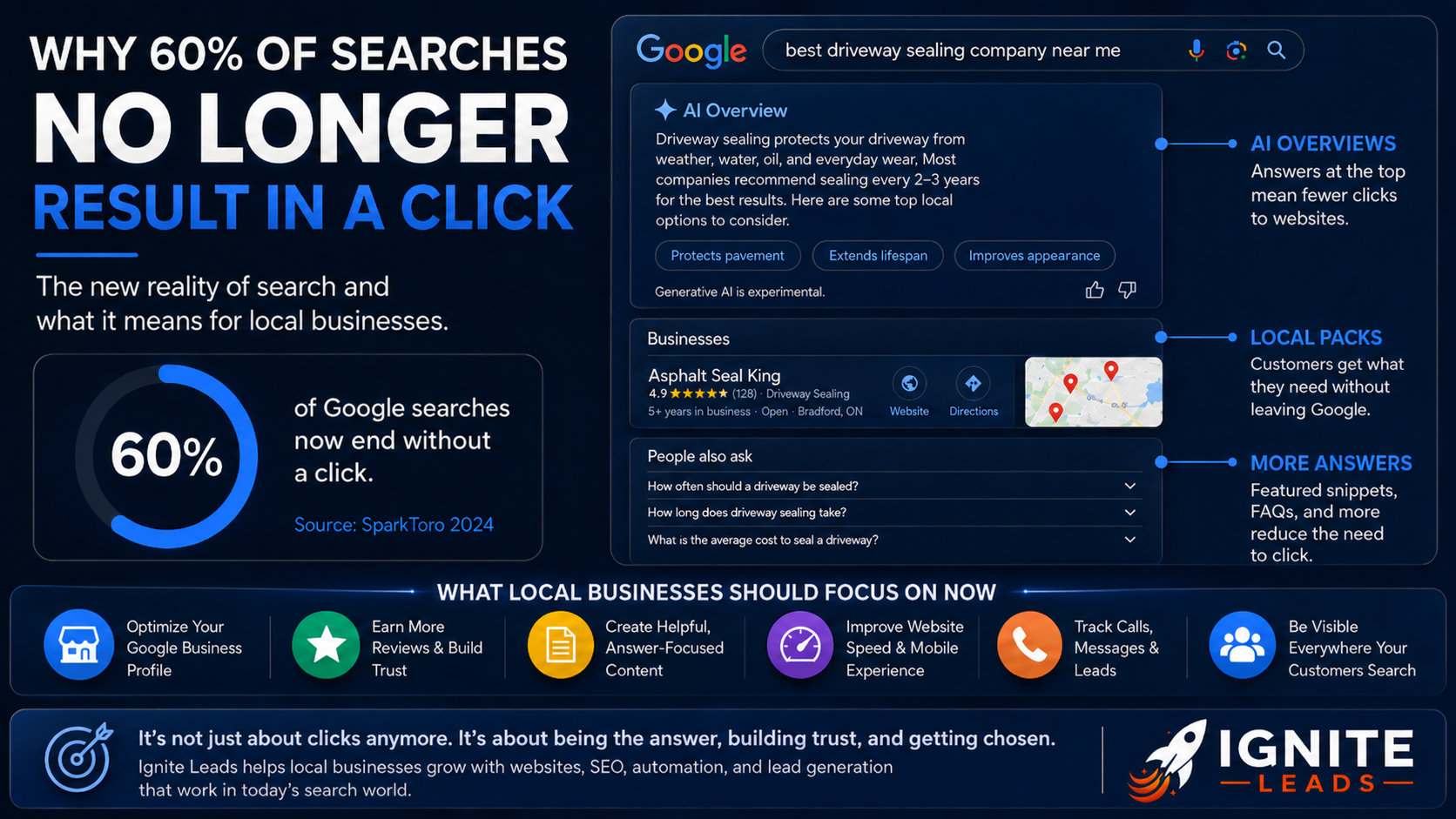
For service businesses, local search is no longer just a ranking exercise. Google Maps, reviews, mobile search results, call buttons, business profiles, websites, and lead response systems now work as one customer acquisition path. A weak point anywhere in that path can turn a high-intent lead into revenue for a competitor.
Local Search Trends in Ontario Are Getting More Competitive
Ontario service markets are crowded, especially across growing communities such as Barrie, Newmarket, Aurora, and Vaughan. More businesses understand that a Google Business Profile can produce calls. More franchises are investing in local pages. More independents are collecting reviews and running paid ads to cover gaps in organic visibility.
The result is not that small operators cannot compete. It means generic marketing is less likely to work. A basic website, a neglected profile, and a phone number that goes unanswered will not outperform a business with current reviews, clear service information, fast response times, and consistent local signals.
Search results are also more compressed. On a mobile screen, a customer may see map listings, sponsored placements, review ratings, hours, and call options before they reach traditional website results. If your listing does not earn attention at that moment, being technically indexed is not enough.
Intent matters more than search volume
Broad searches can look impressive in a report, but they do not always create booked work. A search such as "garage repair near me," "emergency electrician Barrie," or "best med spa in Newmarket" carries immediate intent. The person is close to choosing.
That is why Ontario businesses should focus less on chasing traffic for its own sake and more on winning the searches that lead to calls, quote requests, bookings, and showroom visits. A lower-volume service page that consistently produces qualified leads is more valuable than a popular blog post that attracts people outside your service area.
Google Business Profiles Have Become a Front Door
For many local customers, your Google Business Profile is the first version of your business they see. It is where they evaluate your rating, photos, categories, service areas, hours, recent activity, and response quality. It needs the same operational attention as a storefront or reception desk.
Accuracy is the baseline. Your business name, phone number, website, hours, primary category, and service details should match reality. Seasonal hours, holiday closures, and service changes should be updated quickly. A customer who finds conflicting information may not call to clarify. They will choose another result.
Category selection also deserves more care than it usually gets. The primary category tells Google what kind of business you are. Secondary categories can support related services, but adding every possible option creates a vague signal. Be specific about the work you want more of.
Photos are not decoration. Original images of completed jobs, team members, vehicles, facilities, and equipment help customers recognize a legitimate local operator. For a spa, that may mean a clean treatment space and real results. For a garage, it may mean organized bays and technicians at work. Stock imagery rarely builds the same confidence.
Reviews Are Now a Conversion System
Ontario consumers compare businesses quickly. When two providers appear equally convenient, review quantity, recency, and quality often break the tie. A business with 150 reviews from the last few months sends a different signal than one with 28 reviews, most of them several years old.
The trend is not simply to get more reviews. It is to build a consistent, compliant review process that captures feedback when the customer experience is still fresh. Asking only when staff remember creates uneven results. Automating the request after a completed job, visit, or appointment makes reputation growth predictable.
Review responses matter too. They show prospective customers how you handle praise, questions, and problems. A short, professional response is enough. Avoid copy-and-paste replies that sound automated or defensive public arguments that keep a negative experience visible longer than necessary.
Do not offer incentives for positive reviews or pressure customers to change honest feedback. The sustainable play is better service followed by a simple request. Strong reviews are a byproduct of a reliable operation, then a powerful sales asset once they are visible in search.
Fast Response Is Becoming a Ranking Advantage You Can Feel
Google does not need to publish every detail of its local ranking systems for the business impact to be obvious: businesses that answer faster tend to convert more of the demand they earn. A top-three map ranking has limited value if calls go to voicemail, web forms wait until tomorrow, or messages are handled after business hours.
This is especially costly for urgent trades, auto services, clinics, and appointment-based businesses. The lead is often contacting several providers at once. The first helpful reply has a real advantage, even when another company has a slightly stronger online presence.
AI chat, text follow-up, missed-call text back, and voice reception are becoming practical tools for small and mid-sized operators because they reduce the gap between inquiry and response. The goal is not to make every customer interaction robotic. The goal is to acknowledge the lead immediately, gather the right details, and get them to a qualified person or booked slot without delay.
There is a trade-off. Automation must be configured around how the business actually works. A roofing company needs different qualification questions than a coaching practice. A poorly built chatbot that cannot answer basic service-area or scheduling questions can create frustration. A well-managed system protects staff time while making customers feel looked after.
Location Pages Need Proof, Not City Name Swaps
Businesses serving multiple Ontario communities often create one page per location. That approach can work, but only if each page has genuine value. Changing "Aurora" to "Newmarket" across the same paragraph is thin content, and customers can spot it.
A useful local service page explains what you offer in that area, which service issues are common, how far you travel, what customers can expect, and how to request service. It should include relevant proof where possible: local reviews, project examples, team availability, or practical details about service coverage.
Do not create pages for every postal code simply to inflate your footprint. Build pages around real service areas and real business capacity. Local search visibility is more durable when it aligns with where you can actually deliver a good customer experience.
Websites Must Convert the Search, Not Just Represent the Brand
A clean website remains essential because it validates the business after a prospect finds you on Google. Customers want quick answers: what you do, where you work, why they should trust you, how much the next step costs or involves, and how to contact you now.
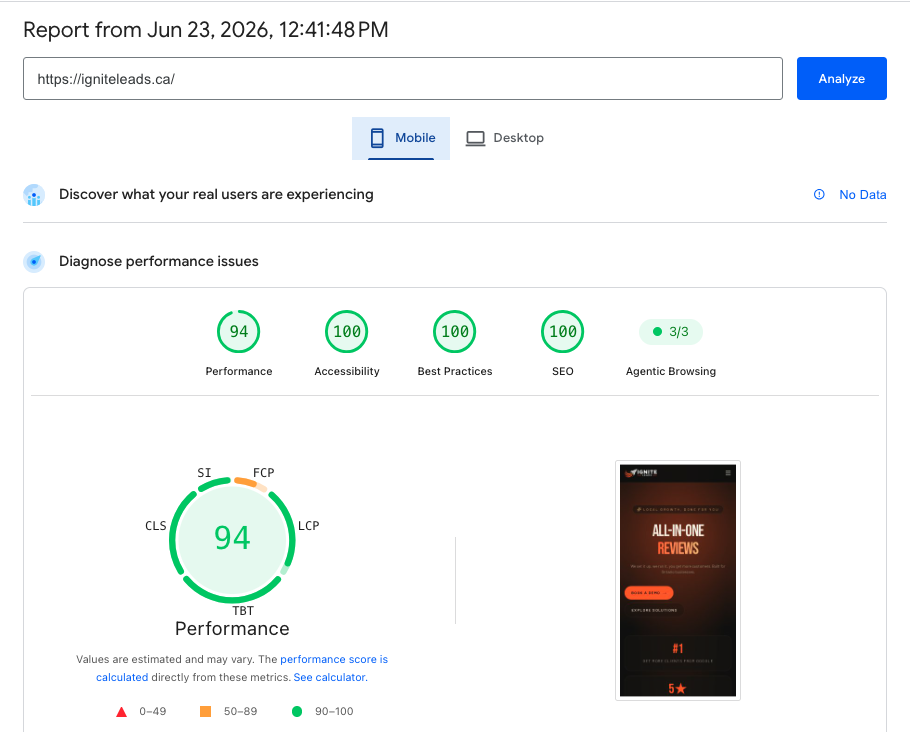
Mobile performance is non-negotiable. Most local searches happen on phones, often between tasks or during a problem. A slow site, tiny contact form, hidden phone number, or vague service page adds friction at the exact moment a lead is ready.
The strongest local websites use clear service pages, visible calls to action, reviews, before-and-after proof where relevant, and easy booking or quote options. They avoid forcing visitors through a long brand story before answering the practical question: can you help me, and how soon?
Measure Booked Revenue, Not Marketing Activity
The most useful shift for Ontario operators is moving from vanity metrics to pipeline metrics. Rankings, impressions, clicks, and profile views are indicators. They are not the outcome.
Track which channel produced the lead, how quickly it received a response, whether it was qualified, whether it booked, and whether it became revenue. This is where a coordinated system beats a collection of disconnected tools. Your website, profile, reviews, CRM, automation, and reporting should make the path from search to sale visible.
Not every business needs the same mix. A high-ticket renovation company may prioritize detailed quote requests and call tracking. A med spa may prioritize online booking and reputation. An emergency locksmith may prioritize immediate phone handling. The common requirement is simple: do not spend to generate demand that your team cannot capture.
Local search trends in Ontario favour businesses that remove friction faster than their competitors. Keep your profile current, earn recent reviews, answer every lead quickly, and make the next step obvious. When those pieces operate together, search visibility becomes more than a marketing metric. It becomes a dependable source of booked customers.
Allan Heath
Founder of Ignite Leads. Helps local businesses grow through SEO, lead generation, and marketing automation — simplifying the playbook so owners can focus on the work.