Article
Local SEO for Small Business That Gets Calls
July 31, 2026 • 7 min read

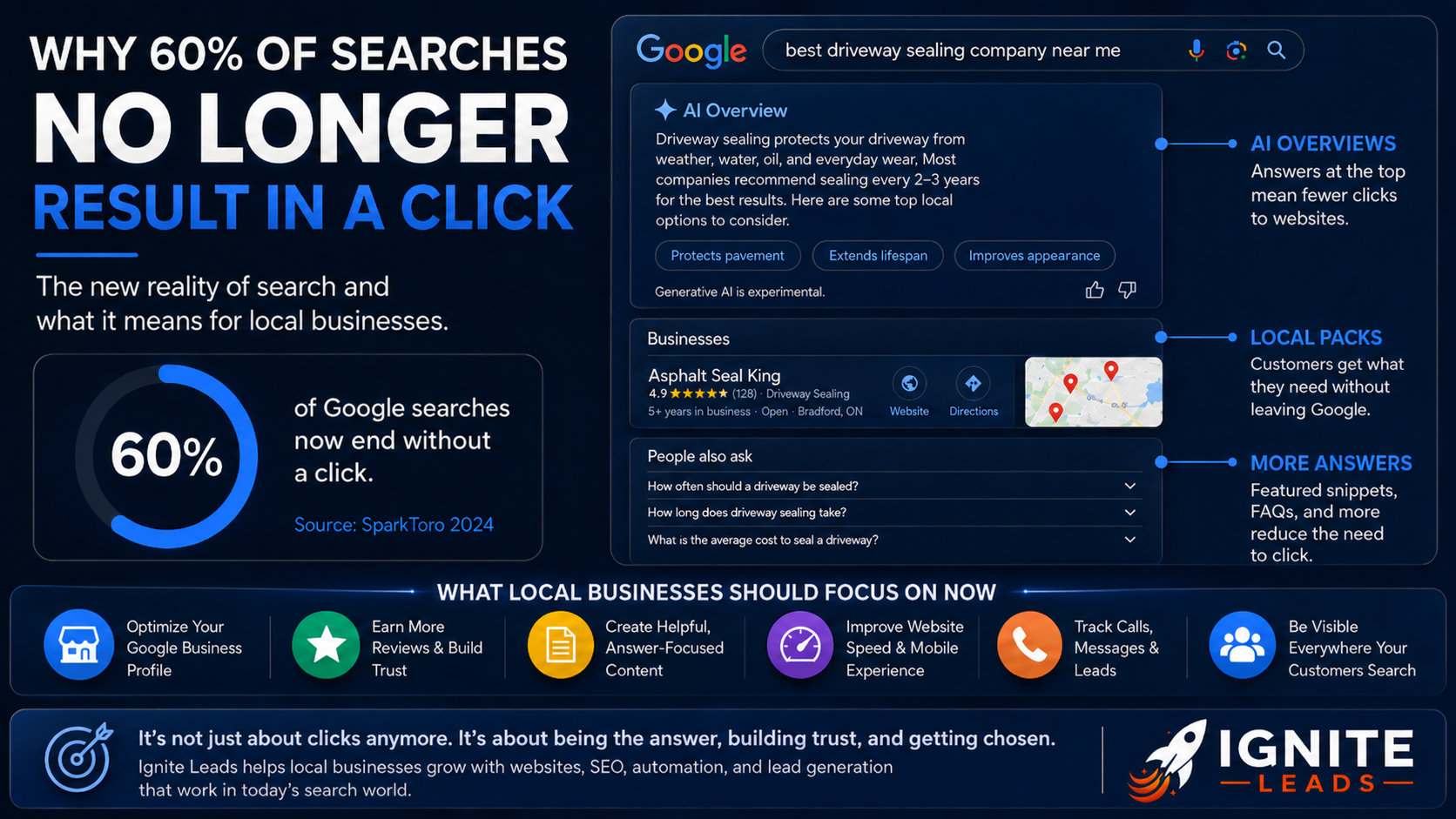
A homeowner in Barrie searches “emergency plumber near me” at 8:15 p.m. They do not want a marketing lesson. They want a trusted business that answers the phone, has strong reviews, clearly serves their area, and makes booking easy. That is what local SEO for small business needs to accomplish: put your company in front of ready-to-buy customers, then remove every reason they might choose someone else.
For service businesses, visibility is only half the job. A top position that sends leads to a slow website, an unanswered call, or a generic contact form still leaks revenue. The businesses that grow consistently treat local search, reputation, and follow-up as one operating system.
Local SEO for Small Business Starts With Intent
Local SEO is the work of helping Google understand where you operate, what services you provide, and why customers should trust you. It affects what appears in Google Maps, the local business results, and standard search listings when someone searches for a service in or near your service area.
The difference between local SEO and broad SEO matters. A garage in Vaughan does not need website visitors from Alberta. A spa in Newmarket does not need thousands of people reading a blog who will never book. It needs nearby people searching for services it can deliver right now.
That means the goal is not traffic for its own sake. The goal is qualified calls, quote requests, directions, appointments, and booked jobs. A smaller number of high-intent searches can produce more revenue than a much larger audience with no local buying intent.
Get the Google Business Profile Right First
Your Google Business Profile is often the first interaction a prospect has with your business. It is not a set-it-and-forget-it directory listing. It is a conversion asset that needs accurate information, ongoing proof, and regular attention.
Start with the basics. Your business name, primary category, service areas, phone number, hours, website address, and services must be correct and consistent. Choose the most specific primary category that matches your core offer. A company that specializes in furnace repair should not rely on a vague category if a more precise option is available.
Then give customers enough information to act. Add service descriptions written in plain language, current photos of your team and work, and clear details about what makes your process different. If you serve customers at their location rather than a storefront, set your profile up properly as a service-area business instead of displaying an address customers cannot visit.
Hours deserve special attention. Incorrect holiday hours create frustration and can cost a booked job. If you offer emergency or after-hours service, make sure your stated availability and your actual response process match. Promising fast help but sending every call to voicemail is not a local SEO problem. It is an operations problem.
Build Pages for Services and Areas You Actually Serve
Your website needs to confirm the relevance Google sees in your profile. One thin homepage with a list of every service and every city is rarely enough to compete in a busy market.
Create focused service pages for your profitable offers. A home service company may need separate pages for drain cleaning, water heater installation, and emergency repairs. A coaching business may need distinct pages for executive coaching, career coaching, and team programs. Each page should explain the service, who it is for, what happens next, and how to contact you.
Location pages can help when they represent real service coverage. If you regularly serve Aurora, Newmarket, Barrie, and Vaughan, pages tailored to those markets can make sense. But they must be useful. Include relevant service information, local context, proof of work in the area where available, and a clear call to action.
Do not create dozens of nearly identical city pages by switching out place names. It creates a weak user experience and gives Google little reason to rank the pages. Fewer useful pages beat a large collection of copied pages.
Make every page ready to convert
A local visitor should not have to hunt for a phone number, wait for a heavy page to load, or fill out a long form to request help. Put the next step in plain sight. For urgent services, click-to-call and rapid call handling matter more than a clever headline. For appointment-based businesses, an easy booking path can be the difference between a lead and a lost opportunity.
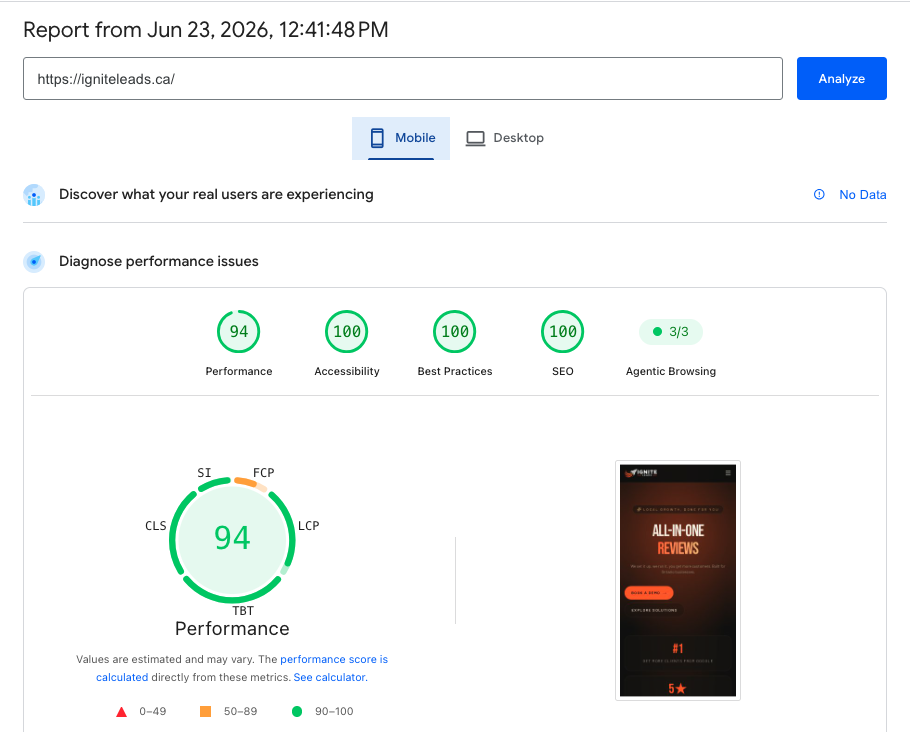
Mobile performance is especially important. Most local searches happen when people are out, busy, or comparing options quickly. Your site should load fast, display cleanly on a phone, and make it easy to contact a real person or an automated receptionist that can qualify and route the lead.
Reviews Are a Ranking Signal and a Sales Tool
Reviews influence local rankings, but their larger value is trust. When a prospect sees two similar businesses, the one with recent, detailed, credible reviews has a major advantage.
The key word is recent. A company with 80 reviews from three years ago may look less active than one with 35 strong reviews collected steadily over the past few months. Ask for reviews as part of your normal customer process, ideally after a successful job, appointment, or result. Do not leave it to memory after a busy day.
A simple automated request system makes this consistent without asking staff to chase customers manually. Keep the request short, send it at the right time, and make the review path easy. Never buy reviews or pressure customers into positive feedback. Shortcuts can damage trust and create platform problems that are far more expensive than doing it properly.
Respond to reviews as well. Thank customers for positive feedback and handle negative comments calmly and professionally. A measured response shows future customers that there is a real owner behind the business. It also gives you a chance to take a service issue offline and resolve it.
Keep Your Business Information Consistent
Google builds confidence by comparing information across the web. If your business name, phone number, address, or service details vary widely across directories, social profiles, and old listings, that confidence drops.
This is less glamorous than content or reviews, but it matters. Audit your major listings and correct outdated information caused by moves, rebrands, changed phone numbers, or new operating hours. For multi-location businesses, each location needs its own accurate details and a clear process for keeping them current.
Consistency does not mean stuffing every directory possible with low-quality listings. It means maintaining credible, relevant business information where customers and search engines expect to find it.
Measure Calls, Bookings, and Revenue - Not Just Rankings
Rankings are useful, but they are not the finish line. Search results change by location, device, and personal behaviour. A report that says you moved from position six to position three is only meaningful if it produces better business outcomes.
Track which calls, forms, chats, and bookings come from local search. Track how fast your team responds. Track how many inquiries become booked appointments or paid jobs. If calls are coming in but few are converting, look at pricing, call scripts, availability, and response time before assuming you need more traffic.
Speed-to-lead is where many local businesses lose ground. A prospect who submits a form to three companies is unlikely to wait hours for a reply. Fast, consistent follow-up through CRM automation, text messages, and AI-assisted reception can protect the value of every lead your local SEO work generates.
Treat Local Visibility as a Managed System
Local SEO rewards consistency, not random bursts of activity. Profiles need updates. Reviews need a repeatable request process. Website pages need to reflect your services and coverage. Leads need to be answered quickly. Reporting needs to show where customers are coming from and what they are worth.
You can manage these pieces internally, but there is a trade-off. Owners and office managers often end up switching between website edits, review requests, missed-call follow-up, and reporting while the actual work of serving customers piles up. A managed system gives one team responsibility for visibility, reputation, and conversion instead of leaving results spread across disconnected tools.
Ignite Leads builds that kind of coordinated local growth system for service businesses that want more control without adding more marketing work to the day.
The practical next step is simple: search for your own business the way a new customer would. Check the map listing, review quality, service information, website speed, and how quickly someone responds when you call or submit a request. Every weak point is a place where a competitor can take the job. Fix the path from search to booked customer, and local search becomes a dependable source of growth rather than another task on the list.
Allan Heath
Founder of Ignite Leads. Helps local businesses grow through SEO, lead generation, and marketing automation — simplifying the playbook so owners can focus on the work.