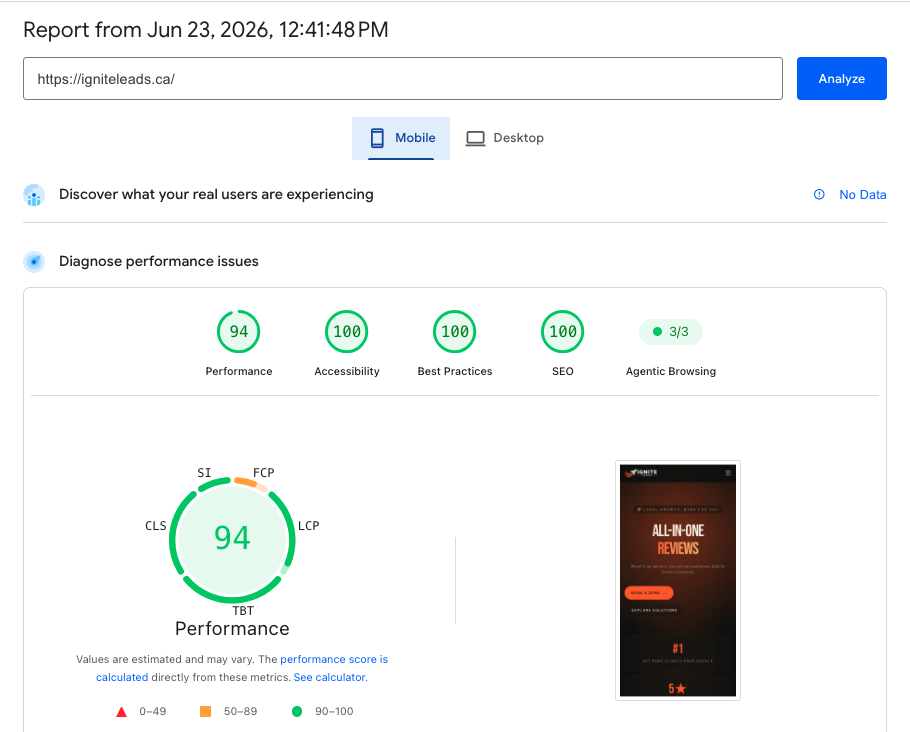
Article
Local SEO for Small Businesses That Drives Calls
October 13, 2026 • 6 min read
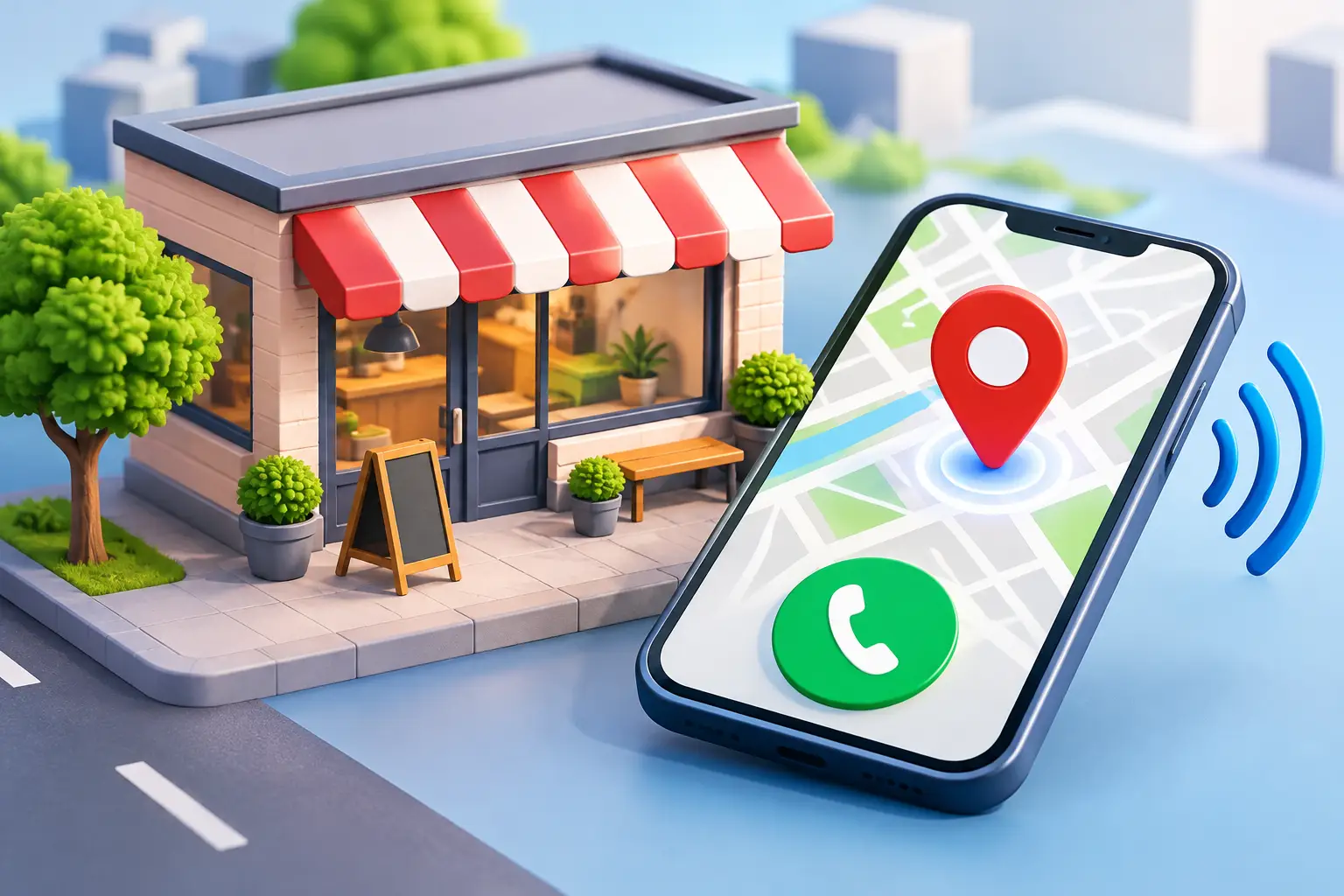
When someone searches “garage near me,” “Barrie massage,” or “emergency plumber in Vaughan,” they are not researching for fun. They are looking for a business to call, visit, or book now. Local SEO for small businesses is the system that puts your company in front of those high-intent customers before they choose a competitor.
For a service business, visibility is only part of the job. A strong local presence also needs credible reviews, clear service information, a fast website, and follow-up that does not leave leads waiting. If one part breaks, you can still rank and lose the customer.
What Local SEO for Small Businesses Actually Does
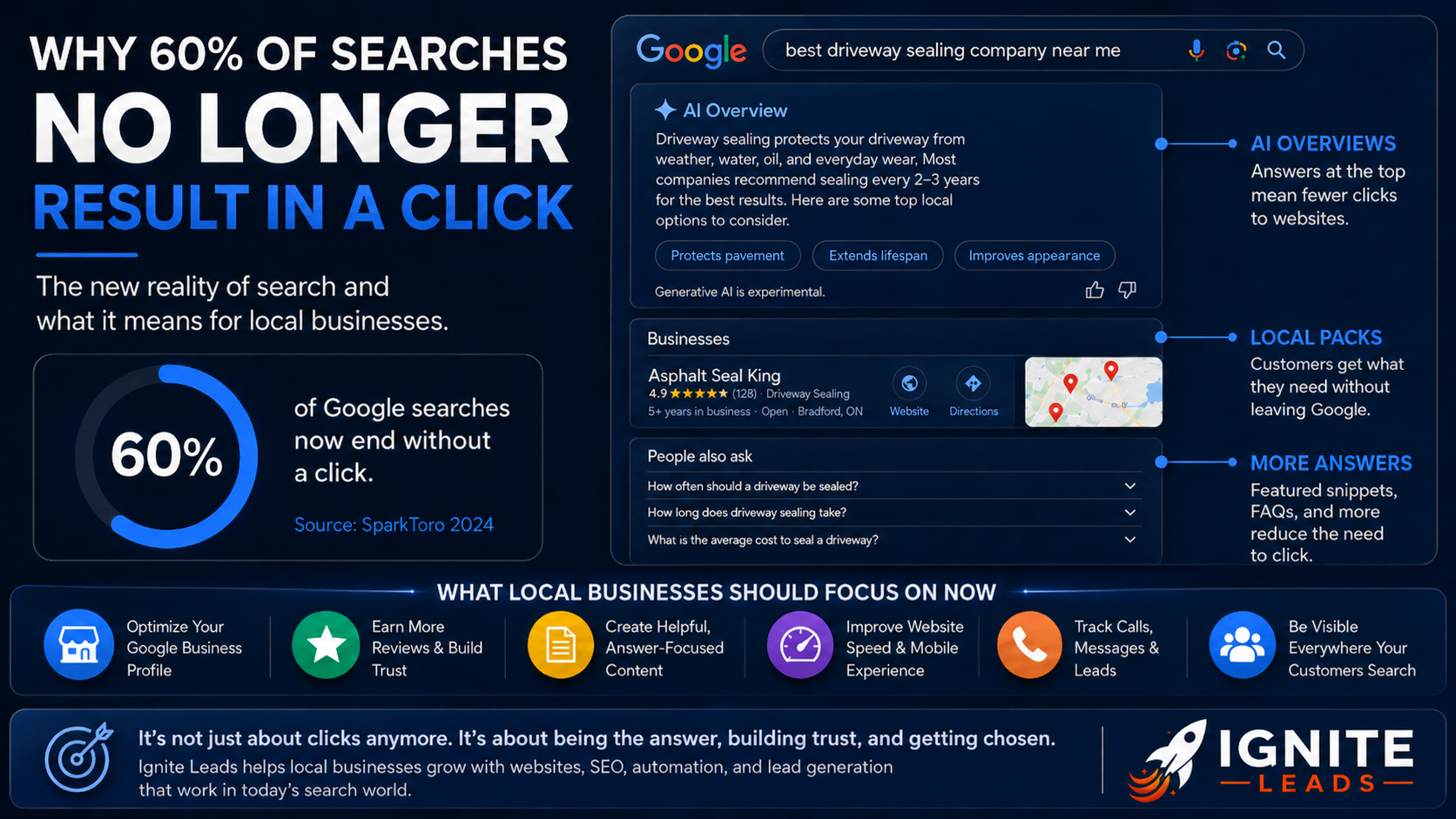
Local SEO improves how often your business appears when people search for services in a specific area. That includes Google Maps results, the local business listings that appear above standard search results, and your website’s organic visibility.
The goal is not to rank for every broad keyword in Ontario. The goal is to show up for searches that match your services, service area, and capacity to serve the customer. A Newmarket auto shop wants brake repair calls from nearby drivers. An Aurora spa wants appointment requests from people ready to book. A home service company may need coverage across several towns, but only where its technicians can respond profitably.
That distinction matters. Traffic without intent can look good in a report and do very little for revenue. Local SEO should be measured by qualified calls, form submissions, booked appointments, direction requests, and customer acquisition - not rankings alone.
Your Google Business Profile Is the Front Door
For many local searches, your Google Business Profile is the first thing a potential customer sees. It needs to answer the questions that decide whether they contact you: What do you do? Where do you serve? Are you open? Can you be trusted? How do they reach you?
Start with accurate business details. Your business name, phone number, website, hours, address or service area, and primary category must be consistent. Small errors create confusion for customers and reduce Google’s confidence in your listing.
Your category selection deserves more attention than most owners give it. Choose the category that best describes your core service, not the broadest label available. Then add relevant secondary categories only where they accurately reflect services you actually provide. A business that tries to appear relevant for everything often becomes less clear to both Google and customers.
Photos also do real work. Use current images of your team, completed jobs, location, vehicles, equipment, and finished results. Stock photos may make a profile look polished, but real photos build local trust. They give customers evidence that your operation is active and legitimate.
Keep services, service descriptions, and hours updated. This is basic execution, but it affects calls. An outdated holiday schedule, disconnected number, or vague service list sends customers to the next result.
Build Service Pages That Match How Customers Search
One generic “Services” page is rarely enough for a business with multiple revenue-driving offers. Customers search for the specific problem they need solved. Your website should have dedicated, useful pages for your priority services.
A roofing company may need separate pages for roof repair, replacement, inspections, and emergency repairs. A clinic may need pages for each treatment customers search before booking. Each page should explain the service, who it is for, what to expect, the areas served where relevant, and how to take the next step.
Do not create thin pages that swap one city name for another. Google has become better at spotting location pages with no local value, and customers can spot them immediately. A page for Barrie should earn its place by being useful to someone in Barrie, not by repeating the word “Barrie” twenty times.
Good local pages combine service relevance with proof. Include real project examples, common local customer questions, testimonials, service process details, and direct calls to book or call. The page should help a buyer decide, not just help a keyword rank.
Reviews Are a Visibility and Conversion System
Reviews influence local rankings, but their bigger value is conversion. When two businesses appear side by side, the company with recent, detailed, credible reviews usually earns more calls.
The problem is that most businesses collect reviews inconsistently. They ask only when someone remembers, usually after a great job, and then stop when operations get busy. That creates a burst of reviews followed by months of silence.
A better approach is to make the request part of the customer workflow. Trigger a review request after a completed service, paid invoice, successful appointment, or positive follow-up. Keep the request simple and timed close to the experience. Your team should not have to chase customers manually every week.
Reply to reviews as well, including the difficult ones. A short, professional response shows future customers that your business takes service seriously. Do not argue publicly or use a copied response for every person. Address the issue calmly, protect private details, and move the resolution offline when necessary.
Review quality matters alongside volume. A steady stream of genuine reviews that mention specific services and positive outcomes is more valuable than vague five-star ratings collected all at once.
Speed to Lead Protects the Value of Your Rankings
Here is the operational gap that costs local businesses the most money: a lead finds you on Google, submits a form or calls after hours, and receives no response until the next day. By then, they have contacted three competitors.
Local SEO creates opportunity. Your response system determines whether you convert it.
Every lead source should feed into one place where your team can see, assign, and follow up on it. Calls need to be answered or routed. Web forms need instant confirmation and a fast human response. Missed calls need automated text-back messages that invite the customer to continue the conversation or book a time.
AI chat and voice reception can help handle first contact outside business hours, answer common questions, collect service details, and route urgent requests. It is not a substitute for good staff or clear processes. It is a way to prevent qualified leads from disappearing while your team is on a job, with a customer, or closed for the day.
This is where a disconnected marketing setup fails. A website, Google profile, review platform, phone system, and CRM cannot operate as separate projects if your goal is more booked customers. They need to work as one system.
Track What Produces Revenue, Not Just Activity
A local SEO report should make business decisions easier. If it only shows impressions, keyword positions, and page visits, it is incomplete.
Track the actions that indicate demand: Google Business Profile calls, website calls, form leads, booked appointments, review growth, missed-call recovery, and lead response time. Where possible, track which leads become paying customers. This shows which services and locations are worth further investment.
There are trade-offs. Ranking for a competitive service in a large market takes time, particularly if established competitors have years of reviews and strong websites. A newer business may see faster returns by focusing first on its highest-margin services, nearby areas, review generation, and conversion process. The right plan depends on competition, service radius, seasonality, and how quickly your team can handle new demand.
Consistency beats random marketing bursts. Update your profile, earn reviews, improve service pages, monitor leads, and fix friction every month. Businesses that treat local visibility as an operating system build an advantage that is hard for competitors to copy.
Put the System in Place Before You Need More Leads
More visibility is only useful when your business is ready to answer, follow up, and book the work. That is why local growth should begin with the full customer path: search result, profile, website, call or form, response, booking, and review.
Ignite Leads helps service businesses bring those moving parts under one managed system, so marketing execution does not become another job for the owner. The practical next step is simple: look at your last ten inbound leads. How many received a fast response, how many booked, and where did the rest fall out? That answer will tell you what to fix first.
Allan Heath
Founder of Ignite Leads. Helps local businesses grow through SEO, lead generation, and marketing automation — simplifying the playbook so owners can focus on the work.