Article
Local SEO Newmarket for More Customer Calls
September 29, 2026 • 6 min read

A Newmarket homeowner with a burst pipe is not researching marketing strategies. They are searching Google, checking reviews, and calling the business that looks credible, nearby, and ready to answer. That is what local SEO Newmarket is built to capture: high-intent customers who need a service now or are close to booking one.
For service businesses, visibility is only part of the job. A top placement that leads to an outdated phone number, a slow website, or an unanswered form still loses revenue. The strongest local growth system connects rankings, reputation, response speed, and follow-up so more searches become real appointments.
What Local SEO Newmarket Actually Does
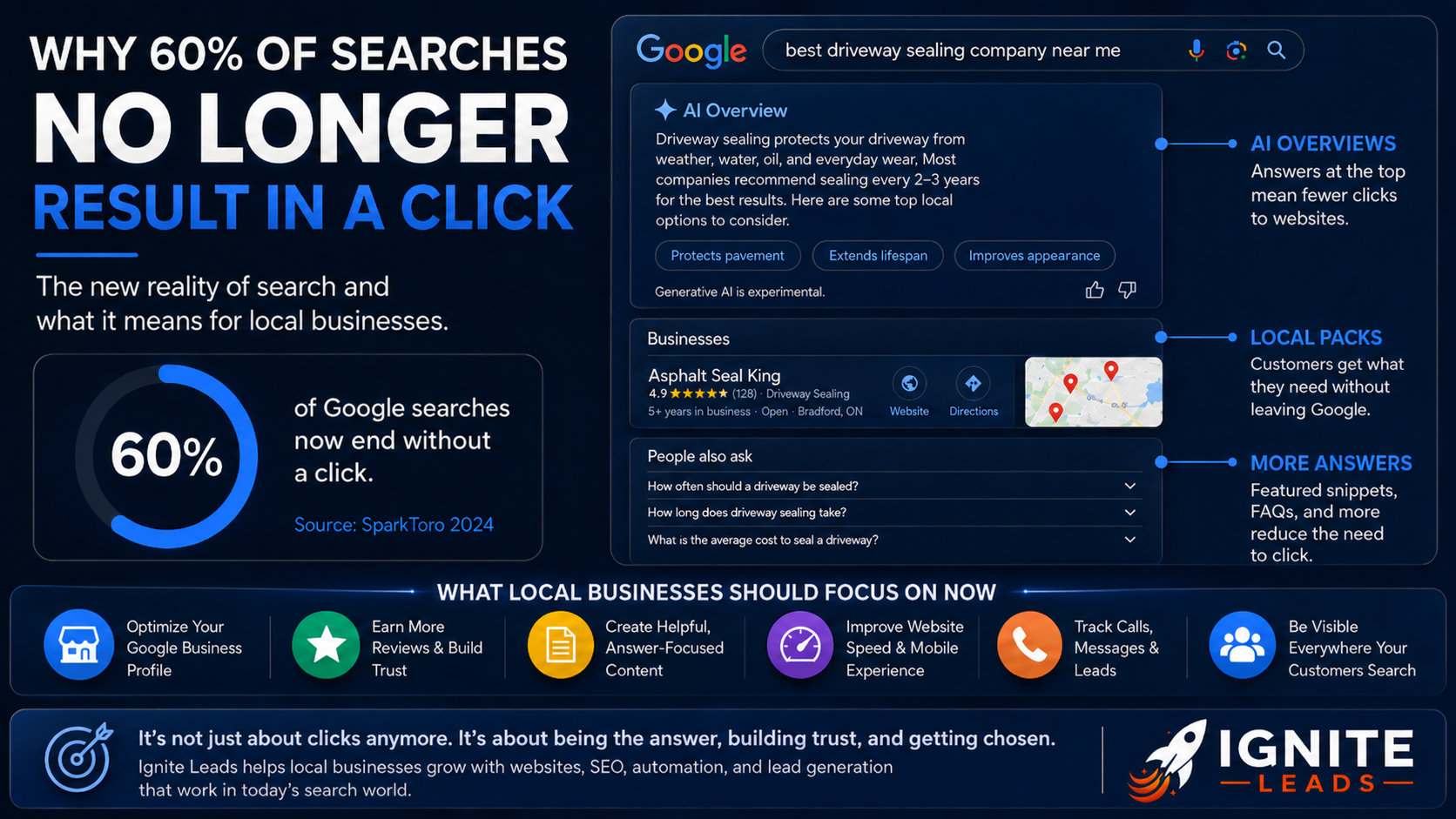
Local SEO helps your business appear when people search for services in and around Newmarket. That includes map results, the local business listings that show up before many organic pages, and standard Google results for searches such as "garage door repair Newmarket," "best spa near me," or "plumber in Newmarket."
Google is trying to show a nearby business that is relevant, trusted, and likely to solve the searcher's problem. Your location matters, but it is not the only factor. A business can serve Newmarket without having the largest office or the oldest domain. It needs clear service information, a well-managed Google Business Profile, consistent business details across the web, useful local pages, and proof that customers have had a good experience.
This is why local SEO should not be treated as a one-time website task. Search visibility changes as competitors earn reviews, add services, update profiles, and improve their sites. A listing left alone for a year is rarely positioned to win consistently.
Start Where Local Customers Make Their Decision
For many service searches, your Google Business Profile is the first sales page a prospect sees. It needs to make the next step easy. The business name, primary category, phone number, hours, website, service areas, and appointment options must be accurate. Small inconsistencies create friction for customers and uncertainty for Google.
Choose categories based on the service that drives the best leads, not the broadest label available. A specialty provider should not hide behind a vague category if Google offers a closer match. Add the specific services you want to sell, use current photos that show real work or your real location, and keep holiday hours updated. These are operational details, but they affect calls.
Reviews carry just as much weight with people as they do with search visibility. A steady flow of recent, genuine reviews gives a prospect confidence before they ever speak to your team. Asking every happy customer at the right point in the job is more effective than sending one large request campaign twice a year. Automation helps, but the request still has to be timely and simple.
When reviews arrive, respond to them. Thank customers by name where appropriate, reference the service naturally, and handle negative feedback calmly. Do not argue in public or use canned replies that make the business look absent. A thoughtful response can protect trust even when the original review is not ideal.
Build Pages Around Services and Buying Intent
A one-page website with a city name pasted into the footer will not compete for meaningful local searches. Customers and Google both need clarity on what you do, where you work, and why someone should choose you.
Each core service deserves a focused page when the service has enough demand and is genuinely offered. A heating company, for example, may need separate pages for furnace repair, furnace installation, heat pump installation, and maintenance. Those pages should explain the problem, the service process, relevant qualifications, expected response times, and how to book. They should not be thin copies with a few words changed.
Location pages can work well when they represent a real service area and contain useful local context. They work poorly when a business creates dozens of near-identical pages for every nearby neighbourhood. That approach creates a weak customer experience and can dilute the site. Start with the locations that matter commercially, then build depth rather than volume.
Your website also has one job that rankings alone cannot handle: conversion. Make the phone number obvious on mobile, use short forms, state when someone can expect a reply, and show proof near the point of contact. If a customer needs urgent service, an AI chat or voice receptionist can qualify the request and route it immediately instead of letting the lead go cold after hours.
Fix the Gaps That Quietly Cost Leads
Many local businesses do not have a ranking problem first. They have a capture and follow-up problem. They pay to generate traffic, then leave callers on hold, miss form notifications, or reply the next morning. In competitive categories, the first credible response often gets the job.
A practical local growth setup should track calls, forms, chat conversations, booked appointments, and lead sources in one place. That gives an owner a usable answer to a simple question: which channels are producing booked work, not just clicks?
There are trade-offs. Adding a live chat tool is not helpful if nobody monitors it. Running automated review requests is not helpful if the timing is wrong or the message goes to unhappy customers. More pages are not automatically better if the site becomes hard to navigate. The right system reduces manual work while keeping the customer experience personal and fast.
For businesses that operate across Newmarket, Aurora, Vaughan, or Barrie, centralized lead handling becomes even more valuable. Customers do not care which internal inbox received their request. They care that a qualified person answers, confirms availability, and makes the next step clear.
How to Measure Local SEO Newmarket Results
Rankings are useful, but they are not the final score. Search results can vary by location, device, and search history, so a number-one screenshot does not always mean the phone is ringing. Track visibility alongside business outcomes.
Look for growth in qualified calls, direction requests where relevant, form submissions, appointment bookings, review volume and rating, and the percentage of leads contacted quickly. If your business uses a CRM, measure the time from inquiry to first response and from inquiry to booked job. Those numbers expose whether marketing and operations are working together.
Expect local SEO to build over time. Profile improvements and technical fixes can create early gains, while stronger service pages, reviews, and local authority generally compound over several months. The timeline depends on competition, category, your starting reputation, and how close the searcher is to your location. A new contractor in a crowded market will need more than a profile cleanup. An established business with poor listings and no review process may see faster movement once the basics are fixed.
A Better Way to Run Local Growth
The most effective approach is not a collection of disconnected subscriptions. Your website should support the services you want to rank for. Your Google profile should reflect accurate business information. Your review process should run after completed work. Your CRM should trigger fast follow-up. Your reporting should show whether those pieces are producing booked customers.
That coordination is where managed systems create leverage. Ignite Leads helps local service businesses put visibility, reputation, lead capture, and automated follow-up under one operating system, so owners spend less time chasing tools and fewer good leads disappear.
The useful next move is simple: search for your own main service from a customer's phone, then try to contact your business. If the result, profile, website, and response process do not make booking feel easy, your next customer is likely choosing the competitor who does.
Allan Heath
Founder of Ignite Leads. Helps local businesses grow through SEO, lead generation, and marketing automation — simplifying the playbook so owners can focus on the work.