Article
Local SEO Vaughan: More Calls, Not More Tasks
August 24, 2026 • 6 min read

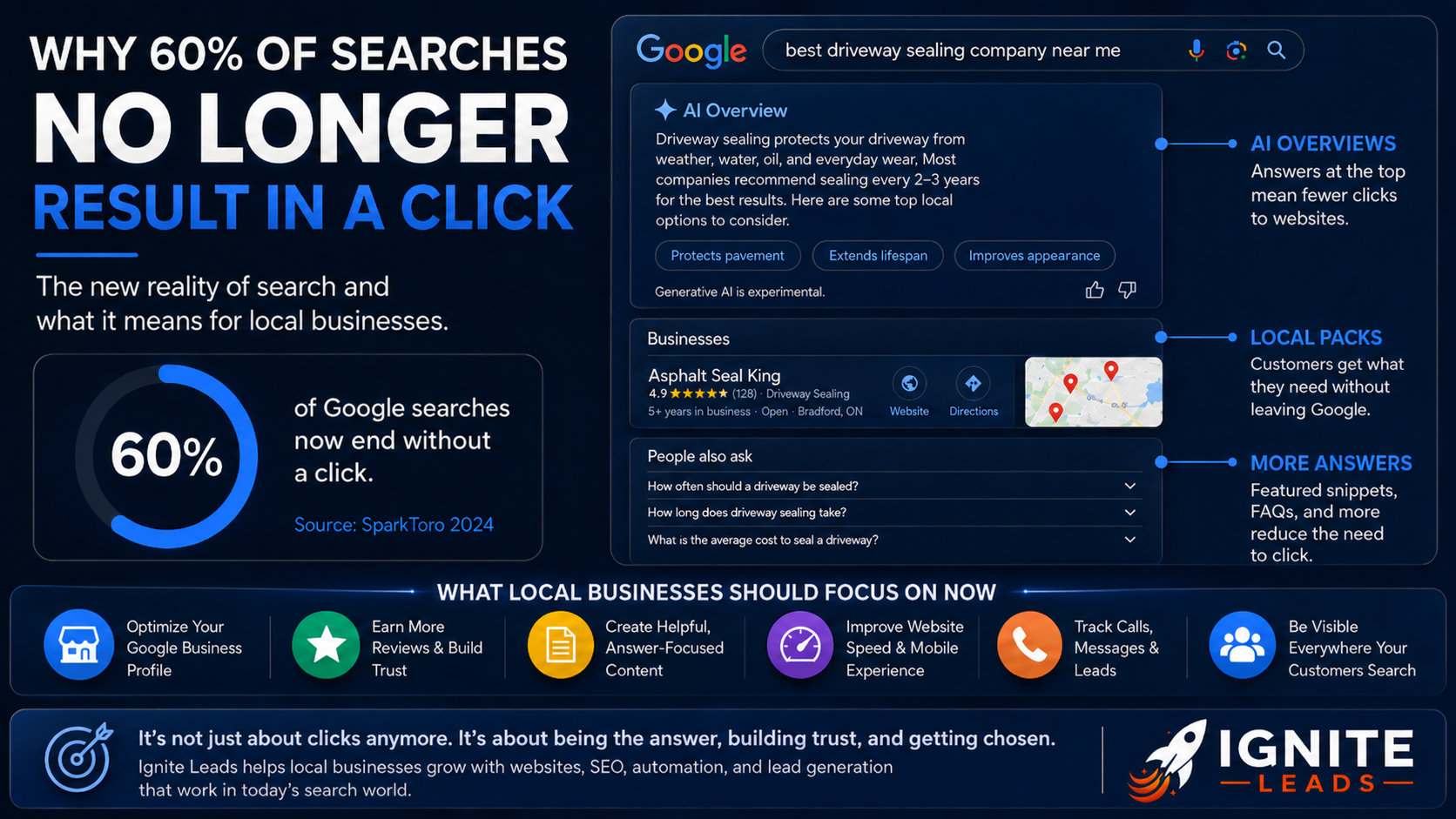
When a Vaughan homeowner searches “garage door repair near me” or “best physiotherapist in Vaughan,” they are not researching marketing. They are looking for a business they can call now. Local SEO Vaughan is the system that puts your service in front of that buyer before they choose a competitor with more reviews, a clearer profile, or a faster response time.
For service businesses, visibility is only the first step. A top Google position does not help much if your website is slow, your calls go unanswered, or new enquiries sit in an inbox until the next morning. The businesses that win local search turn visibility into a managed process: get found, build trust, respond quickly, and make booking easy.
What Local SEO in Vaughan Actually Needs to Do
Local SEO is often sold as a ranking service. Rankings matter, but they are not the outcome an owner is paying for. The real outcome is more qualified calls, appointments, estimate requests, and walk-ins from people in your service area.
That requires more than placing a few neighbourhood names on a website. Google needs clear evidence that your business is legitimate, active, relevant to the search, and trusted by local customers. Potential customers need to see the same thing within seconds.
For a Vaughan service business, that usually means your Google Business Profile is complete and maintained, your website clearly explains what you do and where you work, your reviews are current, and your business information matches across the web. It also means your contact process works on a mobile phone, because that is where many local searches happen.
The trade-off is simple: broad marketing can create awareness, but local search captures intent. Someone scrolling social media may need your service one day. Someone searching for it right now is much closer to booking.
Your Google Business Profile Is a Sales Asset
Your Google Business Profile is often the first interaction a local customer has with your company. Before they visit your website, they may see your category, rating, hours, photos, service areas, recent reviews, and phone number directly in Google Maps.
An incomplete profile creates doubt. A profile with outdated hours, weak photos, no recent reviews, or an unclear service description gives a buyer a reason to keep scrolling.
A properly managed profile should accurately reflect how your operation runs. Use the right primary category, define relevant services, add original photos, keep hours current, and publish updates when they genuinely help customers. If you serve customers at their homes or workplaces, configure your service area correctly instead of displaying an address that creates confusion.
Reviews have an outsized impact here. A business with a 4.8 rating and recent, detailed feedback has a clear advantage over a business with five old reviews, even if both offer comparable work. The goal is not to chase perfect ratings. The goal is to create a dependable review process that asks satisfied customers at the right point in the job or appointment journey.
Reviews Need a Process, Not a Reminder
Most owners know they should ask for reviews. The problem is that it gets pushed aside after a busy day. Staff forget, customers leave, and the review request never happens.
Automated follow-up fixes the operational gap. After a completed service, a simple text or email request can go out while the experience is fresh. The request should be easy to complete and should not feel scripted or aggressive. Over time, that creates a steady stream of new feedback rather than short bursts after someone remembers to ask.
Recent reviews also give you useful business intelligence. They show what customers value, where staff performance is strong, and which issues need attention before they become recurring complaints.
Build Service Pages That Match How People Search
A generic homepage rarely ranks well for every service you provide. It also makes customers work too hard to understand whether you are the right fit.
If you are a plumber, your site should not only say “plumbing services.” It should have useful, focused pages for the work that drives revenue, such as drain cleaning, water heater repair, emergency plumbing, and fixture installation. A massage clinic may need distinct pages for registered massage therapy, sports massage, and prenatal massage. The right page structure depends on your business, margins, and customer demand.
Each page should answer the questions a ready-to-book customer has: what service do you provide, who is it for, what areas do you serve, what happens next, and how can they contact you immediately? Add proof where it matters, including reviews, credentials, project photos, before-and-after examples, or clear pricing expectations when appropriate.
Do not create dozens of thin pages with only the city name changed. Google has become better at identifying low-value location content, and customers can spot it too. One strong page that explains a real service in a real local context will outperform a pile of copy-and-paste pages over time.
Local SEO Vaughan Works Better With Fast Lead Handling
This is where many marketing providers stop too early. They improve your visibility, send traffic to a form, then leave your team to manage the response.
That gap costs money. A customer who needs a quote, booking, or urgent repair may contact three businesses in ten minutes. If your competitor answers first with a clear next step, they often get the job. It does not matter that you ranked first if the lead was never handled.
Your local SEO system should connect to lead handling. Calls need to be answered or routed. Form submissions should trigger an immediate confirmation. Missed calls should receive a prompt text response. New enquiries should land in one place where your team can track status, follow up, and measure booked outcomes.
AI chat and voice reception can help when they are set up around your actual business rules. They can capture details, answer common questions, qualify basic requests, and route leads after hours. They are not a replacement for good service staff when a complex customer issue needs a real conversation. Used properly, they prevent simple enquiries from disappearing while your team is on-site, with a customer, or outside business hours.
Measure the Numbers That Lead to Revenue
Traffic alone is not a useful scorecard. More website visitors can look good in a report while producing no meaningful increase in booked work.
Track the actions that matter: phone calls, form submissions, appointment requests, direction requests, review volume, response times, and booked jobs. Where possible, connect leads to revenue so you can see which services and locations produce the strongest return.
This also helps you make better decisions. If a service page generates many enquiries but few booked jobs, the issue may be price expectations, targeting, slow response, or poor lead quality. If one service produces fewer leads but higher-value projects, it may deserve more attention. Local marketing should be adjusted based on operating data, not assumptions.
Consistency Beats One-Time SEO Work
Google visibility is not a set-and-forget asset. Competitors collect new reviews, update their profiles, add content, and improve their sites. Your own business changes too - new services, seasonal offers, staff changes, hours, or expanded service areas all need to be reflected accurately.
The strongest local presence comes from consistent execution: maintain the profile, earn reviews, improve key pages, track leads, and remove friction from follow-up. It is not glamorous, but it is how service businesses keep gaining ground without constantly reinventing their marketing.
For Vaughan businesses that want fewer disconnected tools and more control over the customer journey, Ignite Leads brings website visibility, reputation management, automation, and lead follow-up into one managed system. The point is not to give your team another dashboard to learn. It is to make sure the customer who finds you on Google can actually become a booked customer.
Start with the basics this week: search for your own business on Google from a customer’s perspective, check the accuracy of your profile, call your main number, submit a test form, and see how long it takes to receive a response. That short exercise will usually show you where your next local lead is being won or lost.
Allan Heath
Founder of Ignite Leads. Helps local businesses grow through SEO, lead generation, and marketing automation — simplifying the playbook so owners can focus on the work.