Article
Local SEO vs Paid Ads: What Drives More Calls?
August 11, 2026 • 7 min read

A garage has two empty bays on a Tuesday. A spa has appointment slots open before the weekend. A contractor needs quote requests before the next crew schedule is set. The local SEO vs paid ads decision matters because each channel solves a different version of the same problem: getting qualified local customers to call, book, or request a quote.
For service businesses, the wrong answer is not always choosing one channel over the other. The expensive mistake is paying for traffic without a system to convert it, or investing in visibility while letting high-intent leads wait hours for a reply.
Local SEO vs Paid Ads: The Core Difference
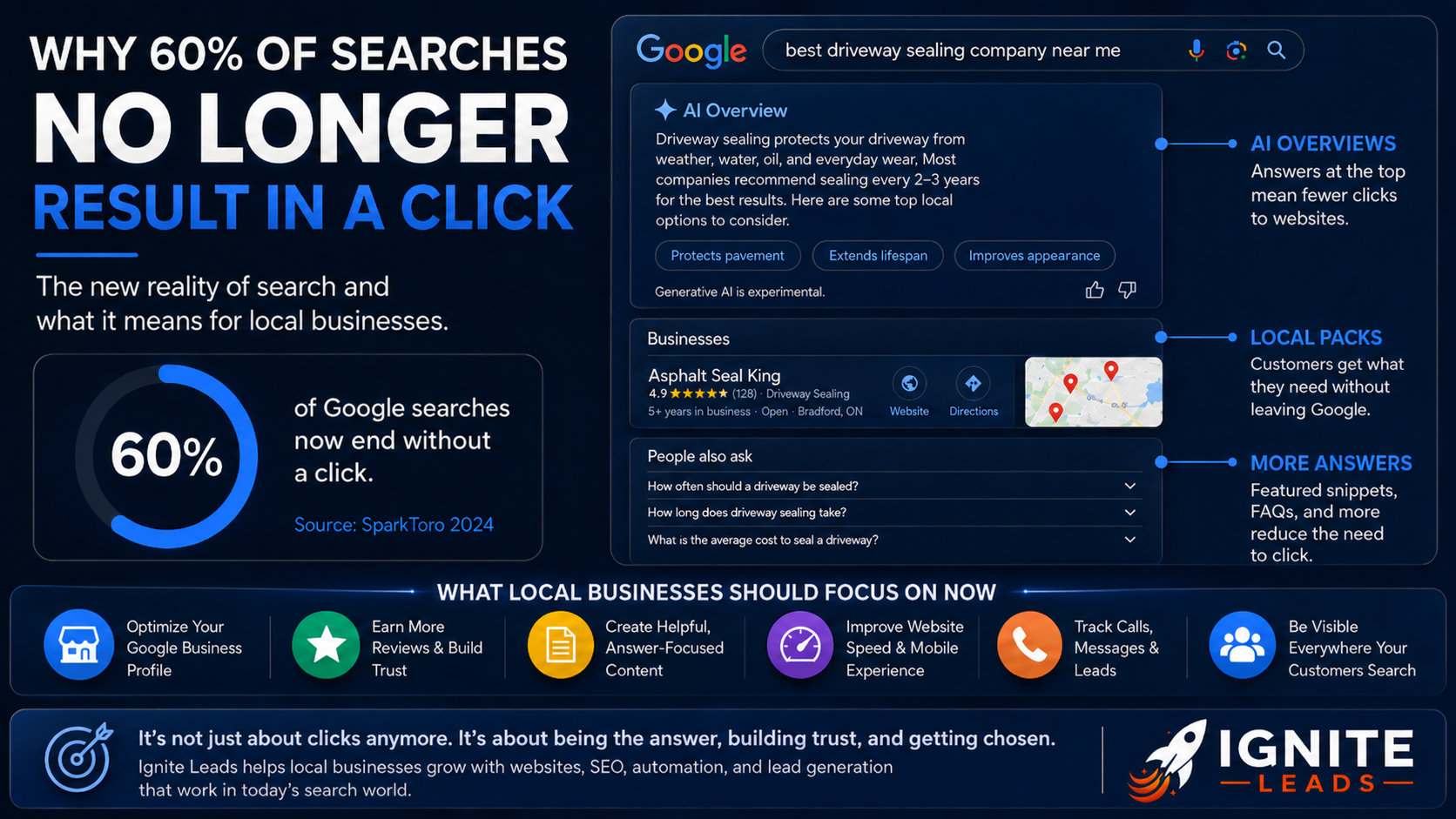
Local SEO earns visibility in unpaid Google results, including the map pack and organic listings. When someone searches “emergency plumber near me,” “brake repair in Barrie,” or “best facial in Newmarket,” local SEO helps your business appear because your website, Google Business Profile, reviews, service pages, and local signals show relevance and trust.
Paid ads buy immediate placement. Google Ads can put your business above organic results for selected searches, as long as your campaign is active and your budget supports the click costs in your market.
The practical difference is simple. Paid ads rent attention. Local SEO builds an asset that can keep producing calls without a charge for every visit. That does not make SEO free. It takes setup, content, review generation, technical work, and ongoing optimisation. But over time, the cost per lead can become far more efficient than a campaign that stops the moment ad spend stops.
When Paid Ads Are the Better Move
Paid ads are built for speed. If you have a seasonal offer, a new location, available capacity, or a time-sensitive service, ads can generate demand much faster than SEO alone.
A Vaughan HVAC company running a promotion before a cold snap does not have months to wait for a new service page to gain traction. A dental clinic with last-minute appointment availability may want calls this week. In these situations, paid search lets you target high-intent terms and control where your budget goes.
Ads also give you more testing control. You can compare service offers, landing pages, calls-to-action, neighbourhoods, and business hours. If one message drives booked estimates and another drives unqualified price shoppers, you can adjust quickly.
That speed comes with trade-offs. Competitive service keywords can be costly, especially for legal, home services, restoration, and emergency work. You pay whether a lead becomes a customer or not. Weak targeting can burn budget on irrelevant clicks, and a generic landing page can turn expensive traffic into no calls at all.
Paid ads work best when the operational side is ready. Calls need to be answered. Forms need an immediate response. Leads need reminders and follow-up. If your office misses calls while your team is on-site, an AI voice receptionist, missed-call text-back, or CRM automation can protect the money you are already spending to generate demand.
When Local SEO Produces Better Economics
Local SEO is usually the stronger long-term play for businesses that depend on recurring local demand. Think auto repair, med spas, cleaning companies, coaches, landscapers, clinics, and trades. Customers search for these services every day, often within a small geographic radius, and Google wants to show nearby businesses that appear credible and useful.
A well-built local presence helps you show up across more than one search. Your Google Business Profile may appear for map searches. Your service pages may rank for specific jobs. Your reviews may influence the customer deciding between three nearby options. Your photos, hours, and accurate contact information can make it easier for someone to choose you without even visiting your website.
This is where local SEO compounds. One well-structured page for furnace repair, one consistent review process, and one accurate business profile can continue supporting future searches. As your business earns more reviews and publishes stronger local service content, competitors have a harder time catching up.
The trade-off is patience. New websites and weak profiles rarely jump to the top overnight. Results depend on your market, competition, website history, location, review quality, and how consistently the work is done. A business in a competitive Aurora or Barrie category may need several months of focused execution before rankings become a dependable lead source.
Local SEO also requires more than adding a few keywords. Google needs confidence that your business is real, relevant, and worth recommending. That means accurate service information, location consistency, pages that match what customers search for, genuine reviews, and a site that works properly on a phone.
The Decision Depends on Your Goal and Your Capacity
If your priority is calls this month, paid ads can give you a fast path, provided your budget and lead handling are in place. If your priority is reducing dependence on paid lead sources over the next year, local SEO deserves consistent investment.
Most established service businesses should not frame this as an either-or decision. The better question is which channel should lead right now.
Use paid ads when you need to fill capacity quickly, launch a new service, test a market, or create demand during a slow period. Use local SEO when you want durable visibility, stronger trust, and lower acquisition costs over time. Run both when you want immediate lead flow while building a channel that will not disappear when you pause ad spend.
Your budget should reflect this timing. A business with urgent revenue pressure may put more into ads initially, then shift a portion toward SEO as organic calls grow. A business already receiving steady referral work may prioritise SEO first to capture the local searches it is currently losing to competitors.
Do Not Compare Clicks. Compare Booked Revenue.
Clicks, impressions, and rankings are useful signals, but they are not the finish line. A campaign that generates 80 clicks and two booked jobs may outperform one that generates 300 clicks and no serious enquiries.
Track the numbers that show whether marketing is producing customers: calls, form submissions, booked appointments, estimates sent, jobs won, revenue, and cost per acquired customer. For higher-value services, track lead source through the full sales cycle. A $40 click can be profitable if it leads to a $4,000 project. A $5 click is wasteful if it creates a conversation with someone outside your service area.
This is also why website conversion matters in both channels. Local SEO can bring qualified visitors, and ads can place you in front of urgent buyers, but neither channel fixes unclear offers, slow websites, missing trust signals, or a contact form that goes unanswered. Marketing channels create opportunities. Your response process turns them into revenue.
Build One Local Lead System, Not Two Silos
The strongest approach connects paid and organic acquisition rather than treating them as separate projects. Your ads should send visitors to pages built around the exact service they need. Those same pages should be useful enough to support local organic visibility. Your review process should strengthen trust for both ad clicks and map searches. Your CRM should capture every call and form lead regardless of source.
There is also valuable overlap in the data. Paid search terms can reveal the language customers use when they are ready to buy. That information can shape your service page priorities and local content. Organic search data can identify services where you already have momentum, helping you avoid paying for clicks you may be able to earn more efficiently.
What should remain separate is measurement. Do not claim SEO is working because ad traffic increased, or assume ads are underperforming because an organic lead booked after seeing your brand several times. Use call tracking, lead-source fields, and clear reporting to understand how each channel contributes.
A Practical Starting Point
Start by fixing the conversion leaks before scaling traffic. Confirm that your Google Business Profile is complete, your website clearly states the services and areas you serve, and every enquiry receives a fast response. Then decide whether the immediate need is demand now or visibility that grows over time.
If you choose ads first, begin with a tight set of high-intent services instead of a broad campaign that tries to cover everything. Use a dedicated page, clear qualification details, and follow-up automation. If you choose local SEO first, focus on your core profitable services, review generation, accurate business listings, and pages that answer real local search intent.
The businesses that win locally are rarely the ones using the most tools. They are the ones that make it easy to find them, easy to trust them, and easy to reach them when a customer is ready to act.
Allan Heath
Founder of Ignite Leads. Helps local businesses grow through SEO, lead generation, and marketing automation — simplifying the playbook so owners can focus on the work.