Article
Low Cost Website Solutions That Bring in Leads
July 14, 2026 • 6 min read

A $99 website that does not generate a single call is not low cost. It is wasted budget. The right low cost website solutions give local service businesses a credible place to send Google traffic, convert visitors on mobile, and capture every serious enquiry without locking owners into a complicated project.
For a garage in Vaughan, a spa in Barrie, or a home service company serving York Region, the question is not whether a website needs expensive animations or custom code. The question is whether a local customer can find the business, trust it, and contact it in under a minute.
What low cost website solutions should actually do
A website is part of your sales operation. It should support the way customers buy local services: they search a problem, compare a few businesses, check reviews, and call or request a quote. If your site makes any of those steps difficult, you lose leads to the company that makes them easy.
A cost-effective website should therefore be built around four jobs: show up for relevant local searches, explain the service clearly, build confidence quickly, and create an immediate path to call, book, or submit a request. Design matters, but only when it helps those jobs happen.
This is where many cheap website offers fail. They sell a template, a few stock photos, and a published URL. That may look like a finished website, but it is not a lead system. A business still needs pages that match real services, clear service areas, conversion-focused calls to action, and a plan for handling enquiries after they arrive.
The difference between cheap and low cost
Cheap usually means the upfront price is low because the work has been removed. You might receive a generic layout, limited editing access, no help writing service pages, weak mobile performance, or an extra bill whenever something needs changing. The price looks attractive until the site needs to do more than exist.
Low cost means the investment is controlled while the essentials are handled properly. It is a practical fit for an owner who needs a professional online presence now, wants room to grow, and does not want a $10,000 build before proving what converts.
There is nothing wrong with a template-based website. Templates can be fast, clean, and reliable. The problem is using the same page structure and generic copy for every business. A template should provide the framework, while the content, calls to action, local relevance, and tracking should reflect your business.
For most small and mid-sized service companies, that approach is more sensible than building every page from scratch. Custom development becomes worthwhile when you need a complex booking workflow, customer portal, large catalogue, or a highly specific integration. A local business that needs more calls this quarter usually benefits more from fast deployment and strong follow-up.
Build for the local customer, not the designer
Your homepage should answer basic questions without making a visitor hunt: what do you do, where do you work, why should someone choose you, and what should they do next? That information belongs near the top of the page, especially on mobile.
Service pages matter just as much. A general page that says “we offer quality solutions” will not compete well with pages that clearly address services such as brake repair, massage therapy, furnace installation, coaching packages, or emergency plumbing. Specific pages give search engines context and give customers confidence that they have landed in the right place.
Local proof does the rest. Real reviews, before-and-after work where appropriate, team photos, service-area details, certifications, warranties, and straightforward pricing guidance can reduce hesitation. You do not need to crowd every page with badges and claims. You need enough evidence for a prospective customer to feel comfortable taking the next step.
Mobile speed is a revenue issue
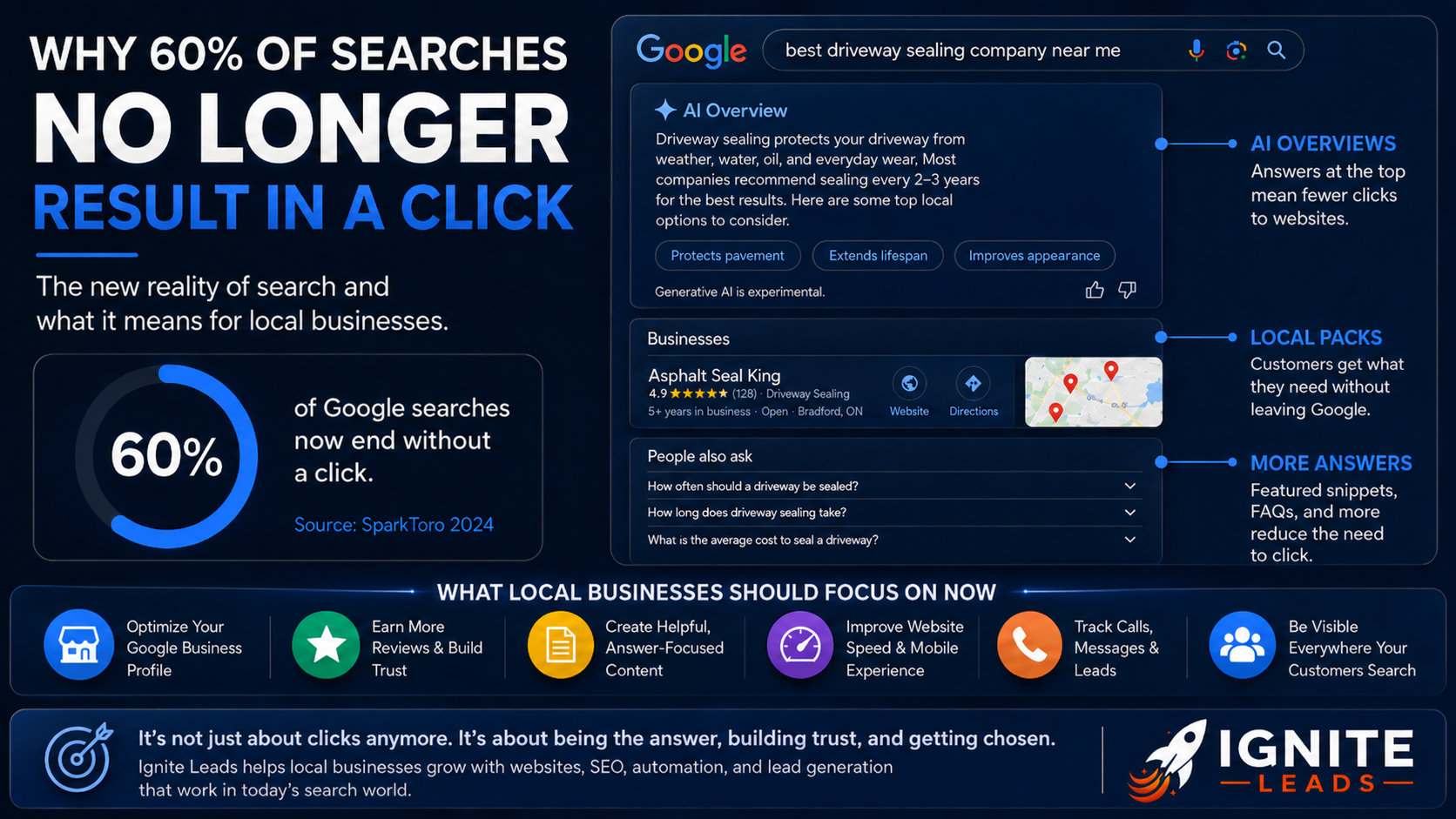
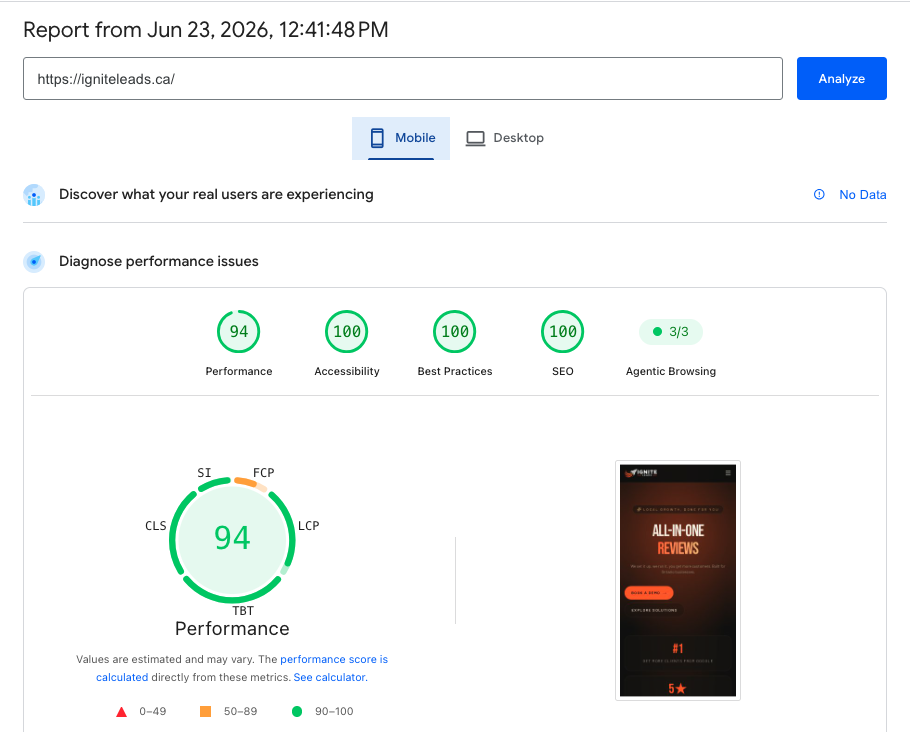
Most local prospects will visit from a phone, often between appointments, after work, or while dealing with a problem that needs attention. If the page loads slowly, the text is hard to read, or the phone number is not tap-to-call, the customer will move on.
Keep the experience simple. Use compressed images, readable headings, short forms, and visible contact options. A form asking for a name, phone number, service needed, and preferred contact time will often outperform a long questionnaire. You can qualify the lead once the conversation begins.
Calls to action need to match intent
Not every visitor is ready to book. Someone looking for emergency repair may want to call immediately. Someone researching a cosmetic service may prefer a quote request or consultation booking. Give each visitor a logical next step, but do not present six competing buttons on one screen.
A strong local website often repeats one primary action across the page, supported by a phone number and a secondary option. Consistency removes friction. Visitors should never need to guess how to reach you.
A website alone will not fix missed leads
This is the part many website providers avoid discussing. More traffic only helps when leads receive a fast response. If a quote request sits in an inbox until the next morning, the business may have paid to create a lead for a competitor to win.
Low cost website solutions work best when they connect to a process for speed-to-lead. That can include instant form notifications, automated text replies, calendar booking, AI chat for common questions, call handling, and a CRM that keeps every opportunity visible. The right mix depends on your service and hours, but the principle is fixed: respond while the customer is still actively looking.
For example, an after-hours request for a locksmith or HVAC company should be acknowledged immediately, even if a technician cannot respond at that exact moment. A consultation request for a salon or coaching business can be offered the next available booking time. Automation does not replace good service. It prevents good prospects from being ignored before your team can provide it.
What to ask before choosing a provider
Before committing to a website package, get clear answers about ownership, ongoing support, lead handling, and growth. Ask whether you can update service details, whether changes are included, and what happens if you need another location or new service page. A low monthly price can be a good deal, but only if the arrangement is transparent.
Also ask how the website supports local visibility. A provider does not need to promise a number-one Google ranking, because no credible company can guarantee that. They should, however, be able to explain how service pages, location information, technical setup, reviews, and ongoing local SEO work together.
Finally, ask what is measured. At minimum, you should know how many calls, form submissions, bookings, and qualified leads the site produces. Page views are useful context, but they do not pay wages or fill schedules. The metric that matters is whether the website helps create profitable customer conversations.
Keep the first version focused
A common mistake is delaying launch until every possible page, photo, and feature is ready. That often leaves a business with no improvement for months. Start with the pages that support revenue: a clear homepage, core service pages, contact or booking path, proof, and essential local information.
Then improve based on real behaviour. If customers regularly ask about financing, add clear financing information. If visitors abandon the quote form, shorten it. If one service generates higher-value enquiries, give it a stronger page and clearer call to action. A website should improve from evidence, not opinions in a boardroom.
For Ontario service businesses, this is the practical advantage of a managed model. Ignite Leads can combine a low monthly website with local visibility, review generation, CRM follow-up, and AI-assisted lead handling, so the site is not left operating as a disconnected brochure.
The best website is not the one with the most features. It is the one that makes it easier for the right local customer to contact you, and easier for your business to respond before that customer calls someone else.
Allan Heath
Founder of Ignite Leads. Helps local businesses grow through SEO, lead generation, and marketing automation — simplifying the playbook so owners can focus on the work.