Article
Multi Location Local Marketing Strategy That Scales
September 14, 2026 • 7 min read

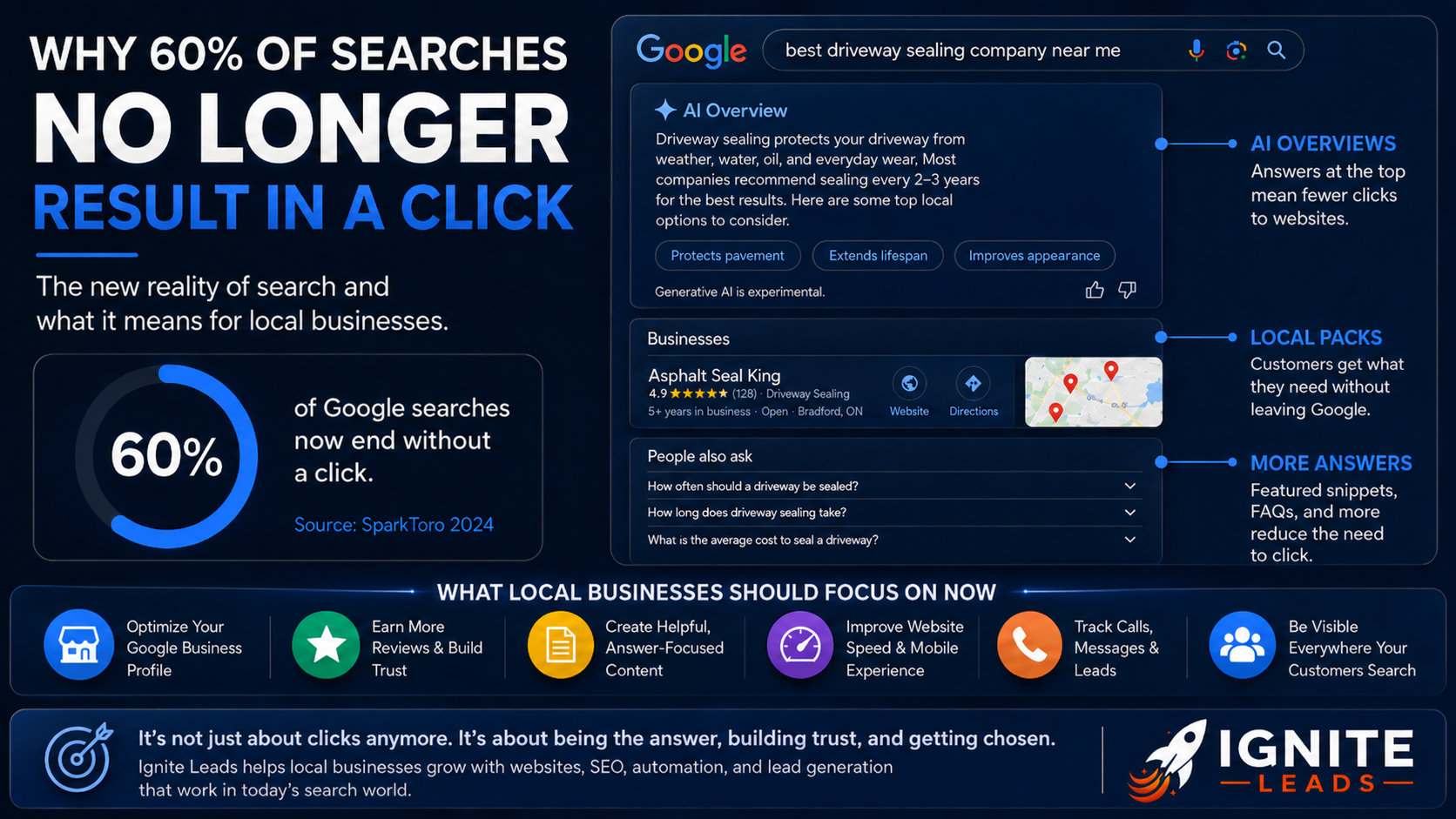
A homeowner searching for a plumber in Barrie does not care that your company has five locations. They care whether the closest branch appears in Google, has credible reviews, answers quickly, and can book the job. That is why a multi location local marketing strategy cannot be a corporate campaign copied across a map. It needs central control, local relevance, and a fast path from search to booked customer.
For service businesses, more locations create more revenue potential - and more ways for leads to fall through the cracks. One branch may have strong reviews but a weak website page. Another may rank well but take two hours to return calls. A third may be spending on ads that send prospects to a generic contact form. Growth becomes inconsistent when each location runs on different tools, standards, and follow-up habits.
Build a multi location local marketing strategy around demand
Start with how local customers actually buy. They search by service, city, neighbourhood, urgency, and proximity. A prospect might search for brake repair in Vaughan, same-day massage in Newmarket, or furnace maintenance near Aurora. Your marketing system must show the right location, service, proof, and contact option at that moment.
The goal is not simply to make every location visible. The goal is to make every location easy to choose.
That requires a clear distinction between what should be centralized and what should be local. Brand standards, technology, reporting, review workflows, lead routing, and campaign strategy should be managed centrally. Location pages, Google Business Profiles, service-area details, photos, team information, availability, and local offers need to reflect what is true at each branch.
Businesses often get this backward. They either give every location total freedom, which creates inconsistency, or they force identical copy and processes everywhere, which weakens local relevance. The best approach is one operating system with location-level execution.
Give every branch a real local presence
Each location needs its own accurate Google Business Profile, dedicated location page, consistent business details, and a clear way for customers to call, message, or book. If a location has a different phone number, hours, entrance, service area, or staff availability, those details must match everywhere customers see them.
A location page should not be a city name dropped into the same paragraph 20 times. It should answer practical questions: What services are available here? Which areas does the branch serve? How quickly can the team respond? Is there parking? Are appointments required? What makes this location credible?
For a garage, that may mean listing the repair services performed at that shop, local booking hours, and recent customer feedback. For a spa, it may mean showing available treatments, provider schedules, and a direct booking option. For a home service company, it may mean defining the local service radius and emergency response process.
Local content works when it reduces uncertainty. Search rankings matter, but prospects also need enough confidence to contact you instead of the next business in the results.
Avoid the duplicate-page trap
Creating one page per town can help when you have legitimate locations, teams, or service coverage to support those pages. It can hurt when the pages are nearly identical and exist only to chase rankings.
Do not claim a physical branch where you do not have one. Do not create thin pages for every nearby municipality. Build pages around real operational value: a verified office, a defined service area, a local team, customer proof, or a useful service offering. Google and customers both respond better to accuracy than inflated coverage claims.
Make reviews a managed process, not a monthly scramble
Reviews are one of the strongest local conversion assets, especially when customers are comparing several similar businesses. A branch with 4.8 stars and recent, detailed feedback usually earns more trust than a branch with an old review profile and no response from the owner.
The issue is not whether you should ask for reviews. It is whether asking happens consistently after positive customer experiences.
Set a single review process across every location. Once a job is complete, an appointment is attended, or a customer confirms satisfaction, the system should send a simple review request by text or email. Branch managers should not need to remember it, and front-line staff should not have to chase customers manually between appointments.
Centralize monitoring so leadership can see review volume, average rating, response time, and recurring feedback by location. Then use that information operationally. If one branch receives repeated comments about wait times, unclear quotes, or missed calls, that is not just a marketing issue. It is a revenue leak.
Responding matters too. Keep responses human, timely, and specific without sharing private details. Thank positive reviewers. Address legitimate concerns calmly and offer a direct route to resolve them. A thoughtful response will be read by future customers, not only the person who left the review.
Treat speed-to-lead as a location KPI
A lead that waits is often a lead that books elsewhere. This is particularly true for urgent services, high-intent mobile searches, and customers contacting several businesses at once.
Every location should have clear rules for incoming calls, web forms, chat conversations, text messages, and missed calls. Who owns the first response? What happens after hours? When does a lead get reassigned? How many follow-up attempts happen before the opportunity is closed?
Automation handles the gaps that people miss. An AI chat or voice receptionist can capture basic details when staff are busy. A CRM can trigger an immediate acknowledgement, route the request to the correct location, and remind staff to follow up. Text messaging can confirm an appointment or recover a missed call while the customer is still actively looking.
Automation does not replace a capable team. It gives the team fewer excuses to lose ready-to-buy prospects. For businesses with multiple branches, that difference compounds quickly.
Track performance by location, not just company-wide
A total lead count can hide expensive problems. If one location generates 60 leads and books 40 percent while another generates 60 and books 15 percent, the issue may be response time, staffing, pricing, reputation, or lead quality. Without location-level tracking, management cannot tell where to intervene.
Your reporting should show the full path from visibility to revenue. At a minimum, monitor search visibility, calls, form submissions, booked appointments, review growth, lead response time, and close rate for each branch. If you run paid campaigns, track cost per qualified lead and cost per booked job separately by location.
Do not judge branches solely by rankings. A top position that produces poor-fit inquiries is less valuable than a slightly lower position that delivers profitable work. Likewise, a branch with fewer leads may be performing better if it converts them efficiently and has room to serve more customers.
This is where a centralized system earns its keep. You can compare performance using the same definitions, identify the bottleneck, and apply a proven fix without rebuilding the process from scratch at every branch.
Use local campaigns without fragmenting the brand
Central brand campaigns can create awareness, but local offers often generate action. A seasonal tire change campaign, neighbourhood service promotion, or branch-specific availability message can work well when it reflects actual capacity and demand.
Keep the offer structure, creative standards, and tracking centralized. Let locations adjust the details that are genuinely local, such as service availability, booking windows, geographic focus, and staffing capacity. This protects the brand while allowing branches to compete where customers make decisions.
Be careful with promotions that drive demand a location cannot handle. A fully booked team does not need more cheap leads. It may need better scheduling, higher-value job targeting, or a campaign paused until capacity opens. Marketing should support operations, not overwhelm it.
Build the system before you add the next location
The best time to standardize local marketing is before expansion makes inconsistency expensive. Document how a new location is launched: profile setup, website page creation, call tracking, CRM routing, review automation, staff training, and reporting. Then make that checklist repeatable.
Ignite Leads helps Ontario service businesses put those moving parts into one managed growth system, so owners can see what each location is producing without managing a pile of disconnected tools.
A new branch should not begin with a blank slate or a collection of logins nobody owns. It should enter a proven system that can be localized quickly, measured clearly, and improved over time.
Your next customer will not experience your company as a multi-location brand. They will experience one search result, one phone call, one review profile, and one response. Make sure every location is ready to win that moment.
Allan Heath
Founder of Ignite Leads. Helps local businesses grow through SEO, lead generation, and marketing automation — simplifying the playbook so owners can focus on the work.