Article
A Reputation Management Strategy That Wins Calls
November 14, 2026 • 6 min read
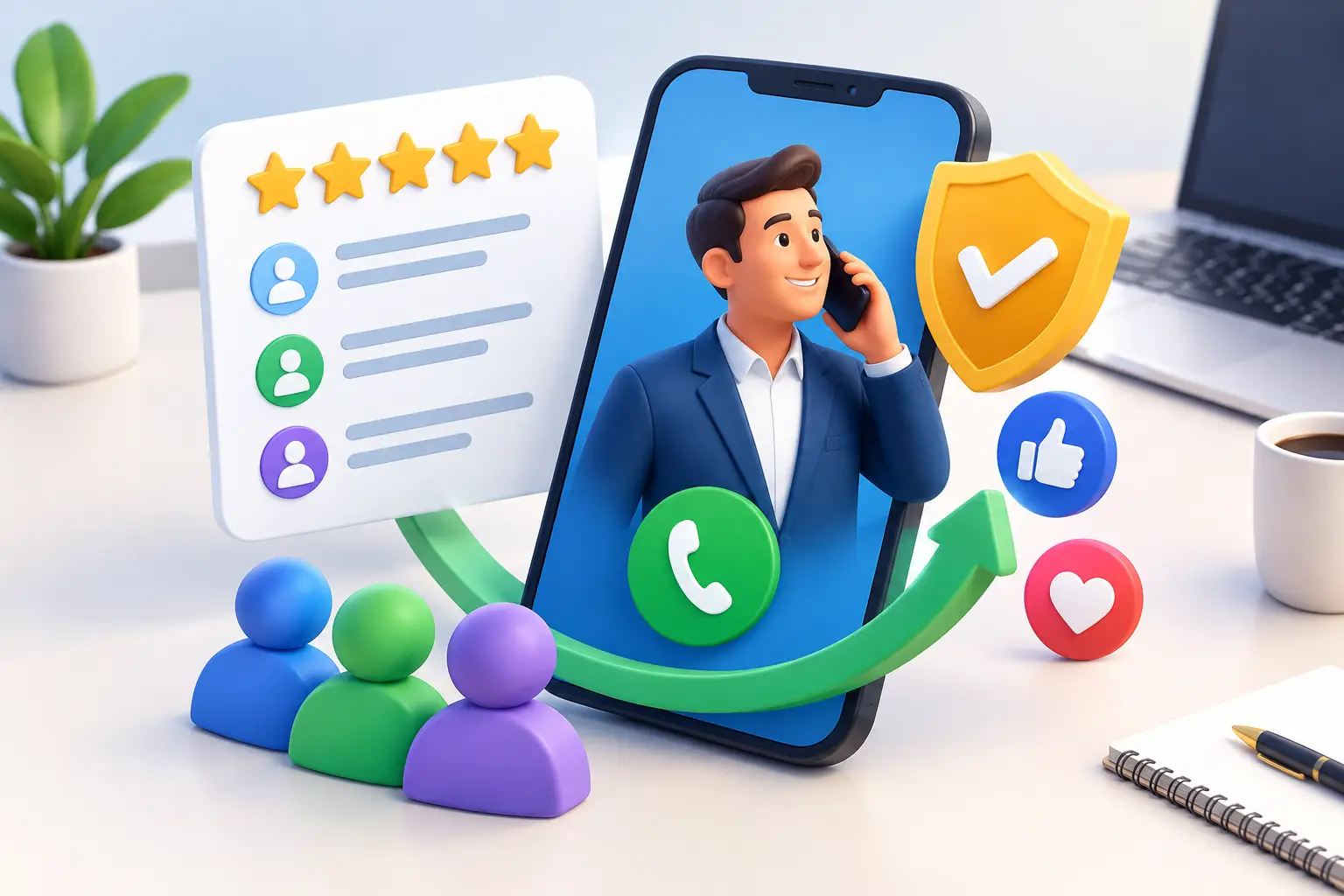
A customer searching for a garage, spa, contractor, or coach rarely starts by comparing service menus. They look at your Google rating, read the newest reviews, and decide whether your business feels reliable enough to call. A reputation management strategy is not a side task for slow afternoons. It is a system for turning completed work into visible proof that brings in more local customers.
For service businesses, reputation affects both visibility and conversion. More recent, credible reviews can support stronger local trust, while fast, professional responses stop a complaint from becoming the only story a prospect sees. The goal is not a perfect five-star profile. It is a consistent process that makes it easy for happy customers to speak up and ensures problems are handled before they cost you the next booking.
Reputation Is Part of Your Sales System
A good reputation does more than make your business look established. It answers the questions a new customer is already asking: Do they show up? Are they easy to deal with? Will they solve the problem properly? Can I trust them with my time and money?
That matters most when the prospect has little time to research. A homeowner in Barrie with a broken furnace or a driver in Vaughan needing repairs is not looking for a long brand story. They want evidence from people like them, close to the moment they need to choose.
The operational problem is that most businesses leave review collection to chance. Staff remember to ask when things go well, then get busy. Follow-up happens inconsistently. Negative feedback sits unanswered. Meanwhile, leads arrive after hours and wait too long for a reply. That is not a reputation problem alone. It is a process problem.
Build a Reputation Management Strategy Around the Customer Journey
The most effective reputation management strategy starts before you send a review request. It maps the moments where customers form an opinion, then assigns an action, owner, and timing to each one.
Start with the promise you can consistently keep
Do not use marketing to create expectations your operations cannot meet. If your business promises same-day service, quote transparency, or fast callbacks, the team needs a process behind it. Reviews quickly expose gaps between what a business says and what a customer experiences.
Choose two or three standards that matter to your customers and make them measurable. For example, calls are returned within 10 minutes during business hours, appointment confirmations are sent automatically, and every completed job receives a follow-up message. Simple standards are easier to maintain and easier for customers to notice.
Ask at the right moment, not whenever you remember
The best time to request a review is immediately after a positive outcome. For a home service company, that may be after the technician confirms the repair is complete. For a spa, it may be after a client checks out. For a coaching business, it may be after a milestone or successful session.
Automated SMS and email follow-up make this repeatable. The message should be short, personal enough to feel genuine, and easy to complete from a phone. Do not bury the request in a long newsletter. Ask clearly, thank the customer, and give them one direct action.
Avoid offering discounts, gifts, or incentives in exchange for positive reviews. It can create distrust and may conflict with platform guidelines. The better long-term play is to earn honest feedback at a steady pace.
Make review requests part of the handoff
Automation handles consistency, but staff still shape the experience. Train front-line employees to mention the review request naturally at the end of a successful interaction. A simple line such as, “You’ll receive a quick follow-up from us. Your feedback helps local customers find us,” works because it explains why the message is coming.
This is not about pressuring customers. It is about removing awkwardness and making feedback a normal part of service. When the request is expected, completion rates are usually better.
Route unhappy customers into a recovery process
Not every customer will be happy, and trying to hide that fact creates bigger problems. What matters is how quickly you identify the issue and whether someone has authority to fix it.
Build an escalation path for negative feedback. The person monitoring reviews should know when to notify the owner, manager, or operations lead. Set a response target, ideally within one business day. For urgent complaints involving safety, payment disputes, or missed appointments, the internal follow-up should happen much faster.
A public response should acknowledge the concern without arguing, sharing private details, or blaming the customer. Then move the conversation offline to resolve it. Prospects reading the exchange are not only judging the complaint. They are judging whether your business takes responsibility when something goes wrong.
Respond Like a Business That Wants the Next Customer
A response to a positive review should be specific enough to sound human. Thank the customer, refer to the service where appropriate, and reinforce a useful point without stuffing in keywords. A generic “Thanks for your feedback” is better than silence, but it does not add much proof.
Negative reviews require more discipline. Do not respond emotionally, even if the review feels unfair. Confirm that you take the experience seriously, apologize for the frustration where appropriate, and invite direct contact to make things right. Keep the response brief. The public thread is not the place to win an argument.
There are situations where a review is fake, abusive, or clearly unrelated to your business. Document the evidence and use the platform’s reporting process. Still, do not build your plan around removal. Your stronger defence is a steady flow of legitimate, recent feedback that reflects the real customer experience.
Track More Than Your Star Rating
A 4.8 rating looks good, but it is not enough to manage performance. Track the number of new reviews each month, average rating, response time, response rate, and recurring themes in the comments. If customers repeatedly praise speed, use that insight in your marketing. If they repeatedly mention missed calls or unclear pricing, fix the operation.
Also track what happens after reputation improves. Are more people calling from your Google Business Profile? Are website visitors booking more often? Are staff hearing, “I chose you because of your reviews”? These are the signals that connect reputation work to revenue.
For multi-location businesses, measure each location separately. One strong location can hide issues at another, and customers will judge the specific branch they plan to visit. Centralized reporting helps, but local ownership still matters.
Avoid the Shortcuts That Create Bigger Problems
Buying reviews, asking friends who were never customers to post, or sending every complaint into a private survey while only happy customers get a public review link can damage credibility. It may produce a short-term bump, but it does not create a trustworthy business profile.
Another common mistake is treating reviews as a monthly marketing project. Reviews age quickly. A profile full of praise from two years ago does not answer whether your team is delivering today. Consistent collection is more valuable than a one-time push.
Finally, do not separate reputation from lead response. A prospect may read 40 excellent reviews, submit a form, and still hire someone else if they wait hours for a callback. Fast follow-up, appointment reminders, and reliable communication protect the reputation you worked to build.
Put One Team in Charge of the System
Reputation works best when review requests, responses, customer follow-up, and reporting sit in one coordinated workflow. Assign ownership, automate the repeatable steps, and review the numbers monthly with the same seriousness you give sales and scheduling.
Ignite Leads helps local service businesses connect these moving parts so good work produces more visible trust, faster responses, and more booked calls. The real advantage is not collecting a few extra reviews. It is building a business customers feel confident choosing before they ever pick up the phone.
Allan Heath
Founder of Ignite Leads. Helps local businesses grow through SEO, lead generation, and marketing automation — simplifying the playbook so owners can focus on the work.