Article
What a Vaughan SEO Company Should Deliver
August 3, 2026 • 7 min read

A homeowner searching for a plumber after a basement leak is not comparing marketing strategies. They want a reliable local company, a clear next step, and a fast response. That is the standard an SEO company Vaughan businesses hire should be built around: not vanity traffic, but more calls, quote requests, and booked work.
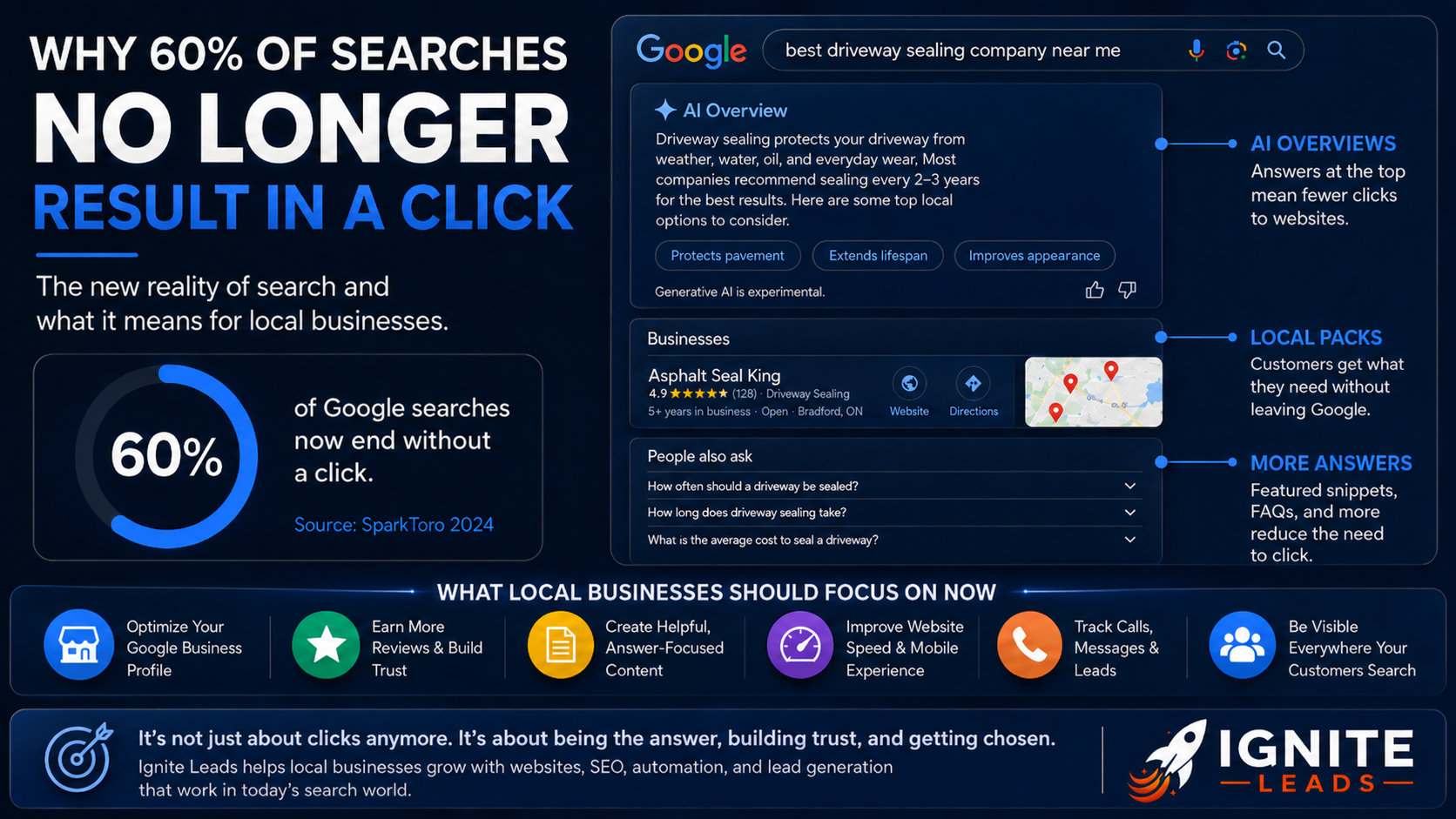
For service businesses, SEO is only valuable when it connects visibility to conversion. Ranking in Google matters, but a high ranking does not fix an outdated website, weak reviews, missed calls, or leads that sit unanswered for hours. The real objective is a coordinated local growth system that helps the right prospects find you, trust you, contact you, and receive a response before they call the next company.
What a Vaughan SEO Company Should Actually Deliver
A local SEO provider should understand how customers make decisions in Vaughan. Search behaviour is practical and immediate. People search for terms such as “garage repair near me,” “med spa Vaughan,” or “electrician open now” when they need a solution. Your marketing needs to put your business in front of that demand and remove the friction between search and booking.
That starts with a strong Google Business Profile. Your categories, services, service areas, photos, business details, posts, and review activity all affect how confidently Google can match your business with a nearby search. A proper local SEO strategy also builds accurate business listings, improves relevant service pages, and creates location-focused content where it serves a genuine customer need.
But visibility is only one part of the job. A local SEO company should also look at what happens after the click. If a potential customer lands on a slow site with vague messaging and no obvious way to call or request an estimate, the ranking has done very little for your business. The website must make it easy to understand what you do, where you serve, why customers choose you, and how to take action.
Local rankings need proof, not guesswork
Google does not rank a business because it has repeated a city name across every page. It looks for evidence of relevance, prominence, and proximity. Some factors are outside your control, such as where a searcher is located. Others can be improved consistently through good execution.
Your website needs useful pages for the services that generate revenue. Your Google Business Profile needs complete, current information. Your business needs a steady flow of genuine reviews, not a burst of requests once a year. Local citations should be accurate, and your online reputation should reflect the quality of the work you actually deliver.
The trade-off is that meaningful local SEO takes consistent work. Anyone promising the top position for every keyword within a week is selling certainty they cannot control. A capable provider will set expectations clearly, explain the work being done, and focus reporting on indicators that matter: local visibility, calls, form submissions, booked appointments, and lead quality.
A ranking is wasted if the lead is missed
Many local businesses lose more revenue through slow follow-up than through low search rankings. A prospect may call while your team is on a job site, after hours, or helping another customer. If they reach voicemail and receive no timely response, they often move on.
This is where SEO and lead handling need to work together. Call tracking can show which enquiries came from organic search. Forms should trigger immediate confirmation and internal notifications. CRM automation can make sure no lead is forgotten. AI chat or voice reception can handle common questions, capture details, and direct urgent enquiries when your staff cannot answer right away.
A business that responds in minutes will often outperform a competitor with a slightly stronger ranking but a slower process. Local SEO creates the opportunity. Speed-to-lead turns that opportunity into revenue.
Where Local SEO Campaigns Commonly Break Down
The most common problem is fragmentation. One company manages the website, another posts on social media, a third runs ads, and no one owns the customer journey from Google search to booked job. When calls drop or leads are poor, each vendor points to a different piece of the system.
The second problem is reporting that looks busy but says very little. Keyword spreadsheets, impressions, and generic traffic charts can be useful diagnostics, but they are not the outcome. A service business owner needs to know whether more qualified people are finding the business, whether those people are contacting it, and whether the team is converting those enquiries.
The third issue is treating reviews as an optional extra. For local services, reviews influence both customer trust and search visibility. A business with current, detailed feedback will usually earn more clicks than one with a similar ranking and a thin or outdated reputation. The process has to be simple enough for staff to use after every completed job, appointment, or purchase.
Finally, some providers build pages for search engines rather than customers. Thin city pages, copied service descriptions, and awkward keyword repetition may create the appearance of SEO work, but they rarely build trust. Good local content answers real questions and makes a decision easier.
How to Assess an SEO Company in Vaughan
Before signing a long contract, ask how the provider connects SEO to lead generation. Their answer should cover more than blog posts and backlinks. You want to know who is responsible for the Google Business Profile, website conversion improvements, review generation, call tracking, CRM follow-up, and monthly performance review.
Ask what you own if the relationship ends. You should retain access to your website, domain, Google Business Profile, analytics, lead data, and core business assets. A managed service should reduce your workload, not create dependence on a provider-controlled account you cannot access.
You should also ask how they determine priorities. A good plan is not identical for every business. A new home service company may need foundational website pages, local listings, and review systems first. An established clinic with strong brand recognition may get greater return from improving conversion paths, handling missed calls, and building more service-specific authority. The right sequence depends on your market, competition, sales capacity, and current bottleneck.
At Ignite Leads, the focus is on managing the connected pieces rather than handing business owners another set of marketing tools to figure out. That means coordinating local visibility, website conversion, reputation, and automated follow-up around one outcome: more qualified customers reaching your team and getting a response quickly.
What the First 90 Days Should Look Like
Days 1 to 30: Fix the foundation
The early work should begin with an audit of your current presence. This includes your website structure, Google Business Profile, service pages, reviews, citations, tracking, forms, and lead response process. The goal is to identify where demand is leaking out of the system.
Your provider should then correct critical business information, set up clear conversion tracking, improve key website pages, and establish a review request workflow. If leads are being missed, this is also the time to configure CRM notifications, automated responses, and reception coverage.
Days 31 to 60: Build local relevance
Once the basics are in place, the work shifts toward strengthening local signals and expanding useful service content. That may include improving primary service pages, adding relevant FAQs, publishing location-specific information where justified, and generating new reviews from real customers.
You may see early movement in local visibility, but the more important signal is whether the system is producing cleaner data. Are calls being tracked? Are forms reaching the right person? Are prospects getting a fast response? Without that visibility, it is difficult to make smart decisions about growth.
Days 61 to 90: Optimise for booked work
By this stage, there should be enough information to identify what is working and what needs attention. Maybe one service page drives most calls. Maybe a specific area produces high-value jobs. Maybe leads are arriving but not being contacted quickly enough. The strategy should adapt to the evidence.
This is where an SEO campaign becomes an operating system rather than a monthly checklist. Improve the pages that convert, strengthen the review process, refine automated follow-up, and direct attention toward the services and locations that produce the best opportunities.
Pay for Outcomes You Can Measure
The cheapest SEO package is not always the lowest-cost option. If it produces reports but no meaningful improvements in visibility, response time, or booked jobs, it can become an expensive distraction. At the same time, a larger marketing investment will not solve a business that cannot answer calls, provide estimates quickly, or handle added demand.
The right investment fits your capacity. If your calendar has room for more work, build the system to capture it. If your team is stretched, improve qualification, automation, and follow-up before increasing lead volume. A practical SEO partner should help you make that distinction instead of pushing a one-size-fits-all package.
Choose a provider that sees the full path from local search to customer conversation. When Google visibility, reviews, website conversion, and fast lead handling work together, marketing becomes easier to manage and far more likely to produce the work you actually want.
Allan Heath
Founder of Ignite Leads. Helps local businesses grow through SEO, lead generation, and marketing automation — simplifying the playbook so owners can focus on the work.