Article
SEO Newmarket for More Local Service Calls
July 23, 2026 • 6 min read

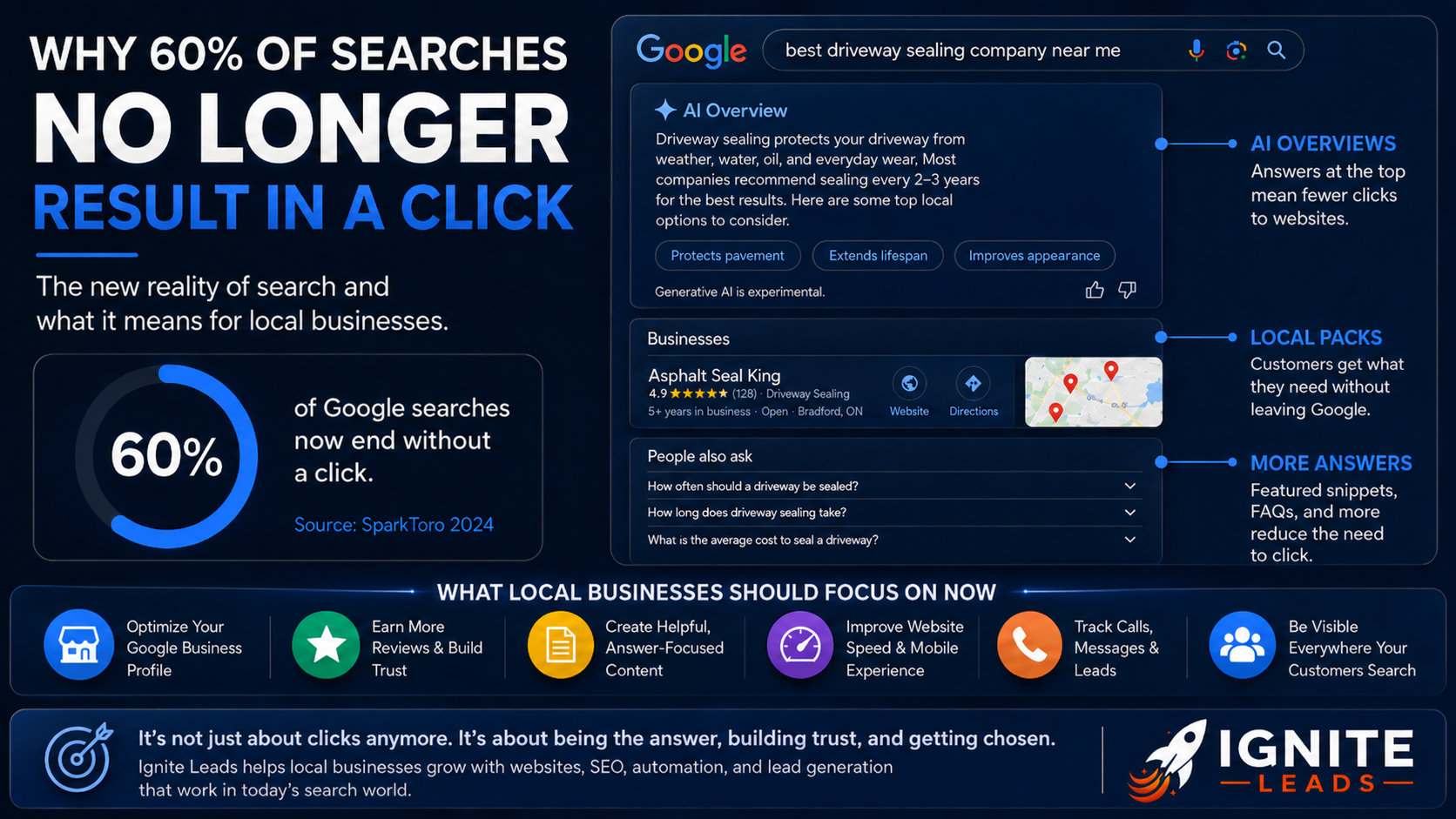
A Newmarket homeowner searching “emergency plumber near me” is not researching marketing strategies. They need help now, and the businesses Google shows first are the ones most likely to get the call. That is what SEO Newmarket needs to accomplish for a local service business: put you in front of high-intent customers at the moment they are ready to book.
Ranking is only part of the job. A local search result has to lead to a useful website visit, a fast answer, and a clear path to call or request an appointment. If those pieces are disconnected, more traffic will not automatically mean more revenue.
Why SEO Newmarket Is Different From General SEO
General SEO often focuses on broad traffic, national keywords, and long-term content volume. Local SEO is more practical. It is built around the searches that bring in customers from a defined service area: “massage clinic in Newmarket,” “garage repair near me,” “roofing company Newmarket,” or “best accountant near me.”
Google uses location, relevance, trust signals, and user behaviour to decide which businesses deserve visibility. A company can have a polished website and still lose leads if its business information is inconsistent, its Google Business Profile is neglected, or its reviews are outdated.
For service businesses, local visibility is valuable because the intent is stronger. Someone searching for a nearby electrician usually needs an electrician. The goal is not to attract everyone. It is to attract qualified local prospects who are likely to call, book, or request a quote.
That requires a system built around three outcomes: appearing in local search results, earning trust quickly, and responding before the lead contacts a competitor.
Start With the Google Business Profile
Your Google Business Profile is often the first thing a prospect sees. It can appear in Google Maps, the local map results, and branded searches. For many Newmarket service businesses, it produces more direct calls than a standard website page.
A complete profile should use the correct primary category, accurate services, current hours, service areas, business description, phone number, and website details. These are basic details, but they carry weight. Google needs to understand exactly what you do and where you do it.
Photos also matter. Real images of your team, vehicles, completed jobs, facility, equipment, or storefront make a business look active and credible. Stock photography has its place on a website, but it rarely builds the same confidence in a local listing.
The profile should not be set up once and ignored. Add updates, answer questions, respond to reviews, and review insights regularly. If your hours change, update them immediately. Sending a customer to a closed location or unanswered phone line wastes a high-intent lead you already paid to earn.
Reviews Are a Ranking Signal and a Sales Tool
Reviews influence both visibility and conversion. A business with recent, detailed reviews gives Google stronger trust signals and gives searchers a reason to choose it.
The common issue is inconsistency. Owners ask for reviews when they remember, staff ask in different ways, and happy customers move on without leaving feedback. A review system fixes that by sending a simple request shortly after the service is complete, when the experience is fresh.
Quality matters more than chasing a large number without a process. A steady flow of genuine reviews that mention the service and local experience is more useful than a burst of generic feedback followed by months of silence. Respond to every review professionally, including the difficult ones. Future customers are watching how you handle problems.
Build Service Pages That Match How Customers Search
A single homepage cannot rank well for every service you offer. If you provide furnace repair, installation, maintenance, and emergency service, each core service deserves a focused page. The same applies to spas, auto shops, coaches, contractors, clinics, and other appointment-driven businesses.
Each page should answer practical questions quickly. What service do you provide? Who is it for? What problem does it solve? What areas do you serve? How can someone book? Use clear language instead of forcing keywords into every sentence.
For example, a page targeting Newmarket garage door repair should explain the repair types available, common warning signs, response expectations, and how to request service. It should also make the phone number and booking option easy to find on mobile. That is more useful for customers and more credible to Google than a thin page repeating the same phrase.
Location pages can help, but only when they are real pages with distinct value. Creating near-identical pages for every nearby town is a weak strategy. If you serve Aurora, Vaughan, Barrie, and Newmarket, explain what customers in each area can expect, use relevant service information, and keep the pages accurate. Do not manufacture location relevance that your operation cannot support.
Technical Issues Can Quietly Cost Calls
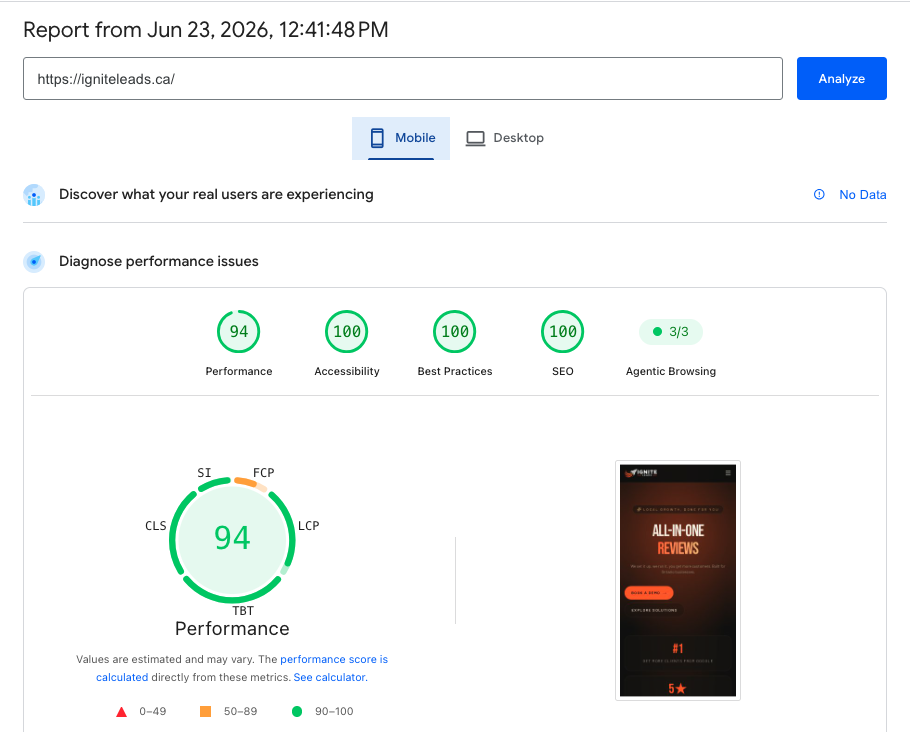
Local SEO is not only content and reviews. Your website must load quickly, work properly on mobile devices, and make it easy for Google to crawl important pages. Broken forms, slow page speed, missing page titles, duplicate content, and confusing navigation can reduce performance even when your services are in demand.
Owners often see this after a website redesign. The new site may look better, but previous rankings disappear because service pages were removed, page addresses changed without redirects, or local content was replaced with vague branding copy.
A good website should do more than look professional. It should turn local search visits into action. That means clear service pages, visible calls to action, click-to-call options, simple forms, and proof that lowers hesitation, such as reviews, credentials, before-and-after work, or straightforward process details.
Rankings Do Not Matter If Leads Wait
A prospect who fills out a form at 2:10 p.m. and receives a reply the next day is unlikely to wait. In local services, speed-to-lead is often the difference between winning and losing a job.
This is where SEO needs to connect with operations. Calls need to be answered or routed. Forms need instant confirmation. Missed calls should trigger a prompt text follow-up. New inquiries should enter a CRM so they do not disappear in an inbox. Appointment reminders and estimate follow-ups should run automatically where appropriate.
Automation is not about removing the human side of service. It is about making sure customers receive a fast, consistent response before your team has time to handle the conversation personally. For busy operators, this removes a major leak in the lead pipeline.
Ignite Leads approaches this as one connected system: website, local visibility, review generation, CRM follow-up, and AI-assisted reception working together. That matters because customers do not experience those as separate services. They experience one journey from Google search to booked appointment.
What to Measure Beyond Your Ranking Position
Ranking reports can be useful, but they are not the full scorecard. A first-place position for a low-value search does not help much if it produces no calls. Track the numbers that connect visibility to revenue.
Look at Google Business Profile calls, website form submissions, booked appointments, quote requests, review volume, lead response time, and close rate. If possible, track where each booked customer came from. This reveals whether the issue is traffic, conversion, follow-up, or sales handling.
There are trade-offs. A highly competitive service category may take longer to rank, especially in a crowded area. A newer business may need to build reviews and authority before it consistently appears in the local map results. In those cases, paid advertising can support lead flow while SEO builds momentum. The right mix depends on your market, margins, service capacity, and goals.
A Practical SEO Newmarket Plan
The strongest local SEO plan is not the one with the most tasks. It is the one that removes the biggest bottleneck first. If your profile is incomplete, fix that. If reviews have stalled, build a request process. If visitors are landing on a vague homepage, create service pages that make booking easier. If leads are going unanswered, address response time before spending more to generate demand.
SEO works best when it reflects a business that is easy to trust and easy to contact. Keep your information accurate, show proof of good work, answer new leads quickly, and make every search visit count. More visibility is valuable, but more booked customers is the result that pays the bills.
Allan Heath
Founder of Ignite Leads. Helps local businesses grow through SEO, lead generation, and marketing automation — simplifying the playbook so owners can focus on the work.