Article
10 Website Conversion Tips for Contractors
July 9, 2026 • 7 min read

Most contractor websites do one job well and one job badly. They look decent enough, but they make people work too hard to contact you. A homeowner lands on the page, scrolls, hesitates, and leaves. That is why website conversion tips for contractors matter - not because more traffic is always the answer, but because more of your existing traffic should already be turning into calls, quote requests, and booked estimates.
If you run a service business, your website is not a brochure. It is part of your sales process. Every section should help a visitor answer three questions fast: do you do this work, can I trust you, and how do I reach you right now?
Why most contractor websites leak leads
A lot of contractor sites are built around the business owner’s perspective instead of the customer’s. The owner wants to show every service, every photo, every certification, and every city. The customer wants a quick yes or no. Can this company solve my problem, and how soon can I talk to someone?
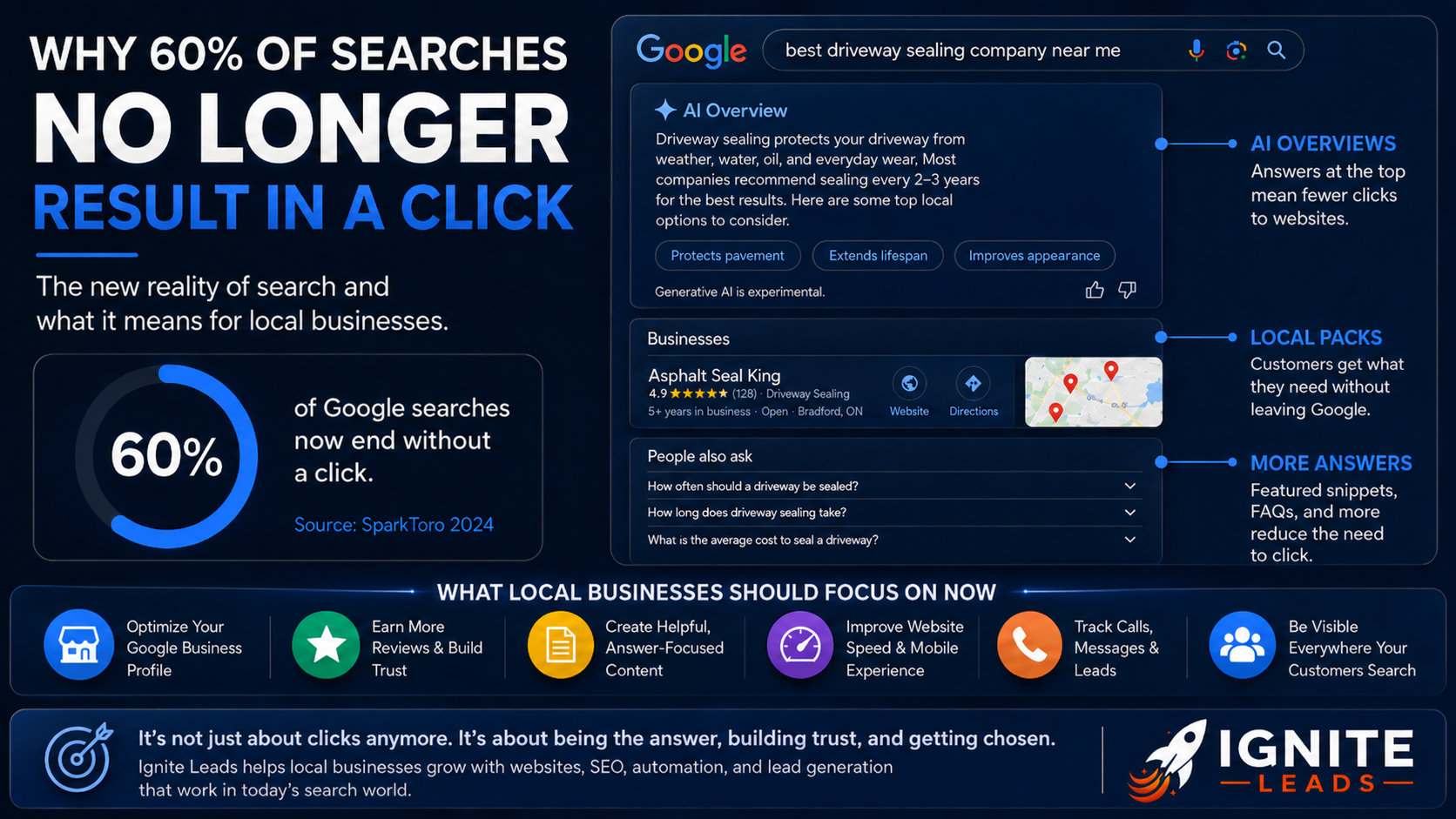
That mismatch costs leads. Too much text, weak calls to action, buried phone numbers, slow pages, and generic copy all create hesitation. On mobile, the problem gets worse. Most local service traffic comes from people searching on their phones, often with some urgency. If your site feels slow or confusing, they back out and call the next contractor.
Good conversion work is not flashy. It is operational. It removes friction at every step.
Website conversion tips for contractors that actually move the needle
1. Put the call to action above the fold
Your best action should be visible without scrolling. For most contractors, that means a clear button to request a quote and a click-to-call phone number. Do not make visitors hunt through a menu or footer to find out how to contact you.
The wording matters too. “Get a Free Quote” usually works better than “Learn More” because it matches buyer intent. If your business depends more on calls than form fills, make the phone number bigger than the button. If your jobs are higher ticket and need qualification, a quote form may be the stronger primary action. It depends on how your sales process works after the lead comes in.
2. Lead with the services people actually search for
Generic headlines waste attention. “Welcome to Our Website” tells the visitor nothing. A stronger headline says exactly what you do and who it is for, like roofing repair, kitchen renovations, or emergency plumbing.
Be specific early. People should know within seconds whether they are in the right place. If you serve homeowners, say that. If you focus on commercial work, say that too. Broad positioning can feel safer, but it often lowers conversion because the message becomes vague.
3. Make trust obvious, not hidden
Contracting is a trust sale. People are inviting you onto their property and often spending real money. They need proof quickly.
Reviews, project photos, certifications, years in business, warranty details, and financing options should not be buried on separate pages. Put them near the top of key pages. A short review block beside a quote form can outperform a long testimonial page that nobody visits.
The trade-off is clutter. If you stack too many badges, logos, and promises in one place, the page starts to feel noisy. Pick the strongest proof points and place them where decisions happen.
4. Build for mobile first
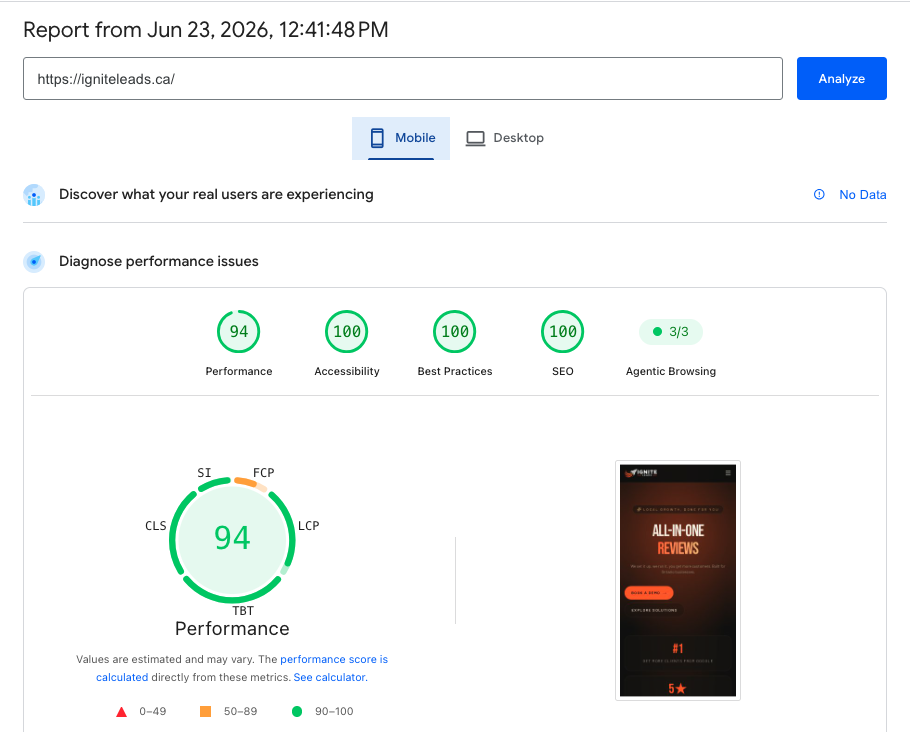
If your site looks good on desktop but awkward on a phone, your conversion rate is taking a hit. Mobile users do not want tiny text, hard-to-tap buttons, or long forms.
Start with the basics. Use large tap targets, short sections, sticky call buttons where appropriate, and fast-loading images. Keep forms simple. Name, phone, service needed, and maybe postal code are often enough for a first contact. Every extra field lowers completion rates unless it serves a clear sales purpose.
This is where a lot of contractors lose leads without realizing it. They test their site from the office on a laptop, but their customers are searching from a driveway, lunch break, or couch.
5. Use location signals where they help conversion
If you serve Barrie, Aurora, Newmarket, Vaughan, or surrounding areas, mention that clearly on the pages where people are deciding whether to contact you. Local relevance helps with both trust and search visibility.
But avoid stuffing city names into every sentence. That reads like SEO copy, not a real business. A cleaner approach is to mention your primary service area in the headline, supporting copy, and contact section, then create useful service-area pages if you have enough demand in each market.
6. Show real project outcomes
Before-and-after photos are useful, but they work better when paired with context. What problem did the client have? What work was completed? How long did it take? What was the result?
That extra detail helps prospects picture the process and reduces uncertainty. It also helps qualify leads. Someone looking for a full basement finishing project responds differently to a gallery than to a short project story with scope and outcome.
You do not need case studies for every job. A few strong examples can do more than a massive gallery with no explanation.
The conversion bottleneck is often after the form
7. Speed to lead matters more than most websites admit
A contractor site can generate leads and still underperform if follow-up is slow. If someone submits a form at 2:14 p.m. and does not hear back until the next morning, your website did its part and your system failed.
This is where conversion and operations overlap. Instant confirmations, text follow-up, missed-call text back, and AI-assisted chat can increase booked jobs because they reduce the delay between interest and contact. For local service businesses, the fastest serious responder often wins.
A lot of owners think of conversion as what happens on the page. In reality, the handoff matters just as much.
8. Reduce form friction without reducing lead quality
Long forms feel efficient for the business because they gather more information upfront. Short forms feel easier for the customer. The right balance depends on your average job value and how much filtering your team needs.
If you install custom kitchens, you may need more qualification. If you offer emergency drain service, speed matters more than detail. In most cases, start shorter and qualify later by phone or text. The goal is to begin the conversation, not conduct an interview on the website.
Use clear labels, no unnecessary dropdowns, and a visible privacy reassurance if you ask for phone numbers. Small details make forms feel safer.
9. Write like a contractor, not a marketing agency
A lot of websites sound polished but generic. Visitors notice. If your copy says “high-quality solutions tailored to your unique needs,” it could belong to almost any business in any industry.
Plain language converts better. Say what you do, what areas you serve, what happens next, and why people choose you. Strong contractor copy sounds confident and practical. It focuses on timelines, workmanship, communication, clean-up, warranties, and responsiveness - the things customers actually worry about.
The best copy also handles objections before they are spoken. If people often worry about delays, address scheduling. If they worry about price surprises, explain your estimate process. If they want to know whether you are insured, say it clearly.
Small fixes that create compound gains
10. Track what leads to booked jobs
A higher conversion rate only matters if it produces good leads. That is why contractors need more than page views and form submissions. You need to know which pages, traffic sources, and calls turn into real estimates and real revenue.
Call tracking, form tracking, CRM tagging, and basic pipeline reporting make this possible. Without that visibility, it is easy to overvalue traffic and undervalue the pages that actually produce customers.
This is also how you make better decisions about what to improve next. Sometimes the homepage is the issue. Sometimes it is a slow quote response. Sometimes your Google Business traffic converts far better than paid clicks. The numbers usually tell a clearer story than opinions do.
What a high-converting contractor website really does
The best contractor websites are simple in the right places and detailed where trust is needed. They make it easy to call. They prove the business is credible. They work on mobile. They follow up fast. And they connect marketing with operations instead of treating the website like a standalone asset.
That is the bigger shift. A contractor website should not just attract attention. It should support the whole lead flow, from first click to booked estimate. That is where managed systems can outperform one-off web design, especially for busy owners who do not have time to patch together forms, chat, reviews, and follow-up. Ignite Leads approaches this as one connected process because fragmented tools usually create fragmented results.
If your website gets traffic but not enough calls, the answer is rarely more design for the sake of design. It is usually less friction, faster response, and clearer proof. Tighten those three areas first, and your website starts acting more like a sales tool than an online placeholder.
Allan Heath
Founder of Ignite Leads. Helps local businesses grow through SEO, lead generation, and marketing automation — simplifying the playbook so owners can focus on the work.