Article
Website Conversion: Turn More Visits Into Calls
November 24, 2026 • 7 min read
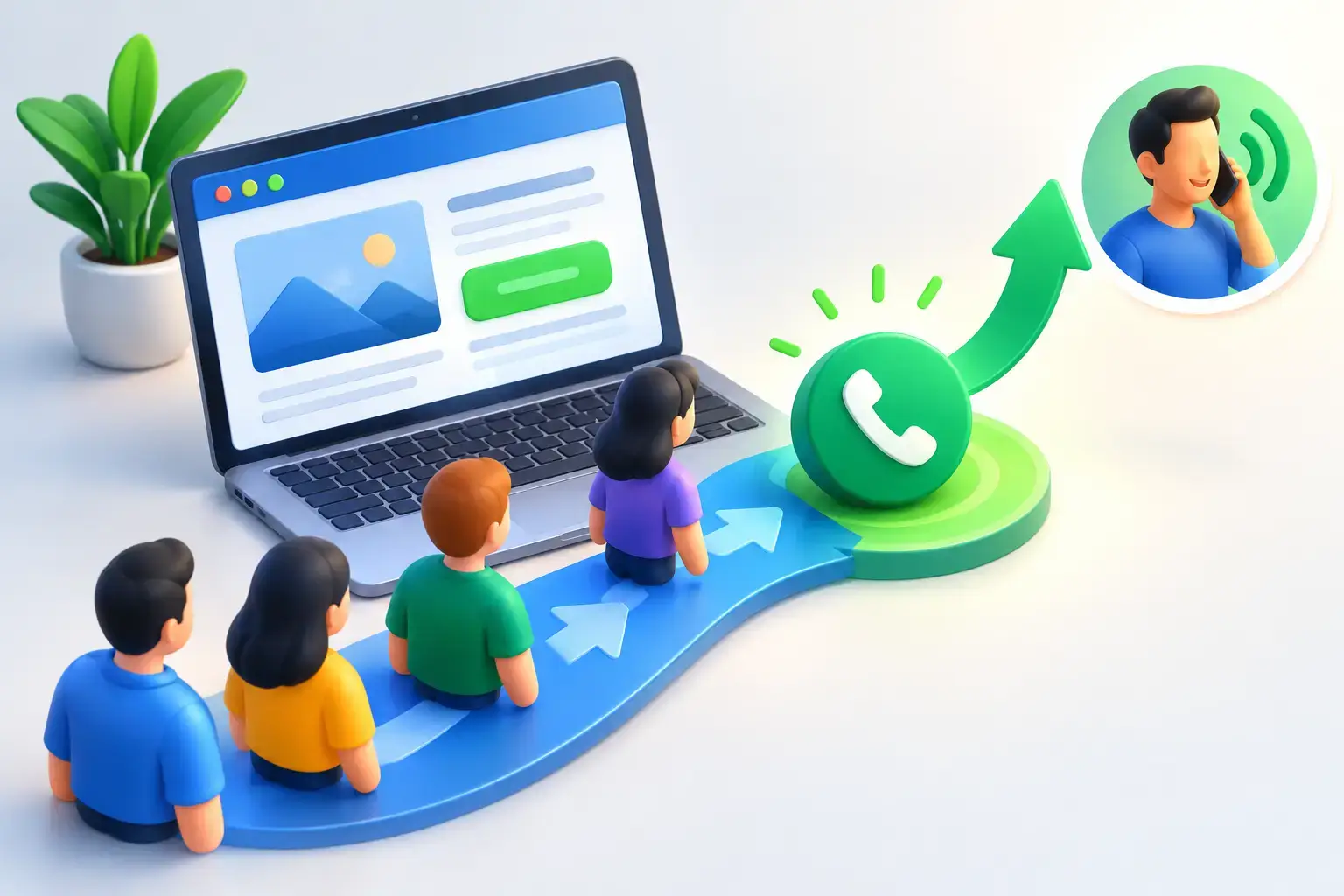
A homeowner in Barrie searches for an emergency plumber at 8:15 p.m. They land on your site, cannot find a clear phone number, see no proof you serve their area, and leave 20 seconds later. Your website may be getting traffic, but website conversion is where that traffic either becomes revenue or disappears to a competitor.
For local service businesses, a website is not a brochure. It is a working part of the sales process. It needs to answer a visitor's question fast, establish confidence, and make it easy to call, request a quote, or book an appointment. Then it needs a follow-up system that ensures the lead does not sit unanswered.
What website conversion means for local businesses
Website conversion is the percentage of visitors who take a valuable action on your site. For a garage, that may be booking a service appointment. For a spa, it may be claiming an introductory offer. For a roofing company, it may be requesting an estimate or making a call.
The right conversion is not always a form submission. A high-value phone call can be worth far more than ten low-intent form fills. That is why conversion should be measured against booked work, qualified conversations, and revenue, not vanity metrics such as page views alone.
A site with 300 monthly visitors and a reliable process for turning 8% of them into qualified leads can outperform a site with 2,000 visitors and no clear path to action. More traffic helps, but only after the site gives people a reason to act.
Start with one clear next step
A common mistake is asking visitors to choose between too many actions: call now, email us, sign up for a newsletter, browse the gallery, read the blog, download a guide, and follow social pages. More options often create less action.
Each major service page should have one primary job. If the page is for furnace repair, the primary call to action should be to request service or call for same-day help. If the page is for massage packages, the job may be to book online. Supporting actions can exist, but they should not compete with the main one.
Put that action where people can see it without hunting. Use direct language such as “Request Your Free Estimate,” “Book Your Service,” or “Call for Same-Day Repair.” “Learn More” is rarely enough when someone is ready to hire.
The offer also needs to match the visitor's intent. Someone searching “auto repair Vaughan” wants evidence that you repair vehicles, serve Vaughan, and can get them in soon. They do not need a generic welcome message about your company values before they know whether you can solve the problem.
Build service pages around buying questions
Local prospects make fast decisions, especially when the problem is urgent. Strong service pages answer practical questions in the order customers think about them: What do you do? Do you serve my area? Can you help with my specific problem? What will happen next? Why should I trust you?
Lead with the service and outcome, not a long company introduction. A page for driveway repair should clearly explain the type of repair offered, common issues handled, expected timeline, and how to request an estimate. This reduces uncertainty before the visitor ever calls.
Specificity beats broad claims. “Reliable service at fair prices” could describe every business in town. “Licensed technicians, clear repair recommendations, and appointment times confirmed by text” tells a customer what working with you actually looks like.
Keep the copy scannable. Most visitors will not read every paragraph. Use short sections, descriptive headings, and clear service details. The goal is not to impress people with how much you know. The goal is to help the right person decide quickly.
Make trust visible before the form
A visitor is weighing risk. They may worry about poor work, surprise pricing, missed appointments, or getting ignored after they submit their details. Trust signals reduce that risk.
Reviews are especially powerful for local businesses because they show real experiences from people nearby. Use genuine review excerpts that mention the result, service, or area when possible. Show your average rating and total review volume accurately. Do not rely on vague testimonials with no name, context, or proof.
Also show the operational details that customers care about: years in business, certifications, insurance where relevant, warranty information, service areas, before-and-after examples, and recognizable payment or financing options. For regulated or specialized services, credentials should be easy to find, not hidden in a footer.
Trust needs to support the decision at the point of action. Place a short reassurance near forms and booking buttons. For example: “We respond during business hours within 15 minutes” is more useful than a generic promise of great customer service, provided you can consistently meet it.
Remove friction from calls and forms
Every extra step lowers the chance that a prospect completes it. A phone number should be tap-to-call on mobile. Your main call button should stay visible as people scroll, particularly on pages built for urgent services.
Forms should collect only what your team needs to make the next move. For many local businesses, name, phone, email, service needed, and a brief message are enough. Asking for a full address, budget, preferred date, how they found you, and several dropdown fields before anyone has spoken to them creates unnecessary friction.
There is a trade-off. Short forms generate more inquiries, while longer forms can filter out weaker leads. For high-volume, lower-value services, a little qualification may save staff time. For higher-ticket estimates, it can be worth keeping the first step simple and qualifying during the call. Test based on your capacity, not assumptions.
After a form is submitted, do not leave people on a generic thank-you page. Confirm that their request was received, explain when they can expect a response, and offer a second contact option for urgent needs. This is a small change that prevents uncertainty and reduces duplicate submissions.
Speed-to-lead protects the conversion
The website does not finish the job when a form is sent. It starts the next stage. If a prospective customer waits hours or days for a response, your conversion rate from lead to booked customer will fall, even if your landing page performs well.
An automated text or email confirmation can acknowledge the inquiry immediately. A CRM can assign the lead, trigger reminders, and keep the conversation from being lost in an inbox. AI chat and voice reception can answer common questions, collect initial details, and route urgent calls when your team is busy.
Automation is not a replacement for good service. It is a way to make sure the customer receives a fast response while your team is on a job, with another client, or outside the office. The handoff still needs to be accurate and human when the situation requires it.
Track response time alongside website leads. If one location responds in five minutes and another responds the next morning, the problem is not web design. It is process. A coordinated system lets you find the break quickly.
Measure website conversion by source and service
One overall conversion number can hide useful information. Visitors from Google Business Profile may behave differently from visitors who arrive through paid ads, organic search, referral traffic, or social media. A person searching a specific service is usually closer to booking than someone reading a broad educational article.
Track calls, forms, bookings, chat conversations, and qualified leads. Then connect those leads to appointments and closed jobs whenever possible. This shows which pages, services, and channels produce customers rather than just inquiries.
Review the data monthly, but avoid changing everything at once. Improve one meaningful element, such as the headline, call to action, proof section, or form length. Let it run long enough to gather a useful sample. Small, consistent improvements compound when they are based on real customer behaviour.
Treat your website as part of one growth system
A high-converting site works best when it is connected to local SEO, review generation, lead handling, and follow-up. Rankings bring in local intent. The website turns that intent into an inquiry. Automation confirms and routes the inquiry. Your team closes the job. Reviews from completed work strengthen the next customer's decision.
When those pieces are disconnected, owners end up chasing leads across forms, inboxes, call logs, and separate software subscriptions. When they work together, it becomes easier to see where revenue is being lost and fix it. That is the practical advantage of a managed system like Ignite Leads: fewer handoffs, faster action, and clearer accountability.
Your next best website improvement is usually not a redesign for its own sake. Start with the page where high-intent prospects are leaving, make the next step obvious, and ensure someone responds quickly when they take it. That is how a website starts earning its place in your business.
Allan Heath
Founder of Ignite Leads. Helps local businesses grow through SEO, lead generation, and marketing automation — simplifying the playbook so owners can focus on the work.