Article
Website Design Guide for Service Companies
October 21, 2026 • 7 min read
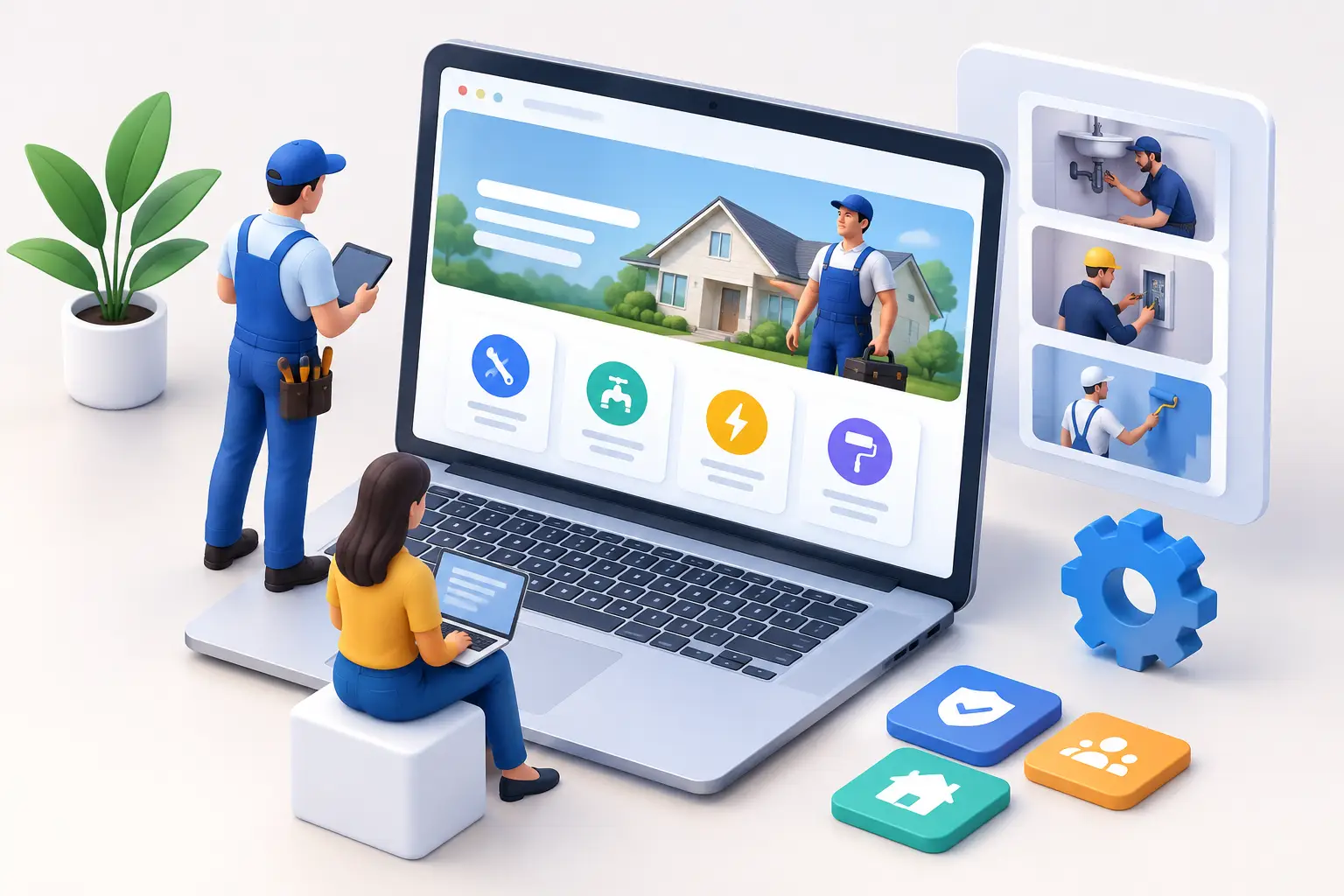
A service business website has one job: turn a local prospect with a problem into a booked call, appointment, or estimate. This website design guide for service companies is built for owners who do not need more pages, more plugins, or more marketing tasks. They need a system that makes it easy for the right customer to act.
A homeowner searching for a plumber at 8 p.m., a driver needing a repair, or a client looking for a nearby spa will not spend 20 minutes studying your brand story. They want to know whether you serve their area, whether you can help, what happens next, and how quickly they can reach someone. Your website needs to answer those questions before they move to the next Google result.
Start With the Conversion, Not the Layout
Many service company websites are designed from the inside out. The owner starts with colours, photos, an About page, and a long list of services. Those details matter, but they are not the starting point. Start with the action you want a visitor to take.
For most local businesses, that action is a phone call, quote request, appointment booking, or text conversation. Pick one primary conversion for each page, then make it visible without forcing visitors to hunt for it. A clear button such as “Get a Quote,” “Book an Appointment,” or “Call Now” works because it tells the visitor exactly what happens next.
The strongest call to action depends on the service. Emergency trades should prioritize click-to-call options. A garage may need booking requests with vehicle details. A coach or clinic may benefit from a short consultation form. There is no universal button that wins for every business. The right choice is the one that matches customer urgency and your team's ability to respond.
Your contact path should also fit the way people actually browse. On mobile, the phone number, booking option, and service area should be obvious near the top of the page. If a customer has to pinch, scroll, or open three menus to contact you, the website is creating friction at the exact moment it should be removing it.
Build Every Page Around Local Buying Intent
A good-looking website that cannot be found does not generate reliable leads. A website that ranks but fails to convert wastes the traffic it earns. Service companies need both local visibility and a clear conversion path working together.
Your homepage should establish three things quickly: what you do, who you help, and where you operate. A vague headline like “Quality You Can Trust” does not tell Google or a potential customer much. “Professional Auto Repair in Barrie” is more direct. It connects the service, location, and customer need in one line.
Service pages deserve the same level of attention. Give each important service its own page when there is enough demand to justify it. A heating company may need separate pages for furnace repair, air conditioning installation, and maintenance plans. A spa may need pages for facials, laser treatments, and massage services. This structure helps search engines understand your offerings and helps visitors land on a page that speaks directly to their need.
Avoid creating dozens of thin pages that swap one city name for another. Location pages can be useful when you genuinely serve multiple communities and can provide relevant details, such as local availability, testimonials, project examples, or service considerations. Copy-and-paste pages are rarely useful to customers and rarely perform well over time.
Use Proof Where Decisions Are Made
Trust is not built on an About page alone. It is built beside the booking button, beside the pricing explanation, and beside the claims you make.
Add current reviews, before-and-after examples, certifications, team photos, warranty information, and clear expectations where they support a decision. If you offer same-day service, explain the conditions. If you provide free estimates, say what the estimate includes. If financing is available, make that visible before the customer abandons the page.
Generic stock photos can make a site look polished, but they do not always make it believable. Real photos of your team, trucks, workspace, completed work, or local projects usually carry more weight. They show customers there is an actual business behind the form.
The Website Design Guide for Service Companies: Essential Page Structure
You do not need a 50-page site to create leads. You need the right pages, connected logically, with every page doing a specific job.
Your homepage should function as a fast overview and routing page. It needs a direct headline, key services, service areas, trust signals, and a clear next step. It should lead visitors toward the specific service page or booking action that fits their situation.
Your core service pages should explain the problem, your solution, what is included, why customers choose you, and how to get started. Write for the customer first. Use plain language that reflects the questions people ask on the phone. Technical detail can help, but only when it reduces uncertainty rather than showing off expertise.
Your contact page should not be an afterthought. Include the phone number, operating hours, service area, email if appropriate, and a short form. Ask only for information your team will actually use. Name, contact details, service needed, location, and a brief description are usually enough. Long forms create drop-off, especially on mobile.
An About page can reinforce credibility, particularly for businesses where trust is personal. Keep it focused on why your team is qualified, how you operate, and what customers can expect. A detailed company history may matter to some audiences, but it should not replace the information that helps someone book.
Make Speed-to-Lead Part of the Design
A form submission is not a lead until someone responds. This is where many service companies lose business. The website captures interest, but the follow-up is manual, delayed, or inconsistent. By the time someone replies, the prospect has called two competitors.
Your website should trigger an immediate next step. That may be a confirmation message, an automated text, a booking link, or an AI chat assistant that qualifies the inquiry and answers basic questions. The objective is not to replace human service. It is to ensure every inquiry receives a fast first response, even when your team is on a job, with a customer, or closed for the day.
The handoff matters. If an AI chat captures a request, your team needs the details in one place. If a customer books, the appointment should enter the calendar and CRM without double entry. If a lead calls, you should know which page or campaign produced the call. Connected systems reduce admin work and make lead quality easier to measure.
At Ignite Leads, this is the difference between a website as an online brochure and a website as part of a managed growth system. Design, local visibility, reputation, follow-up, and reporting should support the same outcome: more booked customers.
Keep Mobile Performance Ruthlessly Simple
Most local service searches happen on a phone, often when the customer is ready to act. A slow, cluttered mobile website costs calls.
Avoid oversized videos, autoplay effects, pop-ups that cover the screen, and complicated animations that delay the page. These elements can look impressive in a design review but frustrate a real customer on cellular data. Fast loading, readable text, tap-friendly buttons, and a clear navigation path will usually outperform decorative complexity.
Mobile design should also account for imperfect attention. People browse while at work, in a vehicle, or between tasks. They may not read every paragraph. Use concise headings, direct language, and visible proof points so the most valuable information is easy to scan.
Measure What Produces Revenue
Do not judge a new website only by whether it looks better than the old one. Track the outcomes that matter: phone calls, form submissions, booked appointments, chat conversations, and qualified estimates.
Traffic matters, but traffic without intent can be misleading. A page attracting fewer visitors may be more valuable if those visitors book at a higher rate. Review which service pages generate inquiries, where visitors leave, how quickly leads receive a response, and which channels produce customers rather than just clicks.
This data gives you practical decisions. If a service page gets visits but few conversions, the offer, proof, call to action, or page speed may need work. If calls are strong but form leads are weak, simplify the form or shift attention to booking. The goal is steady improvement, not a one-time redesign followed by years of neglect.
A service website should make the next customer interaction easier, not add another system for your team to manage. Build around local intent, remove friction, respond quickly, and measure the actions that lead to revenue. When the phone rings, the form is answered, and the booking calendar fills, the design is doing its real job.
Allan Heath
Founder of Ignite Leads. Helps local businesses grow through SEO, lead generation, and marketing automation — simplifying the playbook so owners can focus on the work.