Article
Website Trust Signals That Get More Calls
November 12, 2026 • 7 min read

A homeowner looking for an emergency plumber, a driver needing a garage, or a client comparing local spas is not grading your website on creativity. They are deciding whether your business feels safe, legitimate, and easy to contact. Website trust signals make that decision faster - and they directly affect calls, form submissions, and booked appointments.
For a local service business, trust is not a vague brand exercise. It is the difference between a visitor who taps Call Now and one who goes back to Google to contact the next company. Your site has only a short window to remove doubt, show proof, and give people a clear next step.
Why Website Trust Signals Decide the Call
Most local prospects arrive with limited information. They may have found you in Google Maps, through a referral, or after searching for a service near them. They are not looking to study your company for 20 minutes. They want quick confirmation that you serve their area, do the work they need, have done it well for other people, and will respond when they reach out.
A polished logo alone cannot do that. Neither can generic statements like "quality service you can trust." People have seen those lines on hundreds of websites. Specific evidence carries more weight: recent reviews, real project photos, recognizable service areas, clear credentials, and a working phone number displayed where it is easy to find.
Trust signals also reduce lead friction. If a visitor can see your hours, understand what happens after they request a quote, and know that a real person will respond, contacting you feels less risky. That matters most for higher-value services, urgent jobs, and businesses people invite into their homes.
The goal is not to cover every page in badges and claims. Too many logos, pop-ups, and banners can create the opposite effect. The right approach is a clean site with proof placed near the moments where a prospect is deciding whether to call, book, or submit a form.
The Website Trust Signals That Carry the Most Weight
Real reviews with context
Reviews are one of the strongest forms of local proof because they answer the question prospects are already asking: "What was it like to work with this business?" Feature a current review rating and selected customer feedback on key pages, especially your homepage, service pages, and booking pages.
The details matter. A review that mentions fast arrival, honest pricing, a specific service, or a nearby community is more convincing than a vague five-star quote. Keep reviews current and authentic. A wall of identical testimonials or review language that sounds overly polished can make visitors suspicious.
For businesses in competitive Ontario markets, a consistent review generation system is not just a Google visibility play. It gives your website fresh proof that the business is active, responsive, and delivering good outcomes now.
Clear local identity
Local customers want to know they are contacting a business that actually serves them. List your primary service areas naturally, show an accurate address if you have a customer-facing location, and use a local phone number when appropriate. Your contact details should match what people see on your Google Business Profile and other business listings.
If you serve Barrie, Newmarket, Aurora, or Vaughan, say so where it helps a customer make a decision. Do not stuff every page with city names. A service area section, location-specific service pages, and clear coverage information are more useful than repetitive geography.
Real photos help here too. Images of your team, vehicles, completed work, office, or storefront give prospects evidence that there is a real operation behind the website. Stock photos can support a page, but they should not be the only visual proof your business exists.
Credentials, insurance, and relevant affiliations
For trades, home services, health-adjacent services, coaching, automotive work, and other high-consideration purchases, visitors need reassurance before they make contact. Licences, certifications, insurance coverage, years in business, warranty information, and professional memberships can all help when they are accurate and relevant.
Put these claims close to the service they support. For example, a garage can show technician qualifications on a repair page. A contractor can explain insurance and warranty coverage near a request-a-quote form. A spa can reinforce sanitation standards and practitioner credentials on treatment pages.
Do not add credentials simply because competitors do. Expired certifications, unclear logos, or claims that cannot be verified create risk. One clear, specific statement is more credible than a crowded row of unfamiliar badges.
A contact process that feels reliable
A missing phone number, a vague contact form, or a booking button that leads nowhere can undo all the proof on the page. Make it obvious how prospects can reach you. Display your primary call-to-action in the header and repeat it where a visitor has enough information to act.
Your form should tell people what happens next. Instead of a button that says "Submit," use language such as "Request Your Estimate" or "Book a Callback." Add a short expectation below it: "We respond during business hours" or "A team member will call within 15 minutes." Only promise a response time you can consistently meet.
Fast follow-up is a trust signal after the form, too. If a lead waits until the next day for a reply, the website may have done its job but the sales process has failed. Automated confirmation messages, CRM routing, and AI-assisted reception can acknowledge inquiries immediately and direct urgent callers to the right next step.
Transparent service and pricing expectations
You do not always need to publish fixed prices. Many local services depend on job scope, materials, condition, or travel distance. But hiding every detail makes prospects cautious, particularly when they are comparing providers.
Explain how estimates work, what influences pricing, whether consultations are free, and what is included in a typical service. If you offer financing, monthly options, or package pricing, present it clearly. If a quote requires an onsite assessment, say that directly and explain why.
Transparency is also useful after the sale. Clear cancellation terms, warranty details, refund policies, and scheduling rules lower uncertainty. Keep this information plain and visible rather than burying it in small text that no one reads.
A site that works properly on a phone
A slow, broken, or hard-to-read website signals operational problems, whether that is fair or not. Local prospects frequently search from a phone, often when they need help quickly. They expect pages to load, phone numbers to tap, forms to work, and booking options to be easy to use without zooming in.
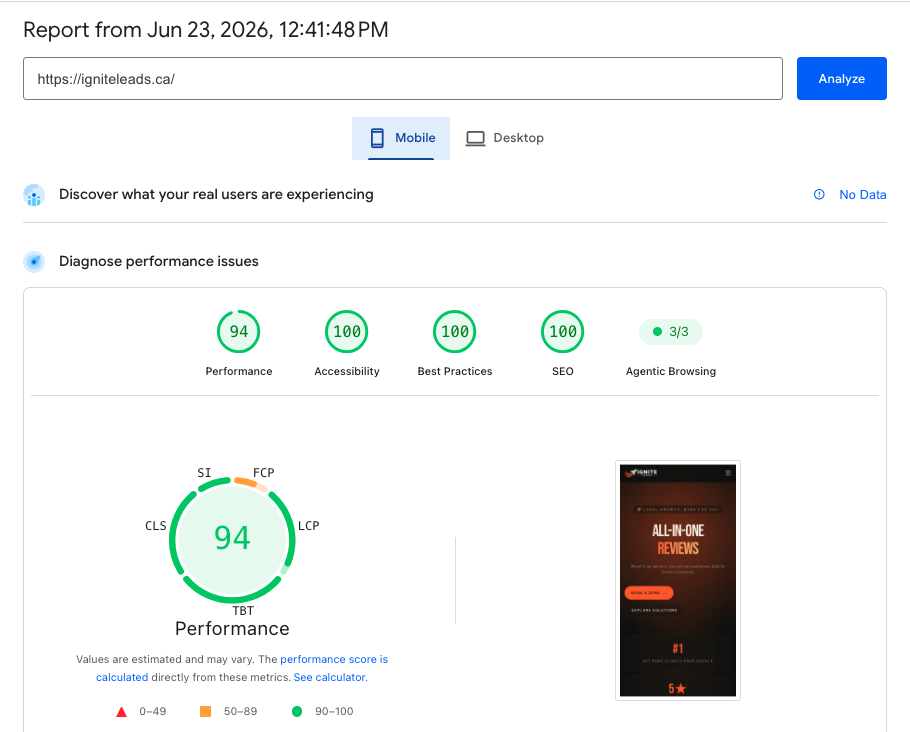
Mobile performance is not only technical housekeeping. It affects perception. A clean, fast page with a visible call button feels more dependable than a cluttered page where the visitor has to hunt for basic information.
Check your website as a customer would. Open it on a phone, request a quote, call the number, and confirm that confirmation messages arrive. Review the experience outside office hours as well. A lead handling gap at night or on weekends can cost more than a design improvement ever recovers.
Where to Place Trust Signals for Maximum Effect
Homepage visitors need fast proof. Put your review rating, local coverage, primary services, and a clear contact option near the top. Follow with practical evidence: customer feedback, project images, credentials, and a short explanation of your process.
Service pages need proof that is specific to the job. A general testimonial is useful, but a review from someone who booked that exact service is better. Pair it with a relevant guarantee, process explanation, and a call-to-action that matches the visitor's intent.
Contact and booking pages need reassurance at the moment of conversion. Show a response-time expectation, a direct phone number, business hours, and a short privacy statement explaining that customer information will only be used to respond to the request. Keep the form short. Every unnecessary field gives an uncertain prospect another reason to leave.
Fix the Trust Gaps Before Buying More Traffic
More traffic does not solve a weak conversion path. If visitors cannot verify who you are, find proof, or get a quick response, paid ads and better rankings simply send more people into the same leak.
Start by reviewing the pages that receive the most visits and the pages that should generate calls. Look for old testimonials, inconsistent business details, generic claims, missing service areas, broken forms, and unclear next steps. Then prioritize the fixes closest to revenue: contact options, reviews, local proof, and speed-to-lead.
This is where a coordinated system matters. Your website, Google visibility, review collection, and follow-up should reinforce each other instead of operating as separate tools. Ignite Leads builds that connection so a prospect sees proof, takes action, and receives a response without your team manually chasing every inquiry.
Trust is built in small, visible moments. Give local prospects proof before they have to ask for it, and make the next step feel easy enough to take now.
Allan Heath
Founder of Ignite Leads. Helps local businesses grow through SEO, lead generation, and marketing automation — simplifying the playbook so owners can focus on the work.