Article
What a Lead Generation Agency Should Actually Do
July 29, 2026 • 6 min read

A lead generation agency is not there to hand you a spreadsheet of names and call it growth. For a local service business, the real job is simpler and more valuable: create demand, capture every opportunity, respond before the customer calls someone else, and turn interest into booked work.
That sounds obvious. Yet many businesses across Barrie, Newmarket, Aurora, and Vaughan are still paying separate providers for a website, ads, SEO, reviews, and CRM software that nobody fully manages. The result is a disconnected system where leads get missed, follow-up is slow, and owners are left figuring out what is working.
A lead generation agency should own the full path to a booking
A lead does not become revenue because someone filled out a form. It becomes revenue when the prospect gets a fast answer, receives clear information, trusts the business, and books an appointment or requests a quote.
That means the agency should look beyond traffic numbers. More website visitors mean very little if the site is hard to use on a phone, the contact form goes unanswered for hours, or the business has too few recent reviews to earn trust. Local marketing works when each stage supports the next.
For a garage, that may mean showing up when someone searches for brake repair nearby, making it easy to call, and responding quickly enough to secure the appointment. For a spa, it may mean helping a visitor compare services, answer availability questions, and receive a booking reminder. For a home service company, it may mean capturing an urgent quote request at night and getting the right follow-up started immediately.
The best systems are built around the customer journey, not around a collection of marketing products.
Start with local visibility where buying intent is strongest
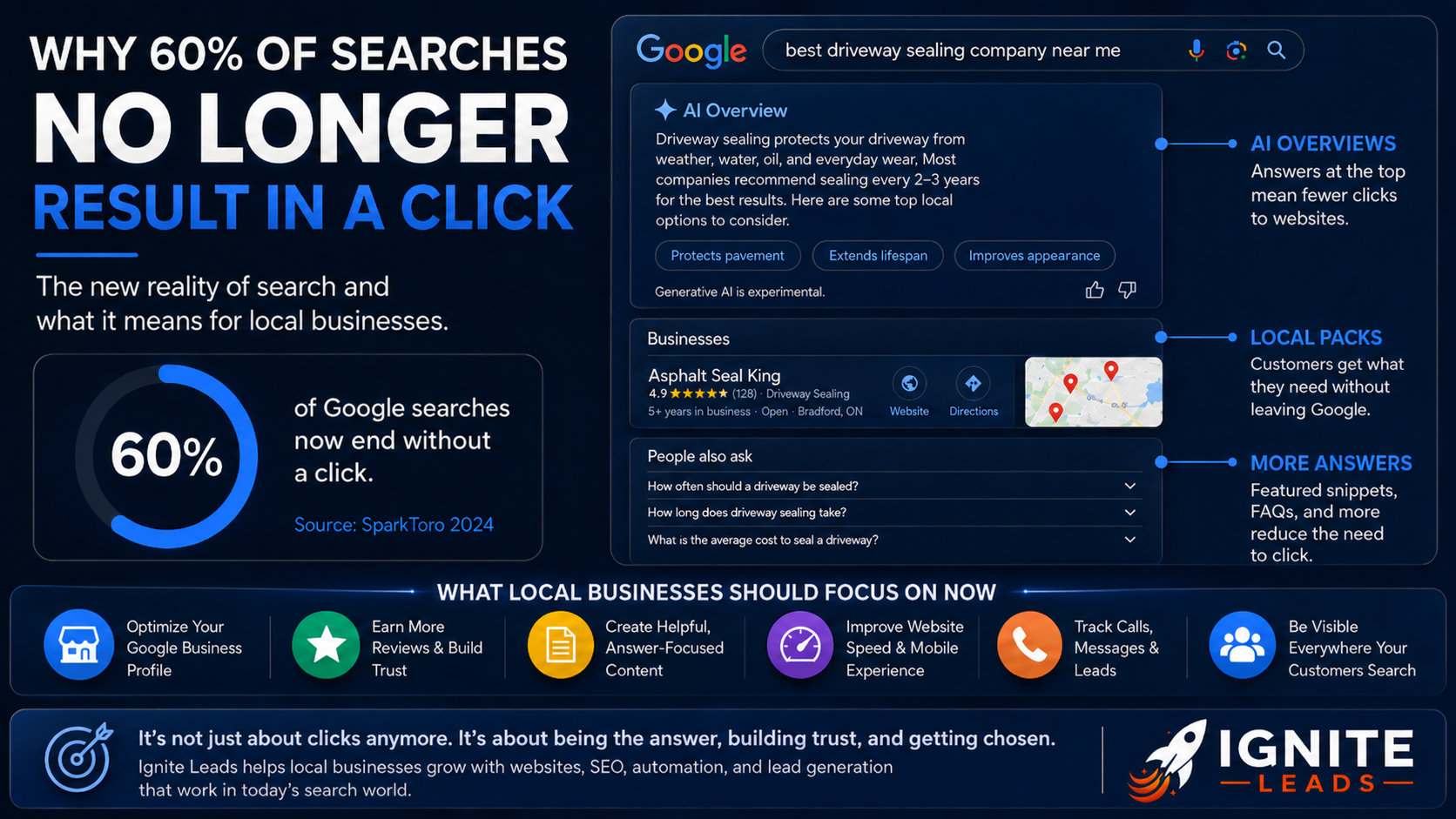
Most service businesses do not need attention from everyone. They need visibility in front of people already looking for what they offer in the areas they serve. Google search, Google Business Profile visibility, local map results, and service-specific pages are often where that demand starts.
A capable agency should make sure your website clearly explains what you do, where you work, and why a customer should contact you. It should also improve the local signals that help Google understand and trust your business, including accurate business information, relevant service content, location relevance, and ongoing reputation activity.
There is no honest promise that every business will rank first for every search term. Competition, market size, existing reputation, and the age of your online presence all matter. But there should be a clear plan for improving visibility around the searches most likely to produce calls and bookings.
A polished website alone is not enough. It needs strong calls to action, fast load times, clear service pages, mobile-friendly contact options, and tracking that shows where inquiries come from. If a customer has to hunt for your phone number, wait for a slow page, or fill out a long form, the system is creating friction instead of removing it.
Speed-to-lead is a revenue issue, not an admin task
A missed call at 10:30 a.m. can be a lost job. So can a web form that sits unread until the next morning. Local customers often contact two or three businesses at once, especially when they need a repair, quote, appointment, or urgent answer. The company that responds first has a major advantage.
This is where automation has practical value. An automated text response can confirm that an inquiry was received. An AI chat assistant can answer common questions and collect key details. An AI voice receptionist can handle calls when your team is busy. Follow-up sequences can keep a prospect moving instead of disappearing after the first interaction.
Automation should not make your business sound robotic. It should handle the repetitive first steps quickly, then route qualified conversations to a real person when judgement, pricing, scheduling, or technical knowledge is needed. The goal is not to replace your team. It is to make sure your team spends time on real opportunities rather than chasing missed messages.
Ask any prospective agency how they handle response time. If the answer is limited to sending leads to an inbox, you are still responsible for the hardest part of conversion.
Reputation needs to be built into the system
For local businesses, reviews are not a side project. They influence whether people call, how they compare options, and how confident they feel about choosing you. A business with strong recent reviews often gets the call even when competitors offer a similar service.
The key word is recent. A handful of positive reviews from three years ago does not carry the same weight as a steady stream of genuine customer feedback. Your process should make it easy to request reviews after a completed service, without forcing staff to remember who to ask and when.
A lead generation agency should help create that process, automate the request where appropriate, and give your team a simple way to monitor responses. It should also help you respond professionally to feedback. You cannot control every review, but you can control whether your business looks attentive, accountable, and easy to deal with.
Never use fake reviews or pressure customers for positive ratings. Those shortcuts damage trust and can create platform issues. Build a review process around real customers and consistent service instead.
One accountable team beats five disconnected tools
Fragmented marketing is expensive in ways that do not always show up on an invoice. Your web developer says the form works. Your CRM provider says the automation is active. Your SEO provider says traffic is rising. Meanwhile, the owner is still wondering why the phone is quiet or why no one called back a new lead.
A managed growth system creates accountability. One team should be able to see the website, lead source, messages, pipeline status, call handling, review activity, and follow-up process. That makes it easier to identify the real bottleneck.
Sometimes the problem is visibility. Sometimes leads are arriving but are not being answered quickly. Sometimes the business is booking calls but losing them because quotes are not followed up. A good partner does not force every problem into the same service. They diagnose the gap and fix the part of the system that is limiting revenue.
This approach also reduces the workload on owners and managers. You should not need to become an expert in local SEO, CRM workflows, call routing, website edits, and outbound email just to keep your pipeline active. Your job is to deliver great service. The marketing system should support that work without creating another full-time role.
What to ask before hiring a lead generation agency
Before signing with any provider, ask how they define a qualified lead and how they track it through to a booked appointment, estimate, or sale. Ask who manages the website after launch, how quickly inbound leads receive a response, and what happens when a customer calls outside business hours.
You should also ask what reporting you will receive. Rankings and clicks can be useful indicators, but they should not be the whole report. You need visibility into calls, forms, conversations, booked work, response times, and the sources producing the strongest opportunities.
Pricing matters, but the lowest monthly fee is not automatically the lowest-cost option. Cheap services can leave you paying separately for tools, setup, support, and fixes. On the other hand, an expensive package is not justified if it cannot show a direct connection to customer acquisition. Look for clear scope, flexible terms, and a system that matches the scale of your business.
For many local operators, a managed model is the practical choice because execution is the constraint. Ignite Leads is built around that reality: one coordinated system for local visibility, reputation, lead handling, and follow-up, managed for businesses that need more customers without more marketing complexity.
The right partner should make growth feel more controlled. You should see more opportunities coming in, fewer leads slipping through, and a clearer view of what is driving booked work. If your current marketing creates more logins, more reports, and more work for your staff, it is time to demand a system that actually carries its share of the load.
Allan Heath
Founder of Ignite Leads. Helps local businesses grow through SEO, lead generation, and marketing automation — simplifying the playbook so owners can focus on the work.