Article
What Is an Integrated Marketing System for Growth?
October 27, 2026 • 7 min read

A missed call rarely looks like a marketing problem. Neither does a slow reply to a web form, an outdated service page, or a five-star customer who never gets asked for a Google review. But together, those gaps cost local businesses booked work every week.
What is an integrated marketing system? It is one connected process for attracting local prospects, capturing their details, responding quickly, following up consistently, and measuring whether those efforts produce real customers. Instead of treating your website, Google visibility, reviews, calls, email, and CRM as separate projects, they operate as one customer-acquisition system.
For a service business, that distinction matters. You do not need more software to manage. You need fewer gaps between a customer searching for help and your team booking the job.
What an integrated marketing system actually does
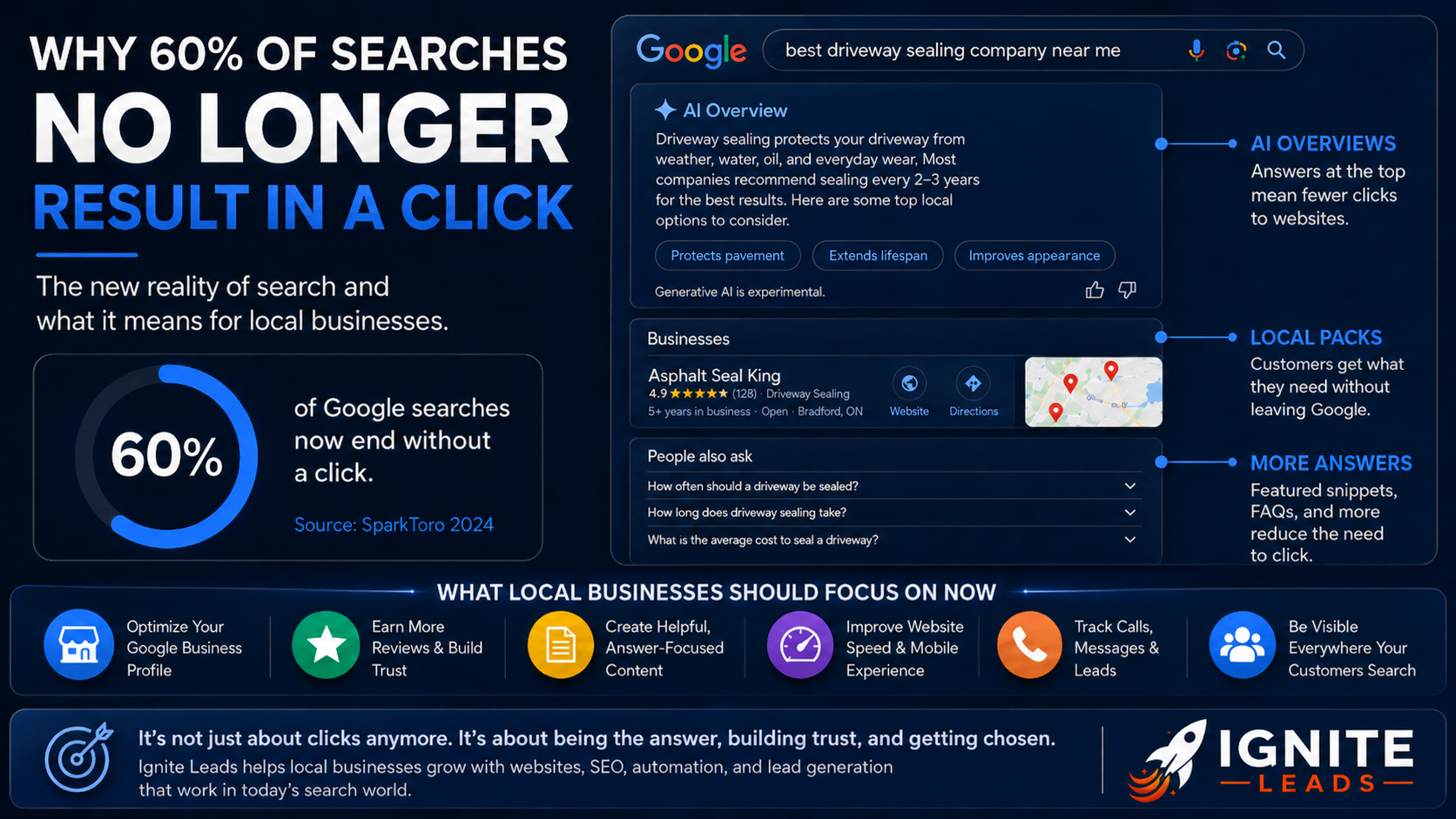
An integrated marketing system connects the full journey from first search to completed booking. A potential customer might search Google for an auto repair shop, spa, coach, or home service provider near them. They find your Google Business Profile or website, check your reviews, submit a form or call, receive a fast response, and get reminders until they book.
Each step affects the next. Strong local SEO brings in higher-intent traffic. A clear website gives that traffic a reason to call. Review generation reduces hesitation. AI chat, voice reception, or CRM automation prevents leads from sitting unanswered. Reporting shows which channels are producing revenue, not just clicks.
The system is integrated when those pieces share a purpose, a workflow, and clear ownership. It is not integrated just because a business pays for several marketing tools.
A collection of tools is not a system
Many owners already have the pieces. They may have a website built years ago, a social media freelancer, a Google Business Profile, a review platform, a CRM that is only partly used, and a staff member checking leads when time allows.
That is a tool collection. It can look busy while still leaking revenue.
For example, a garage may rank well for local repair searches but lose leads because calls go to voicemail during busy hours. A landscaping company may collect form submissions but wait until the next morning to respond. A clinic may earn excellent feedback in person but have too few recent Google reviews to stand out in search results.
None of those businesses necessarily need a new campaign. They need the handoffs fixed.
An integrated system establishes what happens after every action. When a lead calls after hours, the system captures the enquiry and triggers a response. When someone fills out a form, their details enter the CRM, the right team member is notified, and follow-up begins. When a job is complete, the customer receives a review request at the right time. The business can then see whether that review activity supports more local visibility and incoming calls.
The core parts of an integrated marketing system
The exact setup depends on your business model, sales cycle, service area, and capacity. Still, most effective local growth systems include five connected functions.
1. Visibility where local buyers are searching
Local visibility starts with a website that explains what you do, where you work, and why a customer should contact you. It also includes local SEO work that helps your business show up for relevant service searches, especially on Google Maps and local results.
The goal is not traffic for its own sake. A Barrie homeowner looking for an emergency plumber is more valuable than hundreds of visitors with no intention of hiring anyone. Your content, service pages, Google Business Profile, and location signals should be built around that local intent.
2. A website built to convert action into enquiries
A polished website is not automatically a lead-generating website. Customers need to understand your offer quickly, trust the business, and know exactly what to do next.
That means clear service information, prominent calls to call or request an estimate, mobile-friendly pages, visible proof, and forms that do not ask for unnecessary details. It also means tracking calls and submissions so you know what is working.
For many local service businesses, the website is the centre of the system. It gives search traffic, referral traffic, review traffic, and outreach prospects one clear place to convert.
3. Reputation that supports the sale
Reviews do more than improve a star rating. They provide the proof customers look for when deciding whether to call your business or the competitor beside you in the search results.
A review process should be consistent, not dependent on someone remembering to ask at the end of a long day. The best approach is usually automated but timed properly. Ask after the customer has received value, make the request simple, and route feedback into a process your team can manage.
There is a trade-off here. Automation can increase volume, but it cannot replace good service or thoughtful responses to negative feedback. The system should help you ask consistently while keeping your reputation credible.
4. Fast lead capture and follow-up
Speed-to-lead is where many businesses lose the customer they already paid to attract. If a prospect contacts three providers and one responds in two minutes while the others respond hours later, the faster business often gets the conversation.
An integrated system can use CRM automation, text messages, email sequences, AI chat, and AI voice reception to acknowledge leads immediately and keep the conversation moving. That does not mean every lead should receive the same generic message. It means no legitimate enquiry should disappear because your team was on a job, with a customer, or closed for the day.
For appointment-based businesses, follow-up can include booking prompts and reminders. For higher-ticket services, it can create tasks for sales staff, log communication, and prompt the next contact. The right workflow depends on how customers make decisions in your category.
5. Reporting tied to business outcomes
Marketing reports often create more noise than clarity. Page views, impressions, and likes may be useful signals, but they are not the final score.
A practical integrated marketing system tracks the measures that affect operations: qualified calls, form leads, booked appointments, response times, reviews generated, close rates, and cost per acquired customer. When possible, it should also show where your best leads originated.
This lets you make better decisions. If Google Maps generates strong calls but cold outreach creates low-quality enquiries, you can adjust. If a service page receives traffic but does not convert, you can improve the offer or call to action. The value is not in having a dashboard. It is in knowing what to fix next.
Why integration matters more than adding another channel
Adding channels without coordination can create more work and weaker results. A business may invest in ads before its follow-up process is ready, driving more leads into the same slow response time. Or it may invest in SEO while sending visitors to pages that do not convert on mobile.
Integration changes the order of operations. First, make sure the foundation captures and handles demand. Then improve visibility and scale what produces profitable customers.
It also creates accountability. When one partner manages the website, local SEO, reputation, lead handling, and reporting, there is less finger-pointing between vendors. The focus becomes straightforward: are more of the right customers finding you, contacting you, and booking?
That is why a managed approach can make sense for owners who do not want to become marketing operators. At Ignite Leads, the objective is to run the connected setup for local businesses so the owner can focus on delivering the service, not chasing tools or troubleshooting integrations.
How to know if your business needs one
You likely need a more integrated setup if leads arrive from several places but no one can say which source creates bookings. You may also have a problem if calls are missed, web enquiries wait too long for a reply, review requests happen inconsistently, or your marketing providers work independently without shared reporting.
Businesses with short, urgent buying cycles benefit most from fast response workflows. Home services, automotive, wellness, and repair businesses are obvious examples. But longer sales cycles also benefit when follow-up is structured and visible rather than dependent on memory.
The right level of integration depends on your size. A small operator may only need a high-converting website, local SEO, automated lead acknowledgement, and review requests. A multi-location business may need location-specific reporting, routing rules, team permissions, and more detailed CRM workflows. More complexity is only useful when it solves a real operational issue.
Start by tracing one new lead from Google search to booked customer. Write down every handoff, every delay, and every point where nobody owns the next action. That exercise usually reveals the most valuable fix. Build around the gap that is costing you customers now, then connect each new marketing activity to a process that turns interest into booked work.
Allan Heath
Founder of Ignite Leads. Helps local businesses grow through SEO, lead generation, and marketing automation — simplifying the playbook so owners can focus on the work.