Article
What Makes a Local Website Convert More Leads?
September 30, 2026 • 6 min read
A homeowner in Barrie finds your business on Google at 8:40 p.m., compares you with two competitors, and decides whether to call, book, or keep searching in less than a minute. That is what makes a local website convert: it gives a ready-to-buy visitor the confidence and the easiest possible next step.
A good-looking site is not automatically a lead-generating site. Local service customers are usually trying to solve a problem now. They want to know whether you serve their area, can handle their job, have earned other customers' trust, and will respond quickly. Your website has one job: remove enough doubt that they contact you.
Start With One Clear Offer
Many local business websites make visitors work too hard. They lead with a broad statement about quality, a large stock photo, and a menu full of options. The customer still has to figure out what the company actually does and how to get help.
Your first screen should answer three questions immediately: what service do you provide, where do you provide it, and what should the visitor do next? A garage might lead with brake repair and diagnostics in Newmarket. A spa might lead with a specific treatment and online booking. A roofing company might lead with a fast estimate for repairs or replacements.
Specificity beats vague claims. “Reliable local service” sounds fine but does not give a buyer a reason to act. “Book a same-week furnace repair assessment” is clearer because it defines the outcome and the next action.
The call to action must match the way people buy your service. For urgent work, “Call now” should be prominent. For consultations, “Request a quote” or “Book an assessment” is often the better fit. For appointment-based businesses, direct online booking can reduce friction. Avoid offering five equally weighted actions at the top of the page. Give visitors one primary path, then support it with a phone number and a secondary option.
What Makes a Local Website Convert Is Local Trust
A local visitor is not only evaluating your service. They are evaluating whether your business is real, nearby, accountable, and familiar with their needs. Generic pages copied across every city rarely create that confidence.
Use service-area language where it helps a customer make a decision. Name the communities you genuinely serve, show a local phone number, and make your address or operating area easy to find. If you work across Vaughan, Aurora, Barrie, and Newmarket, say so plainly rather than forcing customers to guess whether they are within range.
Proof should appear before a visitor reaches the bottom of the page. Real reviews, short customer testimonials, relevant project photos, credentials, years in business, warranties, and recognizable service details all reduce perceived risk. A homeowner looking for an electrician does not need a paragraph about your passion for excellence. They need proof that you are qualified, responsive, insured where required, and trusted by people like them.
Keep proof relevant to the page. A testimonial about facial treatments belongs near a spa's treatment booking option. A review mentioning punctual repairs belongs on the garage or home service page. The closer the proof is to the visitor's concern, the more useful it becomes.
Make Contact Faster Than the Competition
Traffic has limited value if leads sit unanswered. A conversion-focused website makes it easy to contact the business, but the system behind the website must also respond quickly.
Put a click-to-call number in the header on mobile. Use short forms that ask only for information your team needs to take the next step. Name, phone number, service needed, and preferred contact time are often enough. A 10-field form may give your team more context, but it can also cost you leads. Ask for more only when it genuinely improves qualification.
Chat can work well when it captures leads outside business hours or helps visitors find the right service. It fails when it acts like a dead-end widget with slow, generic replies. Automated chat and AI reception should gather the basics, answer common questions accurately, and route the lead into a real follow-up process.
Speed-to-lead matters because intent drops fast. The person who requests a quote may contact three other businesses before your team opens the notification. Automated confirmations, instant lead alerts, missed-call text back, and a clear CRM workflow prevent promising inquiries from disappearing into email inboxes or voicemail.
Design for Decisions, Not Decoration
Website design should make information easy to scan. It should not compete for attention. Overly animated pages, background videos, sliders, and dense blocks of copy can make a business look polished while making it harder to contact.
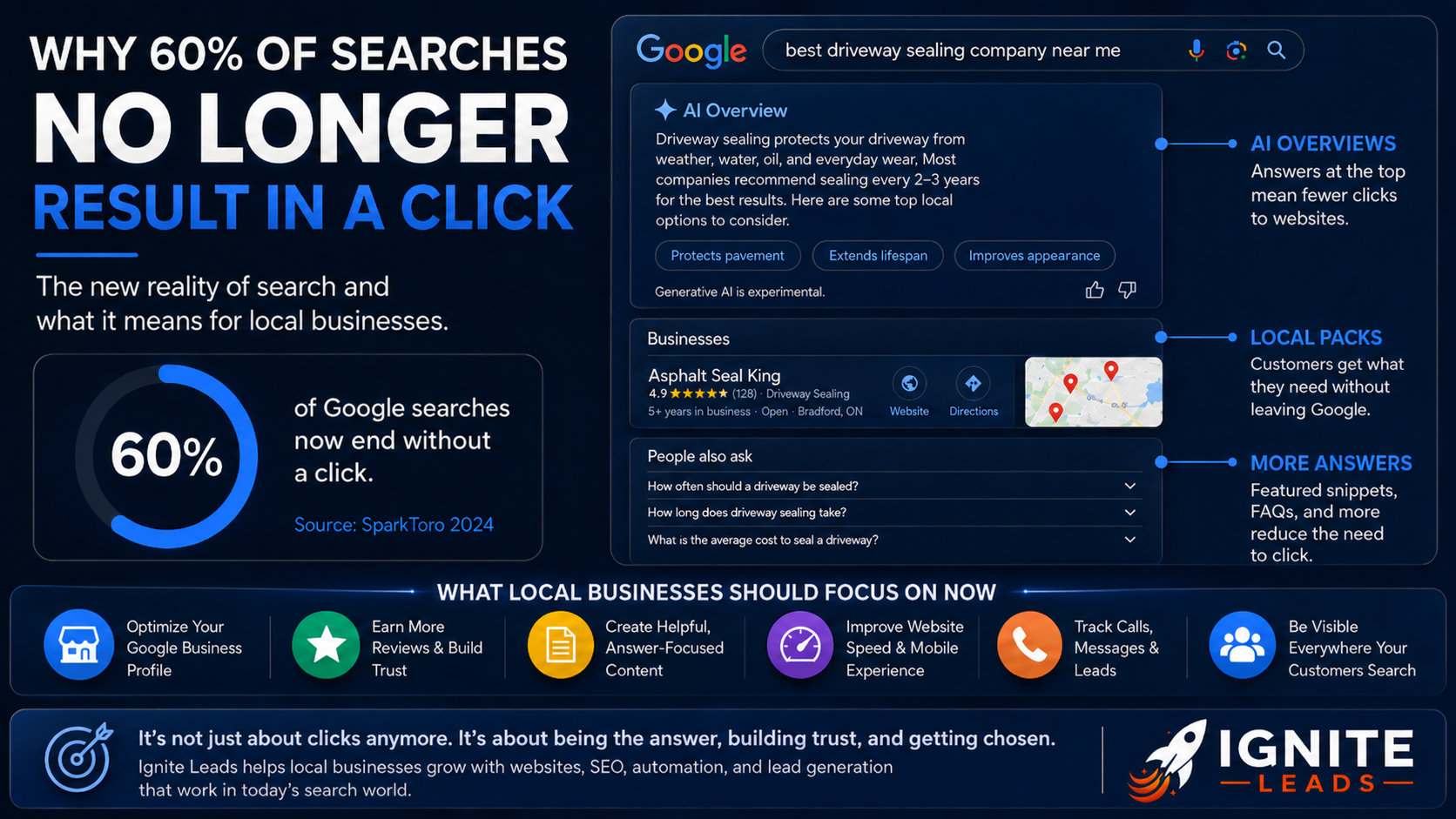
Most local service traffic comes from mobile devices. Test your site on a phone with a practical question in mind: Can someone identify the service, see the phone number, read the reviews, and submit a request without pinching, searching, or waiting? If the answer is no, the design is getting in the way of conversion.
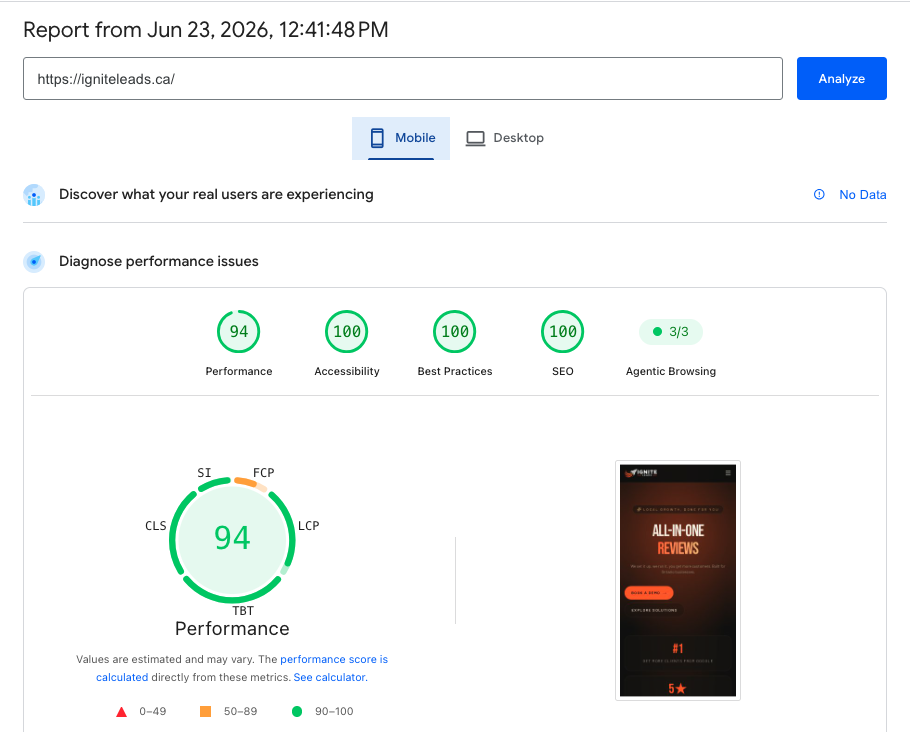
Page speed is part of trust. Slow pages create doubt, especially when customers are searching during a stressful moment such as a breakdown, leak, or last-minute booking need. Large image files, unnecessary scripts, and too many third-party tools can hurt load times. The trade-off is simple: use visual content that supports the sale, not content that delays it.
Your service pages should also reflect how customers search. One page trying to rank for every service, customer type, and location usually becomes vague. Focus each page on a meaningful service intent. Explain the problem, the service, what the customer can expect, the proof, and the action to take.
Answer Objections Before They Become Exits
Visitors often leave because a basic concern is unanswered. They may wonder about pricing, availability, service areas, qualifications, warranty terms, or whether you work with their specific situation.
You do not need to publish a complete price list if every job is custom. You do need to set expectations. A statement such as “Free estimates for eligible projects” or “Appointments available Monday through Saturday” is more helpful than making customers call just to learn the basics.
Use concise sections to explain your process. For example, a home service business can state that a customer requests an estimate, receives a confirmation, gets a scheduled visit, and receives clear recommendations before work begins. This reduces uncertainty without turning the page into a brochure.
Photos and videos should answer objections too. Show your team, vehicles, workspace, completed work, or treatment environment when appropriate. Real visuals usually outperform generic imagery because they make the business feel accountable. They do not need to be studio-perfect. They need to be current, clear, and authentic.
Measure Booked Customers, Not Just Website Visits
A site can receive more traffic and still underperform. The metric that matters is whether traffic becomes qualified calls, form submissions, appointments, and ultimately booked customers.
Track where leads come from, which pages produce inquiries, which calls were answered, and how long it took to follow up. A contact form that produces 20 leads is not necessarily better than one that produces 10 if the first group is unqualified or never receives a response. Review lead quality with operations, not only with marketing.
Conversion improvements should be tested in practical increments. Change the headline, tighten the offer, move testimonials higher, shorten the form, or improve confirmation messages. Then measure the result. Do not redesign an entire site based on preference alone.
For businesses using a managed system such as Ignite Leads, the advantage is coordination. The website, Google visibility, reviews, lead alerts, CRM follow-up, and AI-assisted responses should reinforce one another. A strong landing page cannot compensate for missed calls, and fast follow-up cannot fix an unclear offer.
The best local website does not try to impress everyone. It helps the right customer make a confident decision quickly, then makes sure that decision reaches a team ready to respond.
Allan Heath
Founder of Ignite Leads. Helps local businesses grow through SEO, lead generation, and marketing automation — simplifying the playbook so owners can focus on the work.