Article
GMB Audit for Local SEO That Finds More Calls
October 14, 2026 • 8 min read
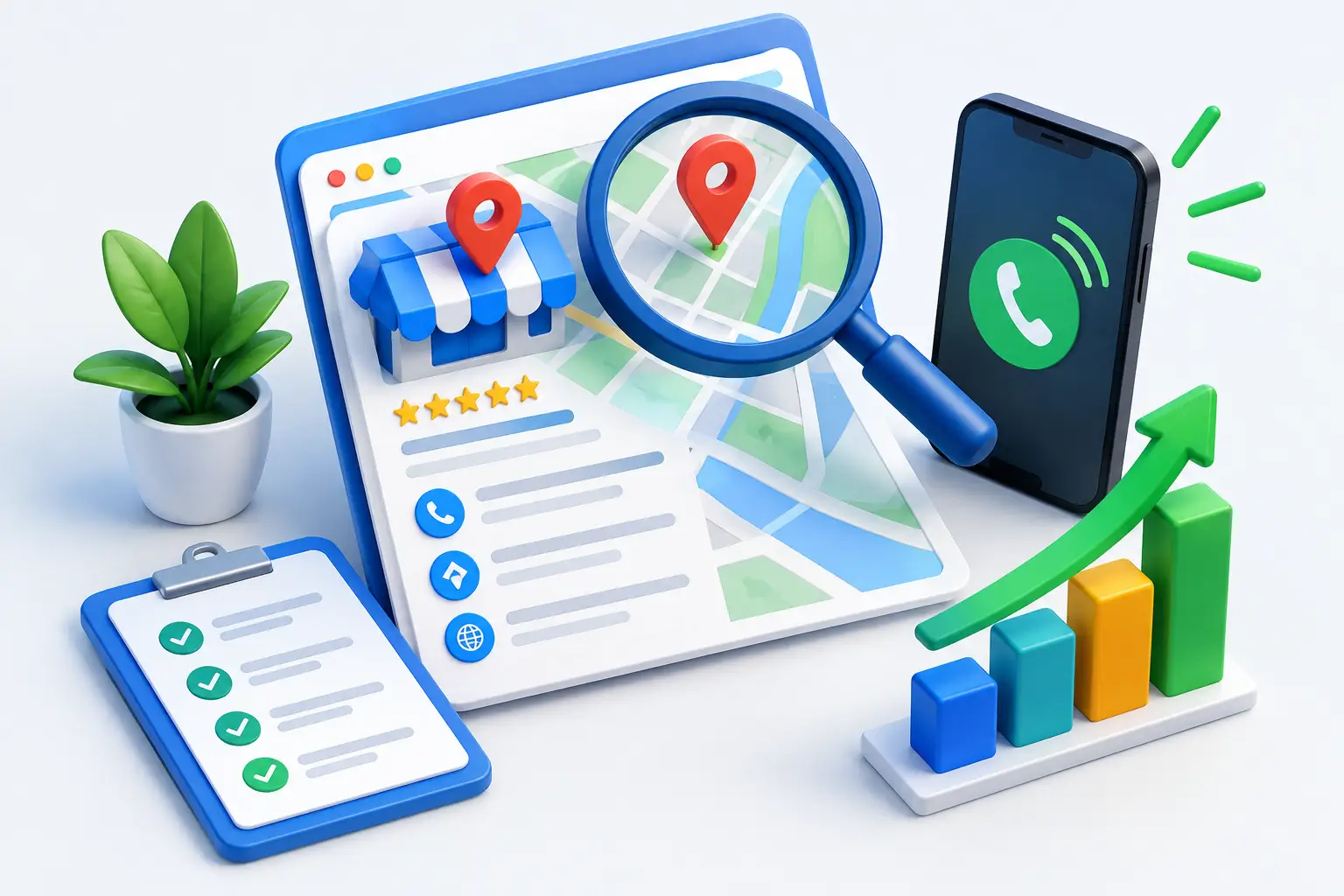
A homeowner in Barrie searches for an emergency plumber at 8:10 p.m. They do not want a polished brand story. They want a business that looks legitimate, answers the phone, serves their area, and has recent proof from real customers. If your Google Business Profile fails any of those tests, you can lose the call before they ever reach your website.
A GMB audit for local SEO shows where that breakdown is happening. GMB is the old name for Google Business Profile, but many business owners still use the term. Whatever you call it, this profile is often the highest-intent piece of local marketing you own. It drives calls, direction requests, website visits, bookings, and the trust that makes a prospect choose you over the business listed one spot below.
The point is not to tick off random SEO tasks. A useful audit identifies the gaps that are costing your business visibility and booked customers, then fixes them in the right order.
What a GMB Audit for Local SEO Actually Measures
Google Maps results are influenced by relevance, distance, and prominence. You cannot move your physical location closer to every searcher, but you can make it easier for Google to understand what you do, where you do it, and why local customers trust you.
A proper audit looks at the profile as part of a conversion system, not a standalone listing. It checks whether the information is accurate, whether the business appears for profitable searches, whether your reputation supports the click, and whether leads receive a fast response after they call or submit a form.
That last part matters more than many owners realize. Ranking first is not a win if calls go unanswered, web enquiries sit overnight, or the customer has to ask basic questions that your profile should answer. Local SEO creates the opportunity. Follow-up converts it into revenue.
Start With the Information Google and Customers See First
Incorrect basics create unnecessary friction. Begin with your business name, primary phone number, website URL, hours, address or service area, and appointment link. These details need to match your real operation and be consistent wherever customers find your company online.
Your business name should be your real-world business name, not a string of keywords. Adding phrases such as “best roofing company in Vaughan” to the name might seem like a shortcut, but it can create verification issues, customer confusion, or a suspended profile. The short-term ranking gain is not worth putting a lead source at risk.
For service-area businesses, the address setup deserves extra attention. If customers do not visit your location, hide the residential or non-customer-facing address and define realistic service areas. Listing every city across the GTA does not make you more relevant everywhere. It can look unfocused and creates expectations your team may not be able to meet. Prioritize the areas where you can provide fast service and earn profitable jobs.
Hours should also reflect reality. If your garage takes calls until 6 p.m. but repair appointments end at 5 p.m., make that clear in your profile and on the booking path. Clear expectations reduce poor-fit calls and negative reviews.
Check Categories Before Writing More Content
Your primary category is one of the strongest relevance signals on the profile. It tells Google what your business is fundamentally about. A spa, for example, should not choose a broad category just because it has more search volume if a more specific category describes its main revenue service.
Review the primary category against the service you most want to sell, then add secondary categories only where they accurately reflect an established offering. A home service company may legitimately offer plumbing repair, drain cleaning, and water heater services. A business that only occasionally handles one of those jobs should not build its profile around it.
Then review services. Add individual services using the language customers use when searching, without forcing city names into every line. Include useful descriptions where they clarify scope, timing, or outcomes. “Same-day furnace repair” is more helpful than a vague “HVAC services” entry if same-day repair is genuinely available.
Products can also work for service businesses when used properly. They are not limited to physical retail. You can present a defined service package, seasonal offer, or popular treatment with a concise explanation and clear next step. The key is accuracy. Promoting offers your team cannot deliver creates avoidable lead waste.
Audit Reviews for Trust, Recency, and Response Quality
A strong star rating helps, but it is not the whole picture. A business with 4.9 stars from 20 reviews may lose trust to a competitor with 4.7 stars from 300 reviews, especially if the competitor’s feedback is recent and detailed.
Look at your review profile through a buyer’s eyes. Are new reviews arriving consistently? Do they mention the services you want more of? Do they reflect the communities you serve? Are owners or managers responding in a professional, specific way?
Do not script reviews or offer incentives in exchange for positive feedback. Instead, build a simple request process that goes out shortly after a successful job, appointment, or delivery. Timing matters. Ask when the customer has experienced the result and the interaction is still fresh.
Your responses should acknowledge the experience and reinforce what future customers can expect. A reply such as “Thanks for trusting us with your brake repair. We are glad we could get you safely back on the road the same day” does more than say thank you. It reinforces a service promise for every future prospect reading the profile.
Negative reviews need a calm, operational response. Never argue publicly or reveal customer details. Address the concern, state that you want to resolve it, and move the conversation offline. One fair response to a poor review can build more trust than a page of generic replies to five-star feedback.
Inspect Photos, Posts, and Profile Activity
Photos answer a question that text cannot: “Is this a real, capable business?” Stock images are not useless, but they should not carry the profile. Prospects want to see your team, vehicles, facility, completed work, equipment, and the quality of the customer experience.
Audit images for relevance and recency. Remove outdated logos, low-quality uploads, duplicate images, and photos that no longer represent the business. Then create a steady process for adding current images from real jobs, with proper customer permission where needed.
Google Posts can support promotions, updates, seasonal services, and event-based demand. They are not a substitute for core profile setup, reviews, or a strong website. Use them when you have something timely to say, such as spring HVAC maintenance, tire change bookings, or a limited appointment opening. Posting for the sake of activity is not a growth strategy.
The same applies to Questions and Answers. Review what is already visible, correct misleading answers where possible, and make sure common questions are answered clearly on your profile and website. If customers repeatedly ask whether you offer financing, weekend service, or free estimates, your marketing system is telling you what information is missing.
Compare Your Profile Against the Local Map Pack
An audit without competitor context is incomplete. Search your key service terms from the locations you want to win, then study the three businesses that consistently appear in the map results. You are looking for patterns, not reasons to copy them blindly.
Compare category choices, review volume and review velocity, photo quality, service detail, business hours, and website experience. Notice which competitors look built to convert and which simply happen to rank because of proximity or years in the market.
This is where trade-offs become clear. A newer business may not match an established competitor’s review count quickly, but it can outperform on response speed, profile completeness, stronger job photos, better service pages, and a smoother booking experience. A multi-location company may have brand recognition, while a local operator can win by showing clearer local proof and providing faster personal service.
Track the searches that lead to action, not vanity terms. “Electrician near me” may matter, but “panel upgrade Aurora” or “24-hour electrician Newmarket” could produce higher-value calls. The best keyword mix depends on your services, margins, service radius, and capacity.
Fix the Lead Handling Gap After the Click
The most expensive local SEO problem is not always a ranking issue. It is often a response-time issue. If Google sends a lead to your phone or website and no one responds quickly, you are paying for visibility that a competitor will monetize.
Test the customer journey yourself. Call during business hours. Submit a website form. Try booking from a mobile device. Check whether calls are tracked, whether forms route into a CRM, and whether missed calls trigger an immediate text-back or follow-up task.
For many Ontario service businesses, a simple automated response system is the difference between a lead and a lost opportunity. The right setup confirms the enquiry, gathers basic job details, alerts the team, and keeps following up until the prospect books or declines. It should feel helpful, not robotic.
At Ignite Leads, the profile audit is treated as one part of a connected local growth system. Visibility, reviews, websites, lead capture, and follow-up need to work together because customers do not experience them as separate marketing channels.
Turn the Audit Into a Monthly Operating Routine
Do a full GMB audit for local SEO quarterly, then review the core indicators every month. Watch profile views, calls, website clicks, direction requests, review growth, response quality, and the percentage of leads contacted quickly. If bookings are flat while profile activity rises, investigate the conversion process before assuming you need more traffic.
The businesses that win local search are rarely the ones doing the most complicated marketing. They are the ones that make it easy for Google to understand them and easy for customers to choose them. Keep your profile accurate, your proof current, and your response time tight. When a local prospect is ready to call, your business should look like the obvious next step.
Allan Heath
Founder of Ignite Leads. Helps local businesses grow through SEO, lead generation, and marketing automation — simplifying the playbook so owners can focus on the work.